
1977 Pontiac Can Am Barn Find Surfaces After 30 Years
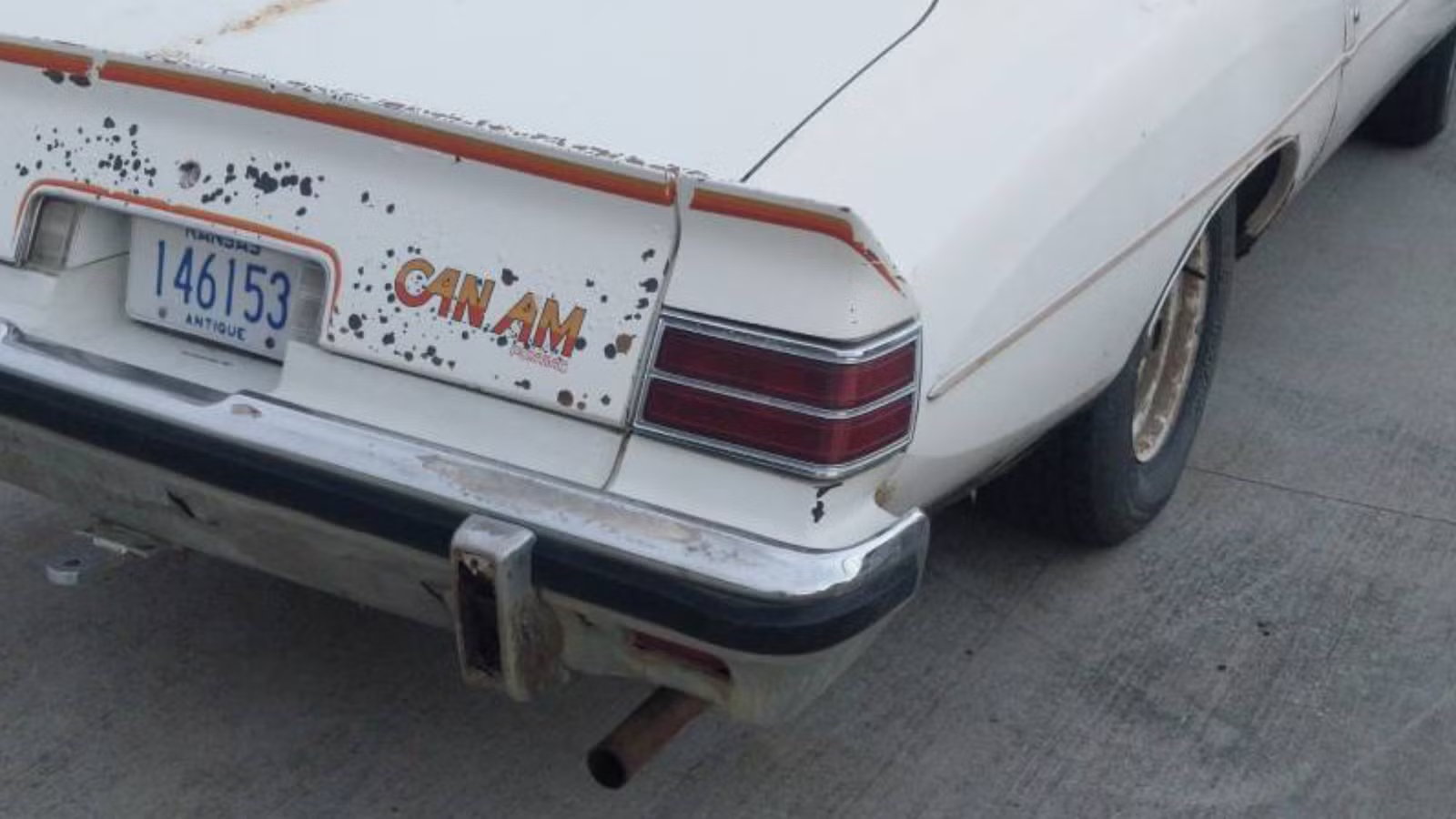
A genuine 1977 Pontiac Can Am has resurfaced in Olathe, Kansas, after sitting in a barn since 1995. The car still wears its factory Cameo White paint under the grime, rides on original Rally II wheels, and carries its numbers-matching W72 400-cubic-inch V8 under that shaker hood scoop. With 106,000 miles on the clock and a $11,000 asking price, it’s now listed for sale as a project, but what makes it worth talking about is what it isn’t: it’s not a restoration, a clone, or a tribute car wearing somebody’s idea of Can Am stripes.

Only 1,377 Can Ams were ever built, and survivors in unmolested original condition are a different animal from the restored cars that occasionally cross auction blocks. This one has rust holes in the shell and torn-up interior trim from three decades of barn storage, but the drivetrain runs, the transmission shifts, and the seller says it’s never been wrecked. For Pontiac collectors, that combination of rarity and originality is exactly what makes barn finds like this one worth chasing.
The 1977 Can Am Is Rarer Than A GTO
The Can Am was Jim Wangers’ answer to a problem Pontiac created for itself. The GTO had been dead since 1974, the LeMans was selling behind its GM midsize cousins, and the Trans Am was proving there was still an appetite for Pontiac muscle. Wangers, the marketing mind behind the original GTO, pitched a LeMans Sport-based performance package built around the W72 “T/A 6.6” 400-cubic-inch V8, the same 200-horsepower engine that topped the 1977 Trans Am’s options list after the 455 was retired.


The formula borrowed heavily from Pontiac’s own back catalog: the shaker hood scoop came straight off the Trans Am, the ducktail spoiler traced back to the Grand Am All-American show car, and the tri-tone orange, yellow, and gold striping gave it a visual link to the Judge-era GTOs. Pontiac and outside contractor Motortown had planned for around 2,500 units, but production stopped after roughly 1,300 cars when the tool used to mold the fiberglass spoiler broke. With the LeMans getting downsized for 1978 anyway, Pontiac didn’t bother fixing it. Final production landed at 1,377 making it one of the rarest Trans Am models Pontiac ever made.
What Makes This Barn Find Different From A Restored Example

Unmolested Can Ams in solid condition typically trade between $25,000 and $40,000, and concours-level cars have pushed past $50,000 at auction. The Kansas car, by contrast, is listed at $11,000, which reflects the restoration work ahead rather than any shortage of desirability. Rust in the shell and damaged upholstery aren’t small jobs, and Can Am-specific trim pieces like the tri-tone decals and shaker scoop hardware are notoriously hard to source since Motortown handled those conversions outside the factory.
What the car does have going for it is the stuff you can’t fake with reproduction parts: a drivetrain that’s never been swapped, an interior that’s never been redone, and a body that’s never seen a wreck. That’s a meaningfully different proposition than buying a Can Am that’s already been restored, because every original panel, stripe, and trim piece on this one is the real thing Pontiac and Motortown built in 1977.
How Many Can Ams Are Actually Left

Estimates suggest perhaps a quarter of the original 1,377 Can Ams survive today, and most of those have already been restored, converted into trailer queens, or quietly rotted away in worse barns than this one. A true survivor that’s run since the Clinton administration, untouched and unmodified, doesn’t surface often. For Pontiac collectors hunting an entry point into Can Am ownership rather than a finished show car, this is about as honest a starting point as the breed gets.
Sources: Craigslist, Hagerty, Mecum

Related posts





Latest Post


No Comments