
1970 Buick GS 455 Stage 1: The 33-Year Torque Record
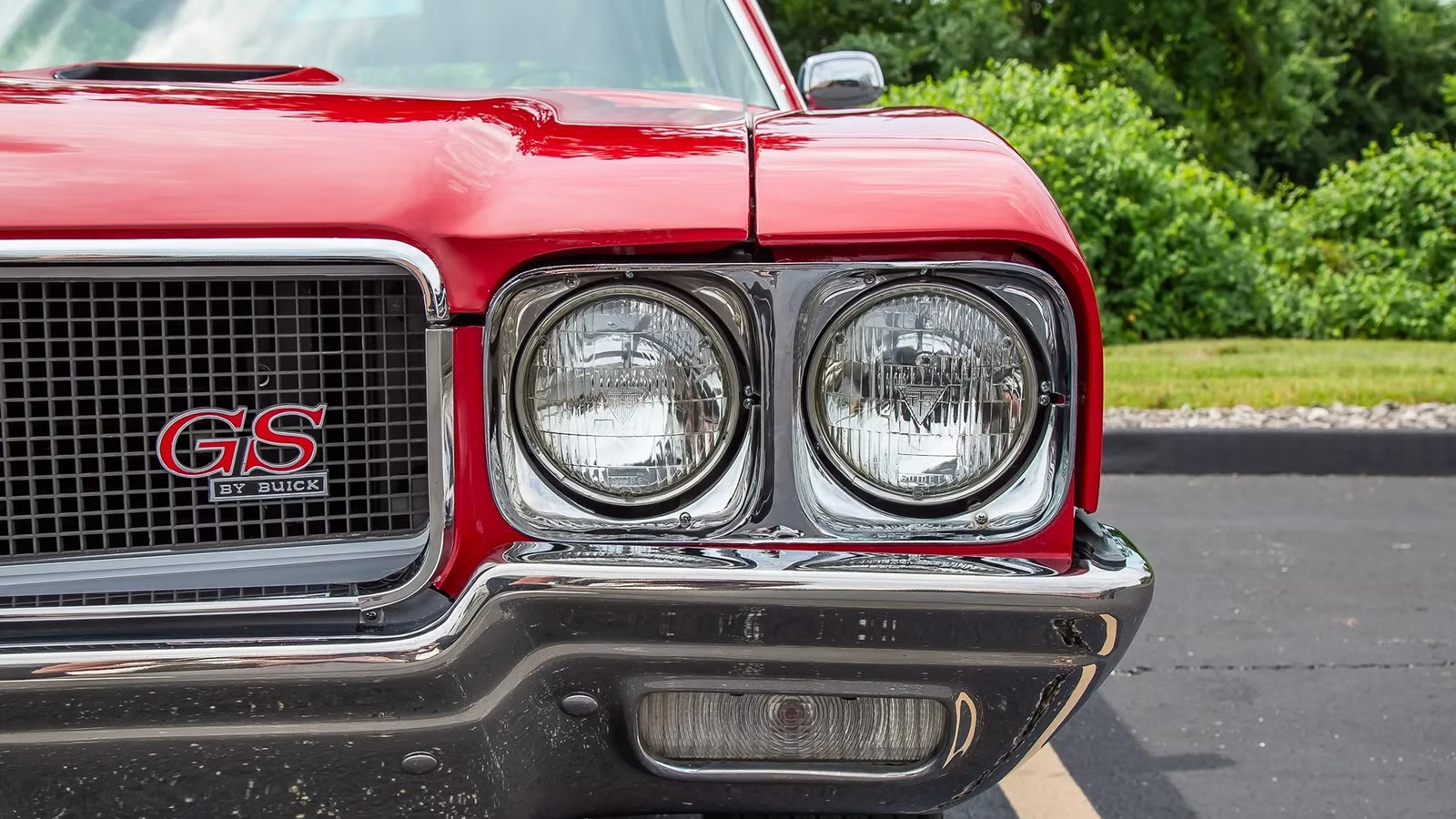
In 1970, Detroit’s horsepower race reached its absolute peak. While manufacturers were chasing high-RPM horsepower numbers to dominate the headlines, a General Motors division was quietly developing a big-block engine focused on low-end usable grunt. The result was a factory torque rating that set a domestic record that remained unbroken for 33 years.
The Year Muscle Cars Hit Their Breaking Point

By 1970, Detroit had created high-RPM, drag-strip-revving, peaky performance engines that felt sluggish for daily driving. Manufacturers would shove high-displacement V8s into small intermediate chassis to post fast quarter-mile times. However, the engines were optimized for top-end horsepower, which meant they had to rev higher to the redline to really get going. Enthusiasts had to live with aggressive cars, making regular suburban driving difficult.
At the same time, insurance companies began placing massive surcharges on high-horsepower cars coming out of Detroit. Federal emission mandates were also taking effect, and to run low-octane unleaded fuel, cars had lower compression ratios across lineups, which in turn reduced performance. Unlike its rivals, Buick shifted its entire focus to low-end fuel-flow efficiency, aiming to improve real-world drivability before the regulations closed the doors on classic muscle.
Buick’s Answer to High-Revving Street Racers


Buick slotted below Cadillac in General Motors’ catalog, designing its performance platforms for plush driving and immediate throttle response over harsh, peaky rides like those of its rivals. The customer expected a quiet, comfortable, and insulated experience rather than a stripped-out racing cabin. Generating strong torque output was the primary objective for Buick as it went head-to-head with its rivals.
With that focus on torque, engineers ensured the car had strong off-the-line pull without sacrificing cabin refinement, rather than creating a high-strung race car. The car would deliver more of a Gran Sport experience, with plush bucket seats, power steering, and functioning air conditioning paired with a big-block engine.
The 510 lb-ft Monster: The Buick GS 455 Stage 1

General Motors lifted its corporate cap on 400-cubic-inch displacement engines in 1970. It allowed Buick to unveil the GS 455 with a revised 455-cubic-inch V8 with an optional Stage 1 package. Bored and stroked to 455 cubic inches, the engine used a 4.3125-inch bore and a 3.90-inch stroke. The Stage 1 performance package transformed the GS 455 into a straight-line beast that could out-grunt rivals while maintaining its unassuming, understated luxury profile.
The ability to pull like a locomotive is what made it different. The 455 Stage 1 generated a massive 510 lb-ft of torque at just 2,800 rpm, and power was rated at 360 horsepower at 4,600 rpm, deliberately kept on the conservative side to avoid soaring insurance premiums. The massive torque helped the car reach higher speeds with greater ease than its high-revving rivals.
The Stage 1 cylinder heads underwent factory machining at the Flint plant, unlike the standard block, to fit a massive 2.135-inch intake valve and 1.750-inch exhaust valve, up from the standard 2.001 and 1.625-inch setup. The 445 Stage 1 also got 30-degree valve seats, unlike the 30-degree valve seats used across GM, which helped Buick dramatically increase low-lift airflow under 0.300 inches of valve lift, pulling fuel faster into the cylinder and directly contributing to massive torque at 2,800 rpm.
Stage 1 Factory Performance Benchmarks

By making peak torque available at just 2,800 rpm, the engine delivered hard acceleration with a continuous mid-range punch, without requiring a steep gear ratio that would compromise highway cruising speeds and fuel economy. In February 1970, Motor Trend documented the car running a 13.38-second quarter mile at 105.5 mph using a 3.64:41 rear end, making it one of the fastest production cars available.
Car Life magazine recorded a 50-to-70-MPH passing time of under 3.0 seconds in top gear, proving the real-world advantages of low-rpm torque over top-end horsepower. While General Motors conservatively quoted 360 horsepower to prevent insurance surcharges, independent dyno tests revealed the output was nearly 390 horsepower.
Structural Efficiency, Weight Reduction, and Driving Dynamics

Buick used thin-wall casting to keep the upgraded 455 engine under roughly 600 pounds, making it roughly 150 pounds lighter than its big-block rival, the Chevy 454, and almost 200 pounds lighter than the 426 Hemi. These heavy cast-iron engines weighed down the front end and disturbed the weight distribution.
Unlike Chevrolet big-blocks, where the oil pan sat flush with the crankshaft centerline, the GS 455’s block had a deep-skirt crankcase design that extended 0.75 inches below the centerline. This tied the oil pan directly into the main caps, dramatically increasing block rigidity and dampening bottom-end torsional vibration caused by the massive 510 lb-ft of torque at low rpm.

Buick’s foundry techniques and lightweight engines helped the GS 455 have superior balance. The reduced front-end weight also helped improve the handling and traction at the rear. The lighter nose gave the GS 455 sharper turn-in response through corners at higher speeds. Plenty of torque continuously assisted throughout the rev range.
Stage 1’s unique camshaft profile further enhanced driver control. While rival cars ran tight lobe separation angles that resulted in a choppy, low-rpm idle, Buick’s camshaft had a wide 114-degree lobe separation angle that minimized valve overlap and allowed maximum air-fuel volume in the cylinder at low speeds to build greater pressure.
The Mechanical Recipe Behind 510 LB-FT

The upgraded 455 engines had Stage 1 heads with oversized 2.125-inch intake and 1.175-inch exhaust valves, operated by a high-lift camshaft and heavy-duty valve springs. The cylinder head casting featured a fully machined combustion chamber, while the high-lift camshafts had 0.454 inches of lift on both intake and exhaust lobes.
Oil passages were enlarged through the block to prevent oil starvation under heavy loads and wide open throttle. The functional Stage 1 hood scoops were not just for styling; they sealed directly against a dual-snorkel air cleaner assembly equipped with dual vacuum-operated foam collars. The dual-snorkel ram-air hood and a specifically calibrated Quadrajet four-barrel carburetor ensured the engine had dense, cool air at all times.
33 Years at the Top and The Record That Refused to Die

Lower compression ratios and federal regulations crushed engine outputs after 1970, leaving the GS 455 torque figure at the top of the domestic performance charts untouched for decades. As the auto industry transitioned into the smog-choked malaise era of the late 1970s and early 1980s, factory ratings of V8-powered cars even dropped to as low as 150 horsepower due to restrictive catalytic converters and similar emissions controls.
High-tech performance cars such as the 1987 GNX, which produced 350 lb-ft of torque, and the 1990 Corvette ZR-1, producing 385 lb-ft of torque, demonstrated modern efficiency and forced-induction technology. Still, none could match the big-block’s torque output. As technology advanced throughout the decades, the GS 455 held its own even against fuel-injected, computer-controlled rivals. The 33-year record was finally broken when Chrysler released the 2003 Dodge Viper SRT-10, with its massive 8.3-liter V10 that produced a factory-rated 525 lb-ft of torque, beating the GS 455’s record at the start of the 21st century.
Source: Hemmings, Hagerty, MotorTrend, GM.

Related posts





Latest Post


No Comments