
10 Used Pickup Trucks Under $30K That Can Tow 10,000 Pounds
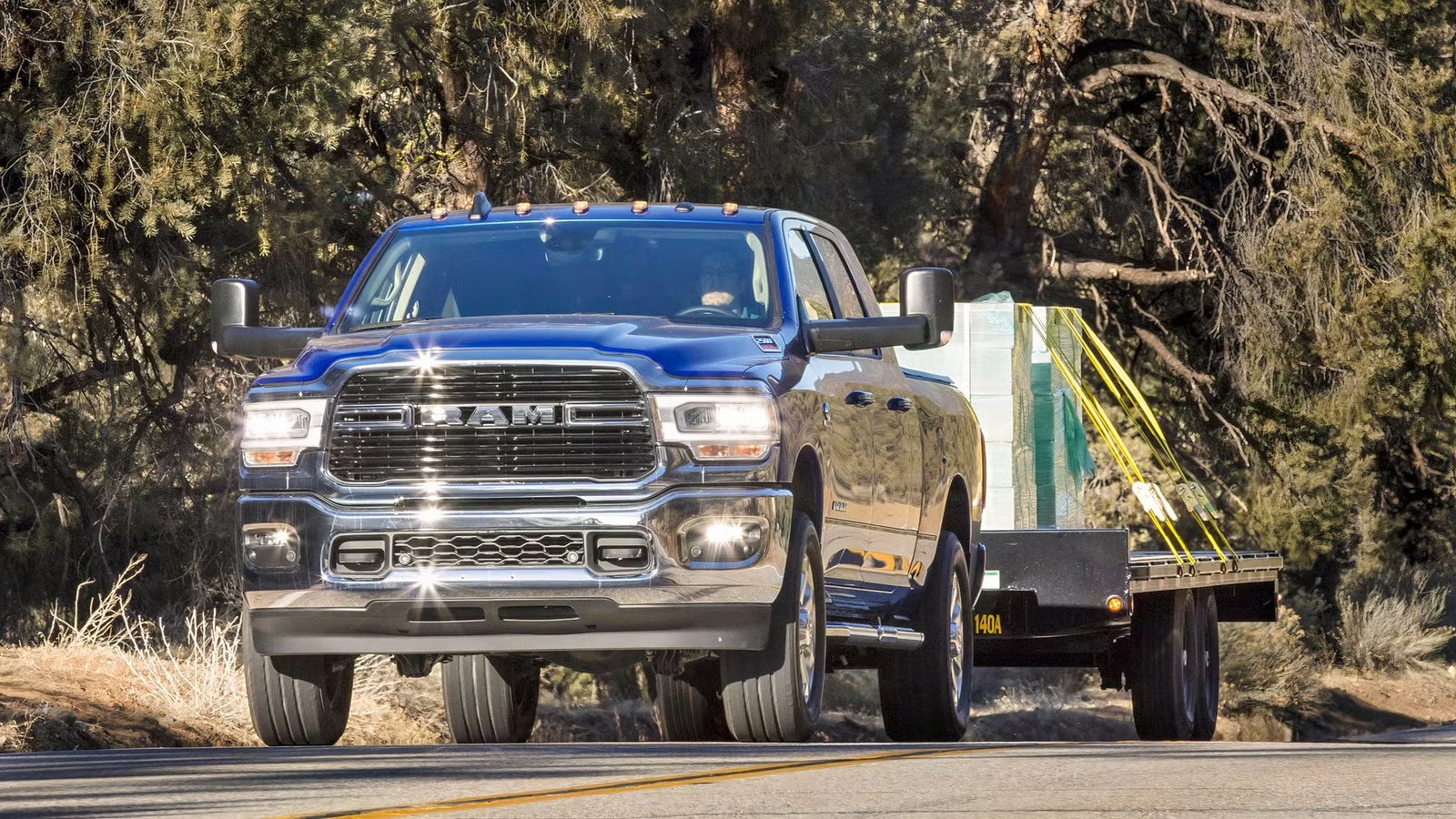
Buying a truck capable of towing 10,000 pounds does not automatically require a $60,000 budget, but it does require careful shopping. The badge on the tailgate tells you surprisingly little because engine choice, cab style, drivetrain, axle ratio, bed length, and factory towing packages can change a truck’s rating by thousands of pounds. Some qualifying trucks are half-ton models built in very specific configurations, while others are gas-powered HD work trucks that sacrifice fuel economy for greater capability. These ten pickups can realistically be purchased for less than $30,000 while providing a manufacturer-rated maximum towing capacity of at least 10,000 pounds.

Maximum manufacturer-rated towing capacity served as the primary ranking factor, followed by representative used pricing and everyday usability.
2018–2021 Toyota Tundra
Used Price Range: $24,000–$30,000 | Maximum Towing: 10,200 Pounds
Reaching the Tundra’s maximum rating requires a Double Cab with RWD, a 6.5-foot bed, 5.7-liter V8, and factory towing equipment. The 5.7-liter engine produces 381 horsepower and 401 lb-ft of torque, but cab style and drivetrain affect how much of that capability can be used for towing. A heavier CrewMax or 4WD model may still approach 10,000 pounds, but buyers cannot assume every 5.7-liter Tundra qualifies.
The Tundra ranks last because its maximum rating barely clears the headline requirement, and its strong resale value makes it expensive relative to its age. A Double Cab is more likely to fall below $30,000 than a comparable CrewMax.
Favorite Features: A Proven V8, Simple Controls, And Strong Resale Value

The old Tundra’s biggest attraction is its relatively straightforward design. Its naturally aspirated V8 avoids turbochargers and complicated cylinder-deactivation hardware, while the conventional six-speed automatic has a well-established service history. The interior feels dated compared with newer domestic trucks, but its physical controls are easy to use while towing. Strong resale value also gives the Tundra an advantage when it is time to sell, even if that same strength makes it more expensive to purchase.
2016–2019 Nissan Titan XD
Used Price Range: $20,000–$28,000 | Maximum Towing: 12,640 Pounds

The highest rating belongs to an early Titan XD Single Cab with RWD and the available 5.0-liter Cummins turbodiesel V8. That specialized configuration can tow up to 12,640 pounds, while Crew Cab and 4WD versions receive lower ratings. The available 5.6-liter gasoline V8 can also push properly configured Titan XD models beyond 11,000 pounds and may represent the safer long-term purchase because it avoids the Cummins engine’s complex emissions equipment.
Buyers should confirm whether the advertised figure refers to conventional or gooseneck towing. The Titan XD was marketed as something between a half-ton and a traditional HD truck, but individual ratings still depend heavily on the cab, drivetrain, hitch, and engine.
Favorite Features: A Comfortable Cabin And Manageable HD Dimensions

The Titan XD feels more substantial than a standard half-ton without becoming as cumbersome as some traditional HD trucks. Its cabin is spacious, its seats are comfortable, and Nissan’s hydraulic body-motion control helps limit unwanted movement over uneven roads. Available features such as the Utili-track bed-channel system, removable bed cleats, trailer-brake controller, and surround-view camera add useful versatility. The gasoline-powered version is especially appealing to buyers who need greater-than-half-ton capability without maintaining an older diesel.
2017–2018 Chevrolet Silverado 1500
Used Price Range: $20,000–$28,000 | Maximum Towing: 12,500 Pounds

A 2018 Silverado 1500 can tow as much as 12,500 pounds when equipped with the 6.2-liter V8, RWD, Max Trailering Package, and the correct cab, bed, and axle combination. The 6.2-liter V8 produces 420 horsepower and 460 lb-ft of torque, giving it substantially more pulling power than the standard 5.3-liter V8.
The Max Trailering Package is essential because it adds equipment such as a more aggressive axle ratio, upgraded cooling, heavier rear springs, and an integrated trailer-brake controller. A Silverado with the correct engine but without that package will carry a lower rating. The truck’s original build sheet or glove-box option codes can help verify its equipment.
Favorite Features: Strong V8 Power And Straightforward Technology

The 6.2-liter Silverado delivers confident acceleration even before a trailer is attached. Its relatively light body helps the engine feel stronger than it does in an HD truck, while the cabin retains traditional physical controls for climate and audio functions. Apple CarPlay and Android Auto were available during this period, giving the Silverado useful smartphone integration without an overly complicated infotainment system. Replacement parts are also widely available because Chevrolet sold these trucks in enormous numbers.
2017–2018 GMC Sierra 1500
Used Price Range: $22,000–$30,000 | Maximum Towing: 12,500 Pounds

The Sierra 1500 uses the same basic towing hardware as the Silverado. Reaching 12,500 pounds requires the 420-horsepower 6.2-liter V8, RWD, Max Trailering Package, and the correct cab-and-bed configuration. Buyers should look for a truck with an integrated trailer brake controller and verify the axle ratio, rather than trusting an advertisement that simply mentions a larger engine.
A Sierra SLT may fit within the budget for moderate mileage, but Denali models equipped with the 6.2-liter V8 often exceed $30,000. An SLE or lower-trim truck provides a better combination of price and towing equipment.
Favorite Features: A More Upscale Cabin And Excellent V8 Performance

The Sierra’s main advantage over its Chevrolet sibling is presentation. Upper trims offer softer interior materials, better seat upholstery, additional sound insulation, and more upscale exterior details. The 6.2-liter V8 remains one of the truck’s best features, delivering naturally aspirated response and enough reserve power to merge or climb grades confidently. Available parking sensors, a rearview camera, and power-folding mirrors can also make the truck easier to position with a trailer attached.
2019–2020 Ram 1500
Used Price Range: $21,000–$29,000 | Maximum Towing: 12,750 Pounds

The fifth-generation Ram 1500 reaches its 12,750-pound maximum with the 5.7-liter Hemi V8, eTorque system, RWD, 3.92 axle ratio, Quad Cab, longer bed, and appropriate towing equipment. Switching to a Crew Cab or 4WD adds weight and reduces the rating, although several properly equipped versions can still tow more than 10,000 pounds.
The engine produces 395 horsepower and 410 lb-ft of torque, while the eight-speed automatic provides a wide ratio spread for getting a heavy trailer moving. Buyers must verify the axle ratio and factory rating because appearance packages and large wheels do not indicate that the truck has the necessary towing hardware.
Favorite Features: Outstanding Ride Comfort And A Well-Designed Interior

The Ram’s coil-spring rear suspension gives it one of the smoothest rides in the half-ton segment. Its cabin also feels more carefully designed than many similarly priced competitors, with supportive seats, useful storage, and clearly arranged controls.
Available features such as RamBox bedside storage, an adjustable air suspension, and a large vertically oriented touchscreen make higher trims particularly appealing. Even basic models offer an interior that feels comfortable enough for long towing trips.
2018–2020 Ford F-150
Used Price Range: $20,000–$29,000 | Maximum Towing: 13,200 Pounds

The 2018 F-150 reaches its 13,200-pound maximum with the 3.5-liter EcoBoost V6, RWD, SuperCrew cab, 6.5-foot bed, and Max Trailer Tow Package. That engine produces 375 horsepower and 470 lb-ft of torque in most non-Raptor applications from this period. Its torque arrives low in the rev range, making it particularly effective when launching a heavy trailer.
Ford offered numerous engines, wheelbases, axle ratios, and towing packages, so two visually identical F-150s may carry very different ratings. Buyers should verify the axle code, payload label, hitch equipment, original window sticker, and trailer-brake controller before assuming a truck qualifies.
Favorite Features: Strong Turbocharged Torque And Useful Towing Technology

The EcoBoost engine provides diesel-like low-end response without the purchase price or emissions of a modern diesel. Available Pro Trailer Backup Assist allows the driver to steer a trailer with a dashboard-mounted control, while the truck manages steering-wheel input. The aluminum body also reduces weight and resists conventional rust on body panels. A flat rear floor, multiple cab choices, and widely available replacement parts make the F-150 easy to use for more than just towing.
2017–2019 Chevrolet Silverado 2500HD
Used Price Range: $22,000–$30,000 | Maximum Conventional Towing: 14,500 Pounds

A Silverado 2500HD Regular Cab with RWD, a long bed, 6.0-liter gasoline V8, and appropriate trailering equipment can tow up to 14,500 pounds conventionally. The engine produces 360 horsepower and 380 lb-ft of torque and is paired with a six-speed automatic. It lacks the effortless torque of the optional Duramax diesel, but gas-powered work trucks are substantially easier to find below $30,000.
Crew Cab and 4WD models carry lower ratings because of their additional weight, but many still comfortably exceed 10,000 pounds. Buyers should also check payload capacity, as the heavier chassis offers more margin for trailer tongue weight than most half-ton alternatives.
Favorite Features: A Durable Gas Engine And Serious Payload Capacity

The 6.0-liter V8 prioritizes durability over fuel economy or refinement. Its simple, naturally aspirated design has been used extensively in commercial fleets, and parts availability remains excellent. The Silverado HD also provides a more stable towing platform than a half-ton truck, with stronger axles, heavier suspension components, and a larger frame. Integrated trailer-brake controls, extendable towing mirrors, and an exhaust-grade braking mode add useful functionality.
2017–2019 GMC Sierra 2500HD
Used Price Range: $23,000–$30,000 | Maximum Conventional Towing: 14,500 Pounds

Like the Silverado 2500HD, the Sierra reaches 14,500 pounds with a Regular Cab, RWD, long bed, 6.0-liter gasoline V8, and proper hitch equipment. Extended and Crew Cab trucks are easier to live with, but lose some towing capacity. Most properly equipped gas-powered examples still clear the article’s 10,000-pound minimum without difficulty.
The Sierra costs slightly more than the comparable Chevrolet because of its trim positioning. Buyers should focus on work-oriented or SLE models because SLT and Denali trucks, especially those powered by the Duramax, frequently exceed the budget.
Favorite Features: HD Stability With A More Refined Interior

The Sierra 2500HD combines the Silverado’s mechanical capability with a slightly more polished cabin. Its seats are well-suited to long trips, and higher trims add conveniences such as heated seats, dual-zone climate control, and upgraded interior materials.
Available LED bed lighting, corner bumper steps, an integrated trailer brake controller, and large towing mirrors enhance its usefulness. The Sierra’s heavy frame and long wheelbase also help it feel planted when crosswinds or passing trucks disturb a large trailer.
2017–2019 Ford F-250 Super Duty
Used Price Range: $23,000–$30,000 | Maximum Conventional Towing: 15,800 Pounds

A gas-powered F-250 can tow as much as 15,800 pounds when configured with a Regular Cab, RWD, 6.2-liter V8, 4.30 axle ratio, and the correct towing equipment. The engine produces 385 horsepower and 430 lb-ft of torque. Choosing the gasoline engine is important to the value equation because clean 6.7-liter Power Stroke trucks often cost more than $30,000.
Crew Cab and 4WD models receive lower ratings, but many remain comfortably above 10,000 pounds. Buyers should inspect former fleet trucks carefully for high idle hours, overloaded suspensions, worn hitches, and deferred maintenance.
Favorite Features: A Spacious Cab And Helpful Trailer Assistance

The aluminum-bodied Super Duty offers a massive cabin, especially in Crew Cab form, while its heavy-duty frame provides the stability needed for towing a large travel trailer or hauling equipment. Available features include trailer reverse guidance, multiple camera views, an integrated trailer brake controller, and blind-spot monitoring that accounts for trailer length. The 6.2-liter V8 is not especially fuel-efficient, but its conventional design and widespread commercial use make it easier to service than an aging diesel.
2019–2020 Ram 2500
Used Price Range: $24,000–$30,000 | Maximum Conventional Towing: 17,130 Pounds

The gas-powered Ram 2500 earns the top position with a maximum conventional towing rating of 17,130 pounds. Reaching that figure requires a Regular Cab, RWD, 6.4-liter Hemi V8, 4.10 axle ratio, and the appropriate towing package. The engine produces 410 horsepower and 429 lb-ft of torque and works with an eight-speed automatic.
A Crew Cab or 4WD Ram will carry a lower rating but can still provide far more than the required 10,000-pound capacity. The 6.7-liter Cummins is also available, but diesel-powered examples generally cost more and introduce additional emissions-system maintenance. A gas Tradesman represents the most realistic sub-$30,000 purchase.
Favorite Features: Exceptional Gas-Powered Capability And A Comfortable Ride

The Ram 2500 combines serious towing strength with better ride quality than many HD rivals. Its coil-spring rear suspension controls heavy loads while remaining more compliant when the bed is empty. The available factory rear air suspension can automatically level the truck under load, improving stability and headlight aim. Its cabin borrows many of the successful design elements found in the Ram 1500, including supportive seats, intuitive controls, abundant storage, and available large-screen infotainment. Those qualities help the Ram provide the best combination of capability, comfort, and attainable pricing in this group.
Sources: OEMs, Kelley Blue Book, CarFax, Edmunds, Autotrader

Related posts





Latest Post


No Comments