
Why Harley-Davidsons Sound The Way They Do
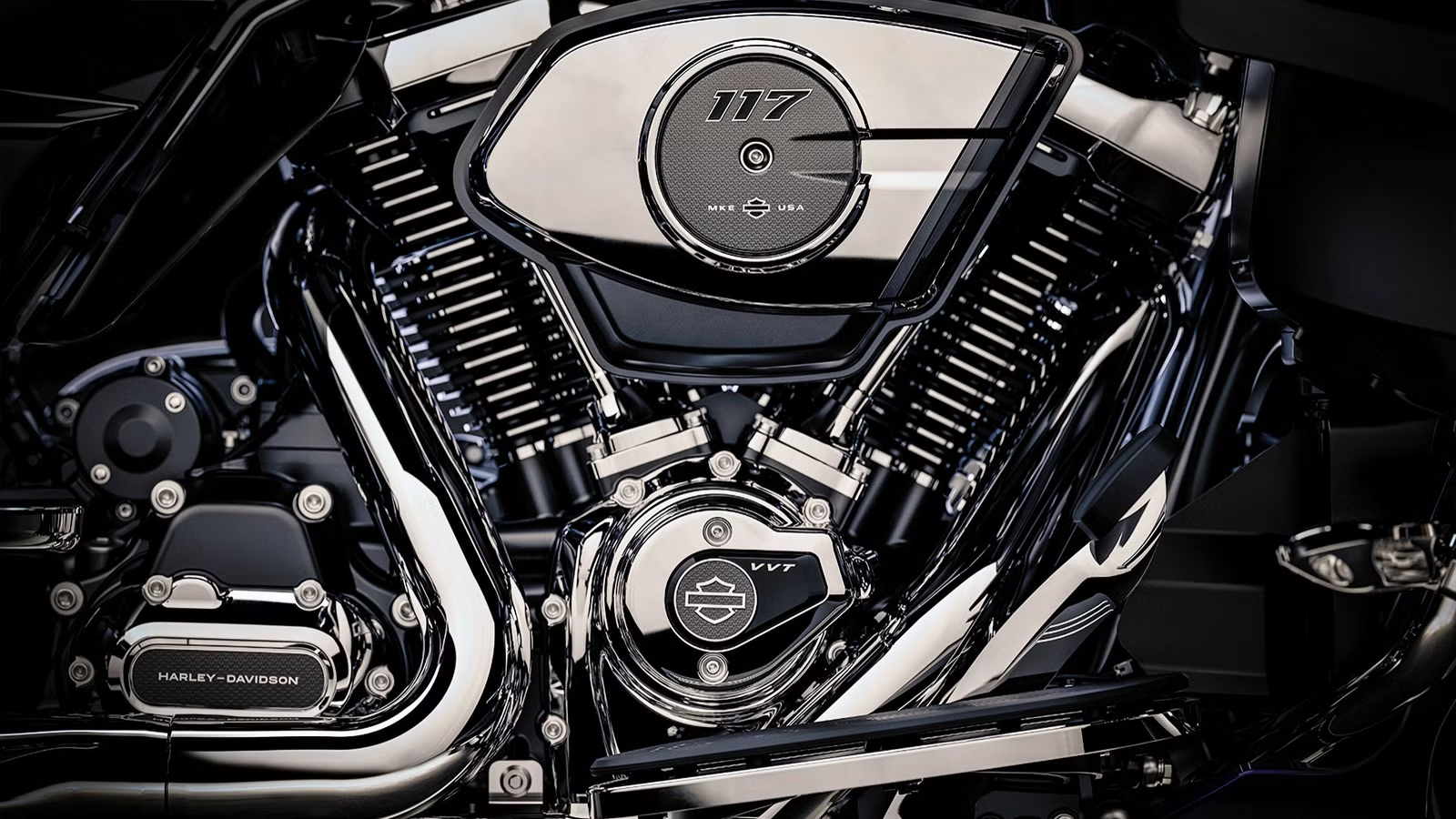
There’s something unmistakable about the sound of a Harley-Davidson. Even if you can’t see the motorcycle, there’s a good chance you’ll recognize it before it comes into view. I’ve spent enough time working on these engines to know that their distinctive exhaust note isn’t simply a product of loud pipes or big displacement. It starts with the way Harley designed its V-twin. The cylinder arrangement, crankshaft configuration, and firing sequence all contribute to an engine character that Harley-Davidson has worked hard to preserve for more than a century.
The 45-Degree V-Twin Sets The Stage
Harley’s Signature Engine Design Dates Back To 1909

When explaining what makes a Harley-Davidson engine different, I start with the angle between its cylinders. Harley’s traditional Big Twin uses a 45-degree V-twin arrangement, a design that dates back to the company’s 1909 Atmospheric V-Twin. That early engine established a configuration Harley would carry through generations of Big Twins, making the 45-degree angle one of the most recognizable features of its engine lineup. However, the cylinder angle alone doesn’t produce the familiar exhaust note. The crankshaft design is equally important.
The Shared Crankpin Makes The Difference
Unlike some V-twin engines that use separate crankpins, traditional Harley Big Twins use a shared crankpin for both connecting rods. This means the rods sit side by side on the same crankshaft journal rather than operating on separate crankpins. Combined with the 45-degree cylinder arrangement, this creates an uneven firing sequence that plays a major role in the engine’s distinctive potato sound.
There’s a practical reason I pay attention to this arrangement when working on these engines. The cylinder angle, crankshaft, and connecting rods aren’t independent design choices. They work together to determine how the engine operates, how it delivers torque, and how combustion events are spaced. Harley could have chosen a different configuration, but the traditional arrangement became an important part of the company’s mechanical identity.

Uneven Firing Gives Harley Its Distinctive Character
The 315/405-Degree Firing Sequence Creates The Signature Rhythm

Here’s where the 45-degree V-twin arrangement really starts to reveal its personality. Because both connecting rods share a crankpin, the traditional Harley Big Twin doesn’t fire at evenly spaced intervals. Instead, one cylinder fires 315 degrees after the other, followed by a 405-degree interval before the first cylinder fires again. Those alternating intervals produce the uneven exhaust-pulse rhythm riders recognize as the familiar Harley rumble.
Each combustion event sends an exhaust pulse through the system, and the uneven spacing between those pulses is a big part of what gives a Harley its unmistakable sound. It’s also part of the engine’s physical character. That distinctive firing rhythm has applications beyond the street, too. The uneven power pulses contribute to traction on loose surfaces. Harley V-twins have long been competitive in hill-climb events, while the same general characteristics have made large-displacement V-twins interesting platforms for scrambling and other dirt-oriented riding.
Of course, the firing sequence isn’t the only factor influencing an engine’s character. Displacement, bore and stroke, camshaft profiles, and engine tuning all play a role. But the 315/405-degree firing intervals establish the underlying rhythm. That’s the mechanical foundation of the sound Harley-Davidson has worked so hard to preserve.
The Exhaust System Completes The Sound
Headers And Mufflers Have Different Jobs

The engine establishes the rhythm, but the exhaust system determines much of what reaches your ears. I’ve heard plenty of Harley-Davidsons with essentially the same engine sound remarkably different simply because their exhaust systems weren’t the same. Headers, mufflers, and internal baffles all influence how those combustion pulses become the exhaust note we recognize.
Exhaust headers do more than carry spent gases away from the cylinders. Their diameter, length, and configuration influence exhaust-gas velocity and pressure waves, which affect how efficiently the engine clears its cylinders. This process, called exhaust scavenging, can also influence engine performance. Mufflers then shape the sound by controlling how exhaust pressure waves are dissipated. Their internal construction, including baffles and chambers, affects volume, tone, and the deeper frequencies that contribute to Harley’s characteristic potato-potato exhaust cadence.
Harley Deliberately Engineers Its Exhaust Note

Harley understands that exhaust design is about more than keeping noise under control. Its Screamin’ Eagle Street Cannon mufflers, for example, were engineered with a specific baffle design intended to produce a deeper bass tone while maintaining a robust exhaust note at idle, part throttle, and acceleration. That’s a good example of the company deliberately shaping the sound rather than simply making the exhaust louder. This also explains why changing mufflers can dramatically alter a motorcycle’s personality.
Harley Engineers Work To Preserve The Signature Sound
Modernizing The V-Twin Without Losing Its Character

One thing I’ve always found interesting about Harley-Davidson is how much engineering goes into preserving the character of its traditional V-twin while making it quieter, smoother, and more efficient. The Milwaukee-Eight is a good example. When Harley introduced it in 2016, the company had to meet increasingly demanding noise regulations and improve rider comfort without losing the exhaust note customers expected. That meant addressing unwanted mechanical noise and vibration.
Reducing Vibration Without Losing The Feel

The Milwaukee-Eight incorporates an internal counterbalancer designed to reduce primary vibration, particularly at idle. Harley says the counterbalancer reduces primary vibration by 75 percent at idle. That doesn’t mean the company wanted to eliminate every sensation associated with a V-twin. Instead, it wanted to reduce the vibrations that could make long rides tiring while retaining the engine’s distinctive personality.
The Milwaukee-Eight also demonstrates that Harley doesn’t have to preserve every traditional engineering compromise to maintain its identity. Its four-valve cylinder heads, dual spark plugs, and improved airflow help the engine breathe more efficiently, while the familiar 45-degree cylinder arrangement remains. Harley was able to modernize the engine without abandoning the architecture that helped establish its sound in the first place.
Harley Has Explored Other V-Twin Configurations

Of course, not every Harley-Davidson V-twin follows that traditional formula. The Revolution engine used in the V-Rod and the newer Revolution Max found in models like the Pan America and Sportster S use a 60-degree cylinder arrangement and liquid cooling. Their overhead-cam designs and different performance characteristics produce a different engine personality. Both depart from the traditional 45-degree Big Twin architecture, demonstrating that Harley can take a very different engineering approach at times.
I’ve always thought that comparison illustrates just how much engine architecture matters. Harley can build a very different V-twin when the intended motorcycle calls for it, but its traditional 45-degree arrangement remains central to the sound many riders associate with the brand. After more than a century, Harley-Davidson’s signature sound remains one of the most recognizable characteristics in motorcycling. It’s the result of deliberate engineering choices, from the 45-degree V-twin and its uneven firing intervals to carefully designed exhaust systems. Harley may continue improving its engines, but that familiar loping rumble isn’t going anywhere.

Related posts






Latest Post


No Comments