
10 Easy Ways To Make The Kawasaki Ninja ZX-4R Faster
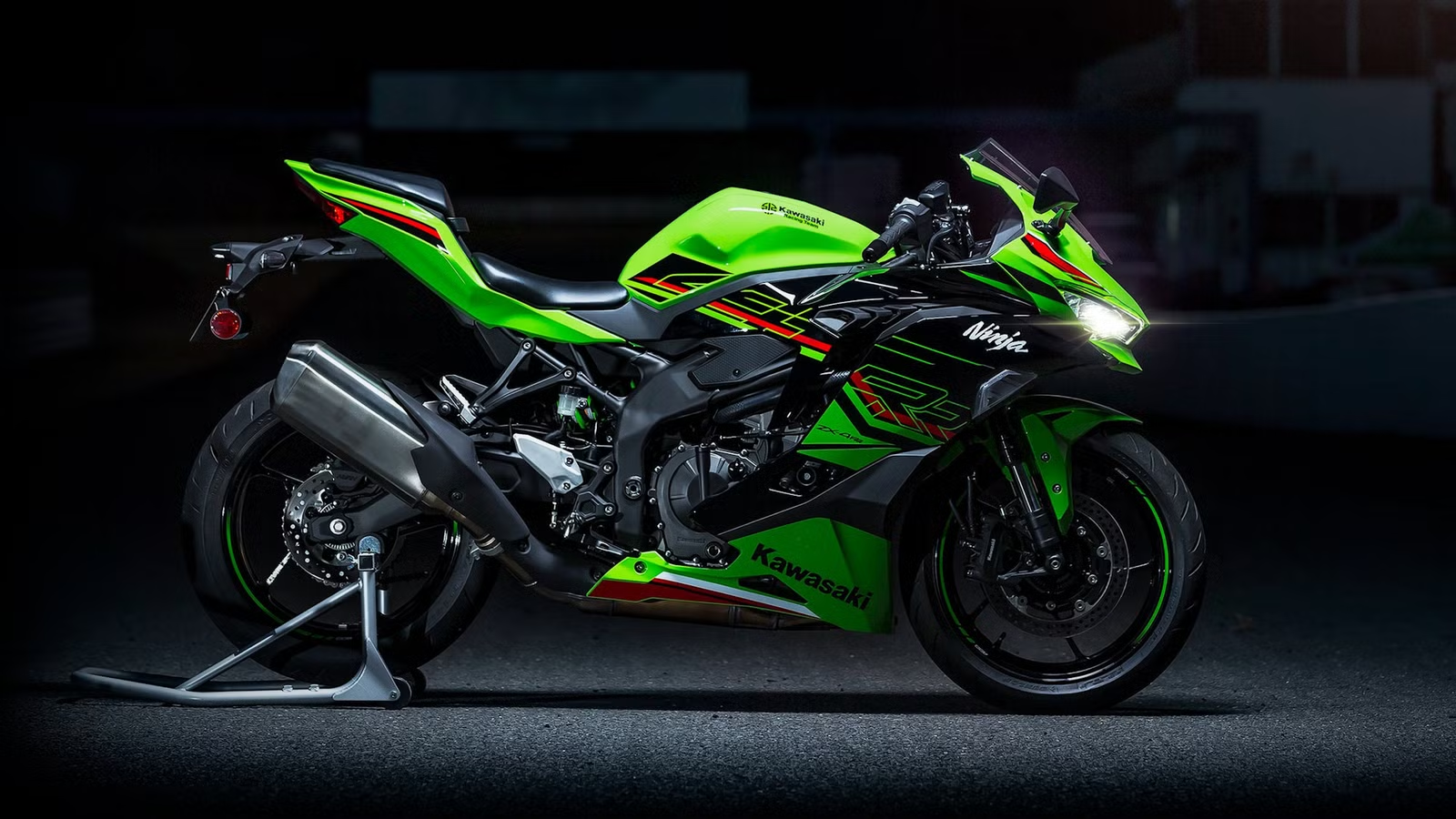
The Kawasaki Ninja ZX-4R has earned its reputation as the most exciting small-displacement sportbike on the market — and the secret weapon is that screaming inline-four. That engine alone makes it the most powerful sub-500cc production motorcycle in the world, capable of embarrassing some middleweight machines that cost considerably more. If you already own one, you know exactly what we mean.\

So what happens when stock isn’t enough? Whether you’re chasing a faster lap time or just want to feel that extra surge down a favorite back road, there are real, proven ways to extract more from the ZX-4R. We’ve rounded up 10 of them — organized from the easiest to the most involved — so you can pick your level and get to work.
All the information sourced here comes directly from the manufacturers. The list is organized in order of ease of modification.
Weight Reduction

Weight slows a motorcycle down. Although the stock 4R tips the scales at 414 pounds wet, you can trim that figure with a few straightforward changes. The easiest win is swapping the heavy stock steel exhaust can and catalytic converter for a titanium or carbon fiber slip-on.
Beyond that, ditching metal components like the rear fender and mirrors adds up quickly. Lighter wheels and carbon fiber bodywork take things further still — the options are virtually endless. And while you’re at it, don’t forget that the rider is part of the equation too.
Aerodynamics

Of all the entries on this list, aerodynamics will probably deliver the smallest gains. But as Dom Toretto will tell you: winning is winning. Aerodynamics plays a significant role at speed, so something as simple as a bubble windscreen can help you extract a couple of extra miles per hour of top speed. Likewise, aftermarket wings can improve how cleanly your Ninja cuts through the air.
Performance Air Filter

More air to the engine means more power — we don’t make the rules. A performance air filter is therefore an easy recommendation. Ideally, go for a free-flow, reusable unit: clean it periodically and reinstall it rather than buying a replacement at every service interval. It’s also one of the most affordable performance upgrades available. A BMC filter runs under $90, while DNA offers one for just over $100.
Aftermarket Air Filter Recommendations
Performance Tires

From the factory, the Ninja ZX-4R rolls on Dunlop rubber — road-oriented sporty tires with adequate grip for everyday riding. But if you’re serious about going fast, grippier rubber is a must.
Our recommendation is either the Pirelli Diablo Rosso Corsa or the Supercorsa SP. Not only will stickier tires give you more confidence mid-corner, but they also reduce traction control interventions and put more power down to the tarmac. As a bonus, high-performance tires typically weigh less than their touring counterparts, shaving a little more from the overall package.
Tire Recommendations For Ninja ZX-4R
- Pirelli Supercorsa (SP or SC)
- Pirelli Diablo Rosso
- Metzeler M9 RR
- Dunlop Q5 S
Chain Sprocket Kit

This is a straightforward way to make the 4R faster — whatever your definition of faster happens to be. If you want more low-end punch off the line, add a few teeth at the rear sprocket. If top speed is the goal, reduce the rear sprocket size instead. A further refinement is fitting a higher-quality chain to minimize transmission losses, bringing wheel horsepower closer to the crank figure. Small changes, but they add up.
Exhaust System
You know this, we know this, and the world knows this. An aftermarket exhaust is arguably the most popular route to more horsepower. It helps the engine breathe more freely, which translates directly into more performance. A slip-on delivers meaningful gains on its own, but a full system — or removing the catalytic converter — unlocks even more. The latter will render the bike non-emissions-compliant for street use, so factor that into your decision.
Recommended Exhausts For Ninja ZX-4R
- Akrapovic full-system exhaust
- Graves Cat-Back slip-on exhaust
- Graves Works 2 full-system exhaust
- Arrow Indy Race Evo slip-on exhaust
- Yoshimura AT2 slip-on exhaust
ECU Flash

The US-spec Ninja ZX-4R is detuned relative to the EU-spec model, producing around 56 horsepower due to American emissions regulations — roughly 20 hp less than its European counterpart. An ECU flash is the most direct way to recover those ponies, de-restricting the engine at minimal cost.
While you’re at it, a skilled tuner can also smooth out the power delivery, spreading it more linearly across the rev range rather than leaving it peaky as it is from the factory. Graves Motorsports offers this service for under $400.
US-Spec Kawasaki Ninja ZX-4R Vs EU-Spec Ninja ZX-4R
|
US-Spec Ninja ZX-4R |
EU-Spec Ninja ZX-4R |
|
|
Engine |
399cc, inline-four |
399cc, inline-four |
|
Power |
56 HP @ 11,500 RPM |
76 HP @ 14,500 RPM |
|
Torque |
26.5 LB-FT @ 11,000 RPM |
28.7 LB-FT @ 13,000 RPM |
|
Transmission |
Six-speed |
Six-speed |
Velocity Stacks
A quick search on velocity stacks will turn up plenty of debate about whether they actually work. The dyno numbers, however, tell a clear story. A set of velocity stacks for the Ninja ZX-4R can add a couple of horsepower across the rev range while also smoothing out power delivery — more pull wherever you crack the throttle. Installation is manageable for most home mechanics with a basic tool kit. Expect to spend around $300 for a set.
Aftermarket Clutch

Ask your local riding group about performance mods and clutches rarely come up — which is exactly why this upgrade is so underrated. An aftermarket clutch can help the motorcycle launch harder and carry more speed both in a straight line and around a circuit.
This isn’t a DIY job for most riders, though. Clutch replacement requires a certified mechanic; done incorrectly, it can cause serious engine damage.
Turbochargers

This is the ultimate performance modification for your Ninja. Turbo kits for the ZX-4R are rare, but specialists like HTP Performance and Moore Mafia can sort you out. The results are dramatic: Japanese shop Trick Star bolted a turbo to a ZX-4R and pushed output to well over 100 horsepower, with a top speed of a scarcely believable 185 miles per hour. Turbo kits run around $5,000 — serious money, but serious performance to match.

Related posts


Latest Post


No Comments