
10 Biggest American Engines Ever Made
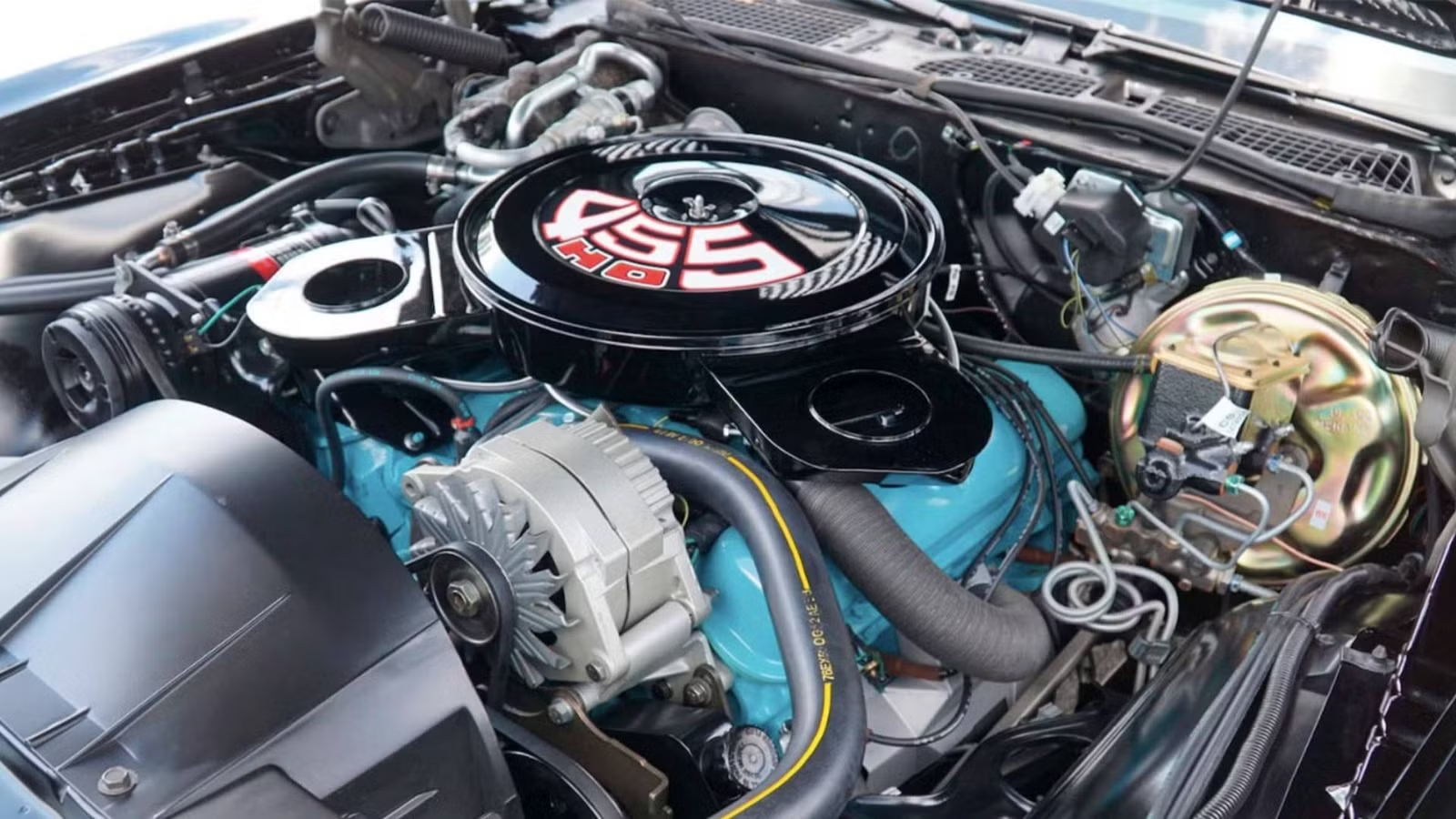
America never treated displacement like a small detail. For decades, Detroit used cubic inches the way a diner uses gravy: too much sounded just right. These engines gave cars character, noise, smell, and enough low-speed shove to make rear tires file a complaint.This list looks at giant American production-vehicle engines, with the focus on cars enthusiasts still argue about in parking lots. No crate-only engines, tank engines, aircraft engines, or diesel workhorses sneak in here. The story starts in the muscle era, reaches back to a Depression-era masterpiece, and ends with a modern V10 that made subtlety leave the room and take a bus home.
10
Chevrolet 454 Big-Block V8 (7.4 liters)
1970 Chevrolet Chevelle SS 454

The Chevrolet 454 arrived at the perfect time and the worst time. In 1970, the muscle-car party still had the stereo cranked, but insurance rates, emissions rules, and fuel fears already stood on the porch with clipboards. Chevrolet answered with the SS 454 Chevelle, a midsize car with a big-block heart and a handshake that could crack walnuts. The LS6 version carried a factory rating of 450 hp and 500 lb-ft of torque, which made it one of the loudest final cheers of the golden era. The LS6 package also bundled the engine with hardware such as dual exhaust, power front disc brakes, a special hood, and heavy-duty supporting pieces.

|
Engine |
Power |
 35 autotech Torque |
0-60 MPH |
Top Speed |
|
7.4-liter V8 |
450 hp |
500 lb-ft |
6.0 seconds |
139 mph |
What made the 454 special was not just size. Chevrolet already had serious big-block credibility with the 396 and 427, but the 454 gave the Chevelle more street attitude than track polish. It leaned on torque, jumped off the line, and made every stoplight feel like a tiny drag strip with crosswalks. Enthusiasts still prize it because it captured the last moment before muscle cars had to start apologizing.
9
Oldsmobile Rocket 455 V8 (7.4 liters)
1968 Oldsmobile Toronado

Oldsmobile gave the 455 a name that sounded like it belonged on a lunchbox and a moon mission. “Rocket” carried real history for Olds, and the 1968 455 lived up to it by turning big torque into a smooth shove. The Toronado made the story even stranger – it sent that big V8’s power through the front wheels by way of a chain-driven Turbo-Hydramatic transaxle. In plain terms, Oldsmobile built a luxury front-drive coupe with more displacement than many later pickup trucks. Factory ratings were 375 horsepower and 510 lb-ft of torque.

|
Engine |
Power |
Torque |
0-60 MPH |
Top Speed |
|
7.4-liter V8 |
375 hp |
510 lb-ft |
7.4 seconds |
135 mph |
That front-drive layout still feels wild because American big engines usually meant long hoods, rear axles, and tire smoke out back. The Toronado did things its own way. The big Olds pulled itself forward like a speedboat leaving a dock. This was a car for people who wanted innovation and a living-room-sized hood. It was weird, brave, and very Oldsmobile.
8
Buick 455 V8 (7.5 liters)
1970 Buick GS 455

Buick never sold itself as the loud kid in the muscle-car cafeteria, and that made the 455 GS even better. It wore a nicer shirt than the Chevelle and talked softer than a GTO, but it carried one of the meanest torque numbers of the era. The 1970 Buick 455 made 510 lb-ft at just 2,800 rpm in GS form, which meant the fun happened before the engine even sounded busy.

|
Engine |
Power |
Torque |
0-60 MPH |
Top Speed |
|
7.5-liter V8 |
360 hp |
510 lb-ft |
6.6 seconds |
127 mph |
The lesser-known trick was weight. Buick’s big-block used thin-wall casting, so it came in lighter than many rivals. That helped the GS feel less like a nose-heavy barge and more like a gentleman who secretly boxed on weekends. The Stage 1 option added better breathing and tuning, and the GSX gave Buick a wild yellow-and-black suit. Still, the regular GS 455 mattered because it made torque its whole personality. It basically said, “Please hold my iced tea,” then left hard enough to wrinkle the pavement.
7
Pontiac 455 V8 (7.5 liters)
1970 Pontiac GTO 455 HO

Pontiac’s 455 was not just another GM 455 with a different air cleaner. In the muscle years, GM divisions still built their own V8s, so a Pontiac 455, Buick 455, and Olds 455 shared a badge number but not a personality. Pontiac’s version used a long stroke and gave the 1970 GTO 455 HO its best weapon: 500 lb-ft of torque. The 1970 GTO 455 HO carried a 360-hp rating, while its torque peaked low enough to make normal driving feel heroic.

|
Engine |
Power |
Torque |
0-60 MPH |
Top Speed |
|
7.5-liter V8 |
360 hp |
500 lb-ft |
6.6 seconds |
124 mph |
The funny part is that Pontiac’s smaller Ram Air 400s often looked better on paper to magazine readers chasing horsepower. The 455 did not care – it made the GTO feel stronger in the rpm range where street cars actually lived. It was the engine for passing, climbing, rolling starts, and looking calm while doing something mildly irresponsible. Pontiac also blurred the “HO” label in later years, but the 1970 version still has a special charm because it arrived right as GM lifted its old limit on big engines in midsize cars. The Goat finally got the cubes it deserved.
6
Ford 385-Series 460 V8 (7.5 liters)
1968 Lincoln Continental Mark III

The Ford 460 was never meant to be a street-racing hero. It entered the world wearing a Lincoln suit, which may explain why it never gets as much muscle-car glory as a 428 Cobra Jet. The 385-Series 460 first appeared for 1968 in Lincoln products, including the Continental Mark III, and early versions produced 365 horsepower and 485 lb-ft of torque. The 460 kept exclusive Lincoln company at first, while Ford later spread the engine into big cars, trucks, vans, and workhorse duty.

|
Engine |
Power |
Torque |
0-60 MPH |
Top Speed |
|
7.5-liter V8 |
365 hp |
500 lb-ft |
9.0 seconds |
125+ mph |
That long life helped the 460 build a second reputation. Hot rodders and truck people learned that Ford’s big Lima engine could take abuse, pull weight, and respond well to parts. The Mark III used it for silence and authority, not burnouts, but the same bones later hauled campers and powered heavy F-Series trucks. Enthusiasts like the 460 because it sits at the crossroads of luxury and utility. It could idle like a bank president and tow like a farmhand.
5
Lincoln 462 MEL V8 (7.6 liters)
1966 Lincoln Continental

The Lincoln 462 MEL V8 feels like an engine from a different branch of the family tree. MEL stood for Mercury-Edsel-Lincoln, and the design used one of Detroit’s stranger combustion-chamber ideas. Instead of forming the chamber in the cylinder head in the normal way, the MEL used an angled block deck that helped shape the chamber in the bore. MEL engines came in 383, 410, 430, and 462 cubic inches and shared that unusual no-chamber cylinder-head approach. The 462 replaced the 430 for 1966 Lincoln Continentals and served as a big, smooth torque source through the late 1960s.

|
Engine |
Power |
Torque |
0-60 MPH |
Top Speed |
|
7.6-liter V8 |
340 hp |
485 lb-ft |
8.6 seconds |
127 mph |
The 1966 Continental gave the 462 the right home. This was not a car that needed to bark at people. It needed to glide, carry doors that looked like they belonged on a bank vault, and move with complete confidence. The 462 did that job with old-school richness. Enthusiasts often overlook it because the later 460 had a longer life and a larger aftermarket, but the 462 deserves respect for its odd engineering and luxury-first mission.
4
Cadillac 472 V8 (7.7 liters)
1968 Cadillac DeVille

Again, this engine was not designed to win stoplight races. Caddy built the 472 because luxury buyers wanted silence, smoothness, and enough torque to move a rolling living room without drama. For 1968, Cadillac launched a new V8 family with a 472-cubic-inch version that made 375 horsepower and 525 lb-ft of torque in early form. The engine used a 4.30-inch bore and 4.06-inch stroke, and Cadillac designed it with room to grow. This same family soon stretched to 500 cubic inches.

|
Engine |
Power |
Torque |
0-60 MPH |
Top Speed |
|
7.7-liter V8 |
375 hp |
525 lb-ft |
7.8 seconds |
128-131 mph |
In a DeVille the 472 did its best work without looking busy. That is a very Cadillac kind of flex. Muscle cars made drivers feel the engine, but Cadillac tried to make the engine disappear until the right foot asked for more. Then the hood rose slightly, the nose gathered itself, and the car moved like a hotel had decided to pass somebody. Hot rodders later found these engines interesting because they made huge torque without the same fame tax as a Chevrolet or Chrysler big-block. The 472 also proved Cadillac understood displacement as comfort, not just speed.
3
Marmon V16 (8.0 liters)
1931 Marmon Sixteen

The Marmon V16 is the grand old surprise on this list. It arrived in 1931, long before the muscle-car wars, and it still towers over almost everything that came after it. Marmon built the Sixteen as an ultra-luxury car with a 491-cubic-inch, 8.0-liter V16. It made about 200 horsepower, which sounds modest until the calendar remembers it was 1931 and most roads still seemed personally offended by speed.

|
Engine |
Power |
Torque |
0-60 MPH |
Top Speed |
|
8.0-liter V16 |
200 hp |
400 lb-ft |
20 seconds |
105 mph |
The best part is the construction. Marmon used aluminum for the engine, not because it wanted bragging rights at cars and coffee, but because weight mattered even in the coachbuilt luxury world. The Sixteen also showed that giant American engines did not start with muscle cars. They started with prestige machines built for people who wanted engineering theater. Cadillac’s V16 won more fame, but Marmon’s had size, elegance, and a final-act sadness because the company faded during the Depression.
2
Cadillac 500 V8 (8.2 liters)
1970 Cadillac Eldorado

The Cadillac 500 is the classic answer to “How much engine is too much?” Cadillac looked at the 472 and said, “Needs more lunch.” For 1970, it stretched the stroke and created a 500-cubic-inch V8 for the Eldorado. Early gross ratings reached 400 horsepower and 550 lb-ft of torque, and the engine remained exclusive to the Eldorado at first.

|
Engine |
Power |
Torque |
0-60 MPH |
Top Speed |
|
8.2-liter V8 |
400 hp |
550 lb-ft |
7.6 seconds |
126 mph |
The Eldorado part makes the story better. This was a front-wheel-drive personal luxury coupe sending 550 lb-ft toward the front tires. That sounds like a dare, but Cadillac tuned the whole car around calm power. It wanted effortless motion, like the road owed it money. The 500 later lost power as compression dropped and emissions rules tightened, but the original 1970 version still stands as the largest regular-production American V8 in a passenger car. It is hard not to admire the confidence.
1
Dodge V10 (8.4 liters)
2008 Dodge Viper SRT10

The 2008 Viper’s 8.4-liter V10 wins this list on displacement, but it also wins on attitude. By 2008, giant engines looked almost extinct in performance cars. Then Dodge showed up with 600 horsepower, 560 lb-ft of torque, and the emotional maturity of a bottle rocket.
The clever detail hides under all that noise.

|
Engine |
Power |
Torque |
0-60 MPH |
Top Speed |
|
8.4-liter V10 |
600 hp |
560 lb-ft |
3.5 seconds |
202 mph |
The 2008 engine used variable valve timing in a pushrod V10, which gave the old-school layout a modern trick. It still felt raw, though, because the Viper never pretended to be a polite grand tourer. It had side pipes, a long hood, and a cabin that seemed designed by people who believed cup holders caused weakness. Compared with the old luxury giants on this list, the Viper used displacement for speed, fear, and lap times. It proved America could still build a huge engine for a street car without wrapping it in woodgrain or excuses.
Source: MotorTrend, Hagerty, HotRod

Related posts
Latest Post



No Comments