
Yamaha’s R6 Pushed Suzuki And Kawasaki Into A High-RPM Race Street Riders Couldn’t Afford
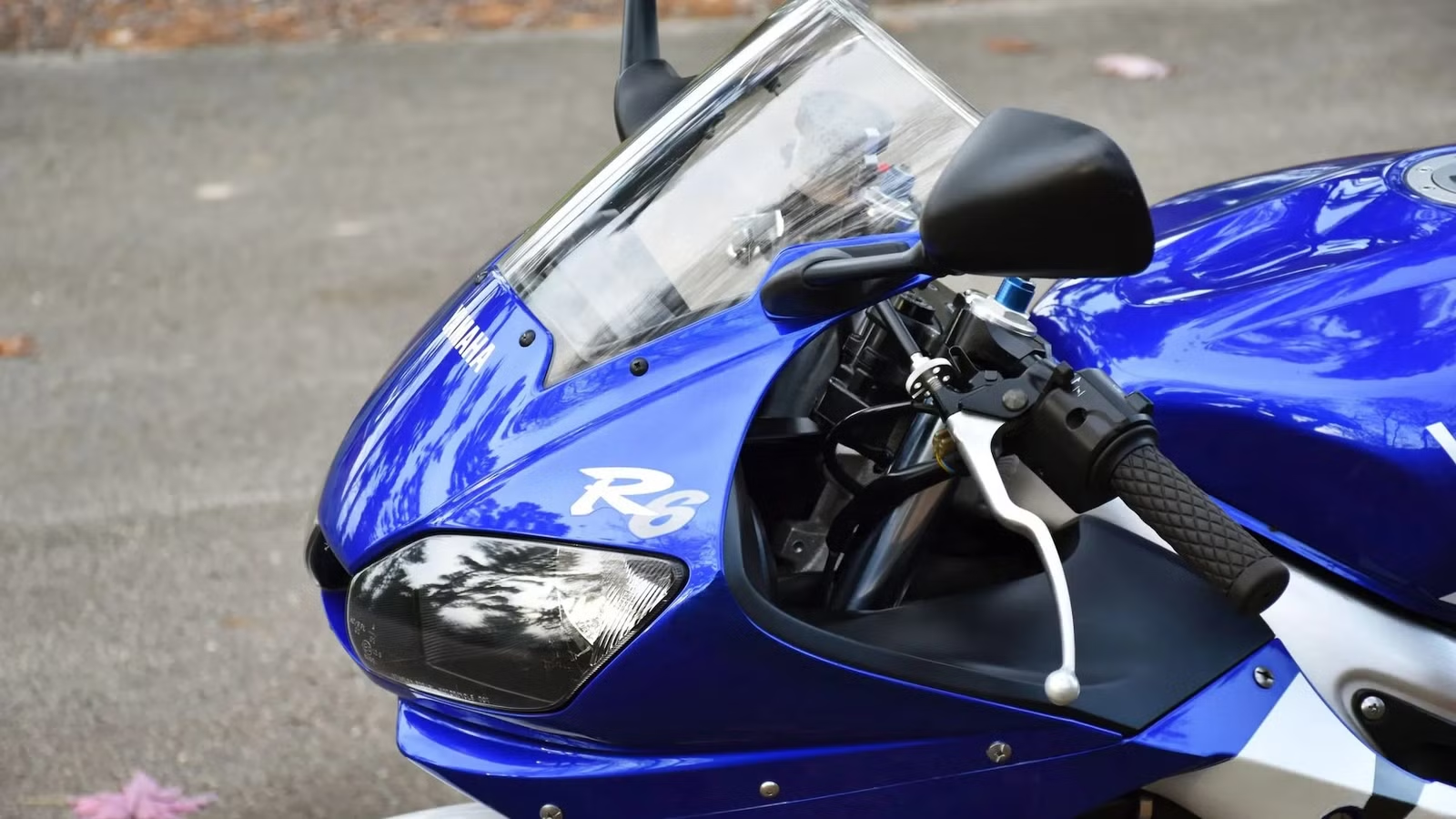
A year after the game-changing R1 debuted, Yamaha followed it up with what was arguably one of the best supersports ever produced in the form of the YZF-R6. Up until this point in time, most 600cc bikes were still more street-oriented machines, but the introduction of the Supersport World Championship in 1997, and strong demand for more racy bikes like the R1, prompted manufacturers to rethink this approach.
Track Performance Suddenly Becomes Marketable

Throughout most of the 90s, top speed had taken center stage in the world of high-performance motorcycles. Purpose-built two-stroke monsters were still used in MotoGP back then, and the Superbike World Championship had quickly become a breeding ground for limited-production homologation specials, largely thanks to fairly strange regulations. While enthusiasts might look back at this homologation bike era with great fondness, none of these motorcycles were particularly accessible.
All that changed towards the end of the decade. Manufacturers now had a global showpiece which served as a shop window for high-performance middleweights. In an effort to keep costs down, this new supersport class was tightly regulated, and as a result, we could all go out and buy more or less what were essentially 600 class race bikes with lights. Unlike the overpowered speed queens and liter-class monsters, supersports were more accessible both in terms of price and performance.
The 1999 Yamaha YZF-R6 Was Essentially A Race Bike With Lights


After the Yamaha R1 had rewritten the rulebook on what a liter-class superbike could and couldn’t do, it necessitated the development of a lighter, more capable middleweight. When it came out, the YZF-R6 was both the most powerful and the lightest supersport available. Everyone could see its potential right away, and just like the R1, the R6 had clearly moved the goalposts in the middleweight class. It was a genuine pocket rocket that cost substantially less than anything else that offered a similar level of track potential, and forced answers out of Kawasaki, Honda, and Suzuki.
The R6 Had An Engine That Could Rev To The Moon
Power: 120 Horsepower
In order to extract this much performance out of such a small-displacement inline-four engine, they were effectively given a race tune straight from the factory, with torque being sacrificed in the name of peak horsepower. As a result, the original R6’s peak power came at a lofty 13,000 RPM, and it would comfortably rev all the way up to 15,500 RPM. In the past, any engine this highly strung would pretty much crumble after every race, but metallurgy had improved to such an extent that the Japanese manufacturers in particular were able to make these engines remarkably reliable.
Unfortunately, by sacrificing almost all the torque, these bikes had pretty much nothing to offer in the midrange. Racy, highly strung engines like this also get pretty hot in traffic, and what was a dream bike for many riders became something of a nightmare to ride through town. That was not what these bikes were designed for, though, and for the brave riders that were willing to use these uncompromising motorcycles as street bikes, the pleasure was worth the pain once you got out on the open road, and into the canyons. While there still are many riders that use supersports like the old R6 daily, most will readily admit that they are better suited to the track.
The R6 Had An Exceptional Lightweight Aluminum Twin-Spar Chassis

The R6 was actually the first Yamaha to make use of a twin-spar aluminum chassis, which helped keep the weight down to just 373 pounds (dry). Over the years, the various generations of R6 got even lighter and more track oriented. The R6 became the default choice for track enthusiasts all over the world largely thanks to how dynamic they were, with a chassis that offered impressive poise and balance. They also proved to be fantastically durable, and relatively affordable to run when compared to other supersports.
The End Of An Era

All four of the Japanese manufacturers developed one impressive supersport after another throughout the 00s, each more racy, and more expensive than the last. But, eventually these bikes became too expensive, and too uncomfortable for the desired target market. While they worked well on track, they no longer worked well at all in the real world. It also cost manufacturers just as much to develop one of these supersports as it would to develop a more powerful liter-class bike, yet they were forced to sell them at a lower price, and make less profit.
The supersport class was also the hardest hit by emissions restrictions. Emissions devices reduced horsepower and added weight, which effectively strangled performance, and development pretty much hit a brick wall. All good things have to come to an end, and such was the case of the old supersport class. While the other Japanese manufacturers soldiered on with heavier, less powerful legacy models, Yamaha made the difficult decision to discontinue the YZF-R6 back in 2020. It marked the end of an era, and the end of the line for what many believe was the best sport bike ever produced, let alone supersport.
Source: Yamaha Global

Related posts
Latest Post



No Comments