
Yamaha Is Splitting the XSR900 Into Two Tiers, and the SP Version Is the One Worth Waiting For
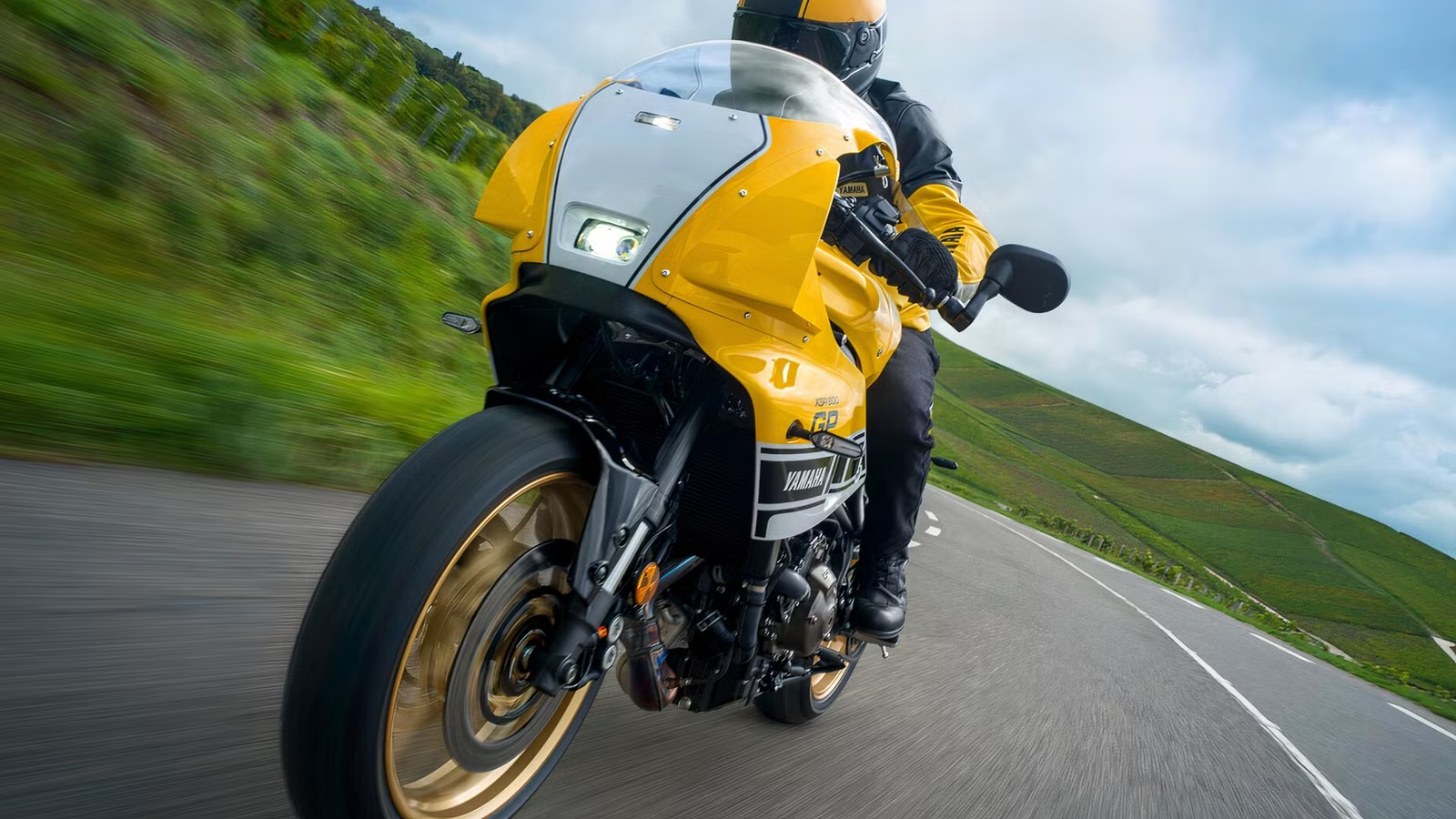
Yamaha’s XSR900 lineup is about to get a lot more interesting. Buried inside the company’s regulatory filings with the National Highway Traffic Safety Administration are two distinct 2027 model year motorcycles: the already-confirmed XSR900 GP, and a name that hasn’t appeared in the XSR family before — the XSR900 SP. Separate VIN prefixes, separate paperwork, and a spec sheet that reads like a wishlist from every CP3 owner who’s ever complained about the stock suspension.

The SP carries the VIN prefix JYARNB2, a sequence that sits entirely apart from the XSR900 GP’s JYARN96, JYARN97, and JYARN98 codes. That distinction matters: Yamaha’s CP3 models have progressively moved through the JYARNA series, and no other current Yamaha uses a JYARNB prefix. That’s not a typo. It’s a new model.
What the VIN Codes Actually Tell Us
NHTSA’s vehicle identification number database — governed by 49 CFR Part 565 — requires manufacturers to file decoding documents that explain what each character in a VIN represents. When Yamaha files a new prefix, it’s registering a distinct vehicle configuration, not a trim level of an existing one.

The XSR900 GP has already appeared in California Air Resources Board documentation for 2027 under codes XSR9GPVCW and XSR9GPVCY. The SP’s JYARNB2 prefix shows up separately in NHTSA filings, with both 49-state standard and CARB-compliant emissions variants accounted for. Two motorcycles, two sets of regulatory paperwork. The possibility of a clerical error exists — Yamaha hasn’t formally commented on either model’s US launch timeline — but the filing structure makes that explanation increasingly difficult to hold onto.
The SP Formula: Öhlins, Brembo Stylema, and a Track Mode the Standard Bike Doesn’t Have

The 889cc CP3 inline-triple carries over in the SP, producing 119 horsepower at 10,000 rpm and 68.6 lb-ft of torque at 7,000 rpm — figures consistent with the current generation’s Euro 5+ tune. The engine isn’t the story here. The chassis upgrades are.
According to filings reported by Crazy Wheels, the SP gets an inverted KYB front fork with Diamond-Like Carbon coating on the inner tubes — a low-friction surface treatment that reduces stiction and sharpens small-bump response. Out back, a fully adjustable Öhlins rear shock with remote preload adjustment replaces the standard unit. Braking hardware steps up to Brembo Stylema radial-mount monobloc calipers paired with a radial master cylinder. These are the same Stylema calipers found on the MT-09 SP and on dedicated track machines well above this price bracket.
The electronics package also expands. Beyond the standard Street, Sport, and Rain modes, the SP adds a customizable Track Mode that lets riders disable rear ABS independently and fine-tune Engine Brake Control and Lift Control settings. The six-axis IMU that underpins the current XSR900’s electronics suite remains, but the SP’s Track Mode gives it a level of configurability the standard bike has never offered.
How Yamaha’s SP Tier Works, and Why It Matters Here

Yamaha has used the SP designation consistently across its lineup to signal one thing: the same engine, a meaningfully better chassis. The MT-09 SP follows this formula precisely — Öhlins rear shock, premium braking, and suspension geometry tuned for a rider who wants the bike to perform on a mountain road as confidently as it does in traffic. The R1M takes the same approach at the top of the supersport range, adding Öhlins Electronic Racing Suspension for riders who want factory-level adjustability without a full race team.
The XSR900 has always been the CP3 platform’s most visually distinctive expression, but it’s also been the one where the chassis investment stopped short. The current bike’s engine, electronics, and general chassis architecture are genuinely capable — ask anyone who’s ridden one hard. The frustration has always been that the suspension and braking hardware didn’t match the engine’s ambitions. An SP variant would close that gap directly, giving the XSR900 the same treatment Yamaha already applies to its naked and sport siblings.
Two XSR900s for 2027, and What Comes Next

If both filings are accurate, the US market could receive the XSR900 GP and XSR900 SP simultaneously for 2027 — a two-tier Sport Heritage lineup that covers the retro-superbike aesthetic of the GP and the performance-naked brief of the SP. European riders have had the GP for longer; the CARB filings suggest North America may get both at once.
Yamaha has not confirmed a launch window, pricing, or whether the two models arrive at dealerships at the same time. An autumn reveal at EICMA would fit the timeline for a 2027 model year motorcycle. Until Yamaha speaks, the regulatory paperwork is the only confirmation on record — but it’s a meaningful one. A distinct VIN prefix, a distinct emissions filing, and a spec sheet that upgrades every component CP3 riders have wanted improved. That’s not a rumor. It’s a motorcycle.
The XSR900 has spent years being the CP3 platform’s most charismatic also-ran — brilliant engine, brilliant electronics, chassis hardware that never quite kept pace. If the SP filing becomes a production motorcycle, that argument goes away. Keep an eye on EICMA.

Related posts


Latest Post


No Comments