
Why The Lexus TX 500h Steals Buyers From The Lincoln Aviator
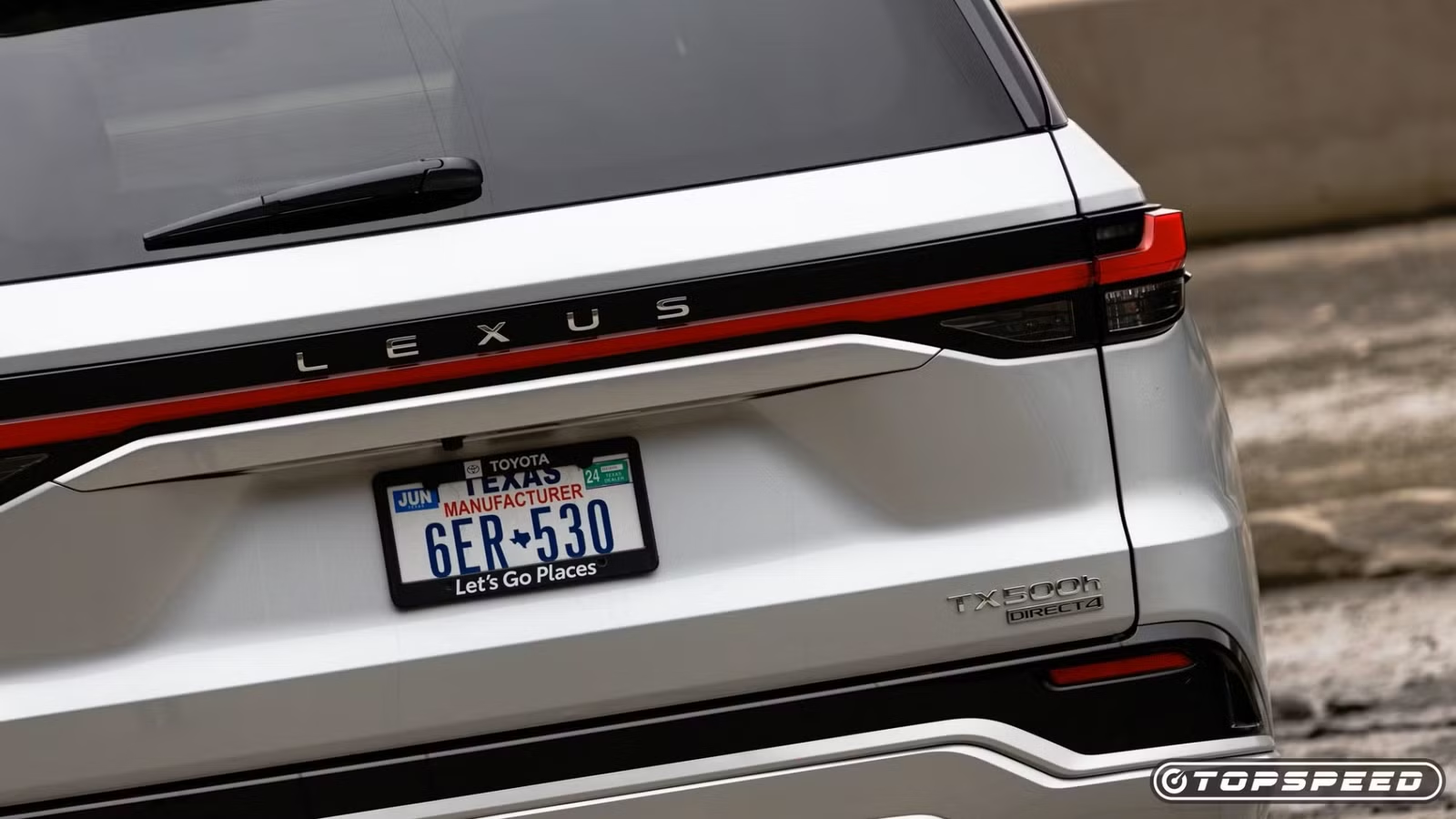
Don’t let this headline fool you. By all intents and purposes, the Lincoln Aviator is a splendid choice for anybody shopping for a luxury three-row midsize SUV. If you really want to get down to brass tacks, the Aviator is just a fancy Explorer at the end of the day. Lincoln, however, does luxury incredibly well. By the end of this article, you’ll find that you’re going to be spending $70,000 either way.

What the Aviator has over the Lexus TX is tenured buyers. The TX has only been around since 2024, and there really haven’t been any other unibody three-row midsize luxury SUV alternatives save for the Acura MDX. Like most arguments we make on TopSpeed, it comes down to math and pricing.
Rethinking Familiarity
The current Aviator came onto the market in 2020, but this also isn’t the first time that we’ve seen this make and model. It originally came out for the 2003 model year and was a body-on-frame SUV. It got a much-needed refresh in 2025 to mimic styling cues with the newer Navigator and Nautilus.

The Lexus TX, on the other hand, came out in 2024 and fills a much, much needed space for the luxury brand. Lexus simply didn’t have a full-length comfortable three-row family SUV to compete. Anyone who bought an Aviator back in 2020 is probably looking to trade in and potentially trade up, and the Lexus TX is looking pretty good right now.
Ownership Costs Should Always Be In The Luxury Conversation

With any car, there are upfront costs and long-term costs. For standard vehicles, the long-term costs typically are the same throughout give or take 100 or 200 or so dollars. Luxury cars are a totally different ball game. With Porsches, for example, you could easily spend $20,000 on a brake replacement alone. Kelley Blue Book does the five-year cost analysis by adding the depreciation to how much it is going to cost to run and maintain over that five-year period. Therefore, the Lincoln Aviator costs $71,745. Unfortunately, it’s also had the highest problem rate since it was redesigned, with Lincoln, as a brand, ranking low in J.D. Power’s 2026 VDS with 217 problems per 100 vehicles; the industry average is 204 PP 100.
The Lincoln Aviator’s Case Point

That’s not to completely make you run away from the Lincoln Aviator. It has an incredibly powerful twin-turbocharged 3.0-liter V6 that makes 400 horsepower and 415 pound-feet of torque. It has a 10-speed automatic transmission and comes in either rear-wheel drive or all-wheel drive. It’s fast too, with a zero to 60 time of 5.3 seconds. It also comes with a bevy of features that the Lexus does not. For example, Blue Cruise 1.5 includes automatic lane change plus a hands-free, on-approach automatic open liftgate. Additionally, rare for the segment, you can actually put regular fuel in this as well, which is a huge savings. Finally, there is air-glide suspension and open-pore woodgrain.
Why The Lexus TX 500h Works

Yes, the Lincoln does have hands-free highway driving, but what it doesn’t offer is any other powertrains besides the V6. You can have the Lexus TX in three different ways. There’s the baseline turbocharged four-cylinder TX 350, the 500h hybrid and the all-powerful and efficient 550h+ that has a plug-in hybrid powertrain. Lexus has even earned the “performance hybrid” label, as the hybrid delivers 366 horsepower while returning 27 miles per gallon combined. This ends up being more horsepower and better fuel economy than the base engine.
The Powertrain Delivers Impressive Power And Efficiency

To continue on with the Lexus TX 500h, it’s powered by a turbocharged 2.4-liter in-line four-cylinder engine that’s then tethered to two electric motors. It has a six-speed automatic transmission and is only all-wheel-drive. It surpasses the Lincoln Aviator in fuel economy, achieving 27 miles per gallon city and 28 miles per gallon highway. The plug-in hybrid 550 variant comes with an even bigger 3.5-liter V6 that has an 18.1 kWh battery pack, delivering 33 miles of electric range. Pretty impressive for something of that size. It also ends up having more horsepower than the Aviator, with 404 horsepower on offer. Where they are similar, however, is in their towing capacity, as they are both able to tow 5,000 pounds.
Two Separate Theories On Luxury

The Lexus TX harbors the same resemblance that you’ll find in the NX and the RX, especially in the dashboard design. You’ll find a similar 14-inch touchscreen with the same Lexus interface. What the other two models don’t have, however, is 33.5 inches of third-row legroom with an additional 20.2 cubic feet behind the third row for storage. US News, on the other hand, has referred to the Aviator’s third row as cramped and only suitable for children. The Lincoln’s trump card is the front seats. These are 30-way power-adjustable perfect position seats that offer a quiet flight isolation lounge-style cabin. Edmund’s argues that the TX has a dull drive and an interior that “doesn’t live up to Lexus standards.”
The Price Gap Goes Far Beyond The Sticker

To be completely transparent, there is a noticeable gap in terms of pricing. The Lexus TX 500h F Sport Performance Premium is somewhere around $72,010 with destination. Meanwhile, the Aviator Reserve is around $66,730 before destination. We are using the mid-tier trims as comparisons because most people will end up going with these trim levels. The only discount you’ll probably be getting on either is between three and five percent under sticker, because nobody really wants to let these go at the dealership.
Lexus Takes The Worry Out Of Owning A Hybrid

Luckily, these are both subsidiaries of mainstream brands (i.e., Ford and Toyota). Therefore, they’re not going to be as expensive to maintain. Maintenance costs, of course, will vary depending on what powertrain you get for the Lexus, but the V6 in the Lincoln is the same as the Ford Explorer ST’s. The real difference is going to be in fuel costs. While the Lincoln does take regular gas, it ends up being more expensive. We won’t bore you with the math, but over a five-year period, assuming around 12,000 miles per year, you’re looking at $4,087 with the Lexus hybrid compared to $4,630 with the Lincoln. In terms of warranties, the Lincoln has a four-year, 50,000-mile basic warranty and a six-year, 70,000-mile powertrain warranty. The Lexus, on the other hand, comes with a six-year, 70,000-mile powertrain warranty, an eight-year, 100,000-mile hybrid component warranty, and a healthy 10-year, 150,000 hybrid battery warranty.
Depreciation And Overall Value

According to CarEdge, the five-year depreciation of the Aviator is around $40,410 versus the Lexus TX losing $29,798. That’s $10,000+ difference with more fuel savings. iSeeCars states that the Lincoln only keeps 48.1 percent of its sticker value while the TX soars at 61.2 percent. The Lexus wins this by a long shot.
Reliability And Verdicts

What you’re actually going to be living with, with these cars, if you don’t end up leasing them, is the overall reliability. Will these family luxury cars last for three to six years? The Lincoln Aviator, for example, has a laundry list of recalls, but the Lexus hybrid has a much more complicated powertrain that requires more premium problems to be resolved. Even so, reliability is ultimately why resale numbers are what they are, and you can probably surmise what that means for the Lexus.
Track Record Match Up

Set aside the Lexus badge for a moment and remember that this is essentially a Toyota hybrid. These powertrains have been around in the U.S. since 1999, and Lexus continues to rank highest overall in J.D. Power’s overall reliability rankings. There is also a lengthy list of failures that the Aviator has gone through, from transmission valve body issues to a windshield air bubble recall. While recalls are handled by the manufacturers themselves, you still have to show up with it and spend more time than you probably would want to at the dealership getting it fixed.
The Final Say

Here’s the thing: the Lincoln Aviator has a more plush interior, especially up front. The front seats are to die for, and it offers a top-of-the-line experience you could maybe only get from a Mercedes otherwise. The Lexus TX takes more of a sporty angle, not only on the interior, but also from the exterior design.
The biggest differences are going to be in long-term value, cost of the pump, and overall reliability. This is where the Lexus takes the crown every time. Therefore, if you don’t necessarily need the third row but love the way the Lincoln looks and performs, then by all means, go for it. However, the Lexus wins the argument from at least a logical standpoint.
Sources: Lexus, Lincoln, Ford, Porsche, KBB, CarEdge, Consumer Reports

Related posts




Latest Post


No Comments