
What documents do I need for car finance?
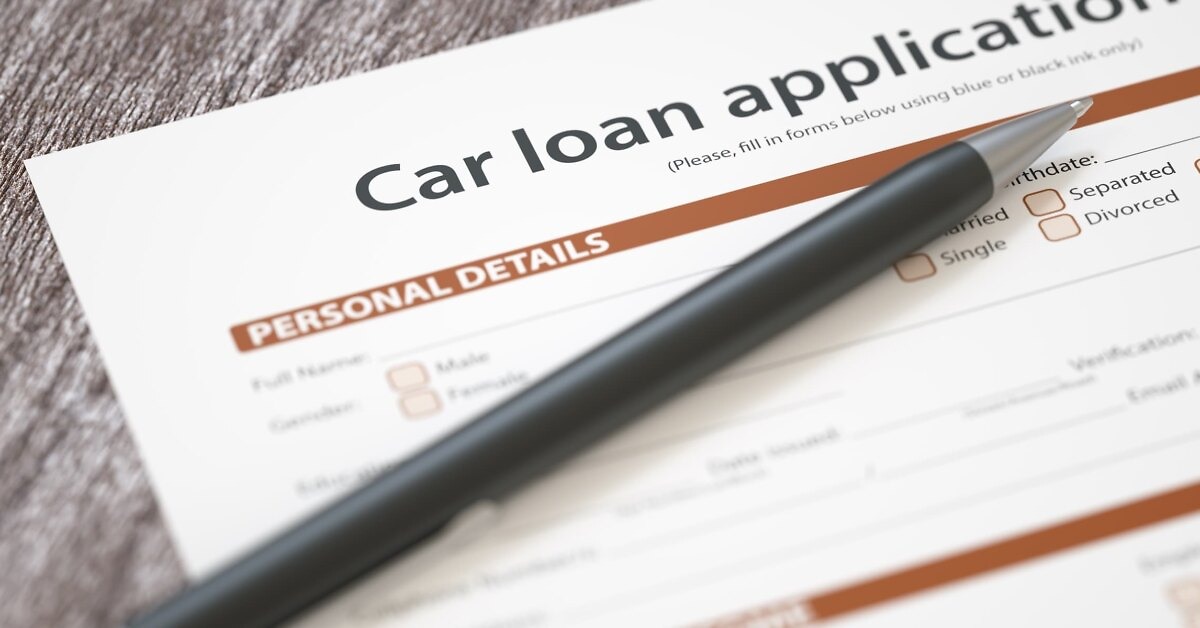
When applying for finance on a new or used car, the finance company needs enough information to properly assess your application. In addition, they will access information held about you by third parties and check any employment references you provide.
What they’re looking for are details about who you are, where you live, where you work, what you earn and which bank account you’ll use for the monthly payments. This is to both verify your identity and to be confident that you can afford the monthly payments to service the loan.

Once the application has been approved, you may need to provide documents to prove some of those details before the finance agreement can be completed. These can include a driving licence or other photo ID, proof of address, bank details and possibly proof of income.
If you can’t provide acceptable documents to back up the information you have provided, your finance application will be declined.
Quick checklist: what you may need
Before you head into the car dealership, it’s worth having the following information and documents ready:
- Driving licence or another form of photo ID
- Proof of address
- Full address history for at least the last three years
- Employment details and recent employment history
- Income details
- Bank sort code and account number
- Proof of income, if requested

You may not be asked for every document on this list. Different finance companies have different requirements, and some checks can be completed electronically. But if the lender asks for proof and you can’t provide it, the application can quickly run into trouble.
The car dealer will also need to provide details of the car you’re trying to buy, along with the specific details of the proposed finance agreement (such as the initial payment, contract length and monthly payment).
Information needed for a car finance application
Before a finance company asks for documents, it needs some basic information to assess your application. This is usually provided on your behalf by the dealership or broker arranging the finance.
You’ll usually be asked for your full name, date of birth, contact details, address history and residential status. You may also be asked whether you own your home, rent, live with family or have another living arrangement.
You’ll also need to provide employment and income information. The lender wants to understand how stable your income is and whether the proposed monthly payments look affordable.
The finance company will then carry out its own checks using the information you’ve provided. This will include checking your credit history, identity, address and employment details.
Address history
Most car finance applications ask for at least three years of address history. If you’ve moved several times, you’ll need to provide the full addresses, including postcodes and the dates you lived there.
If you’re unsure about exact dates, get them as close as you can but don’t guess. Finance companies are looking for a clear, traceable history, and unexplained gaps can slow down the application.
If you’ve recently moved to the UK, or you’ve been living overseas, you may not have three years of UK address history. That doesn’t automatically mean your application will be declined, but the finance company may require more information.
Employment details and income
You’ll need to provide your current employment details, including your employer’s name, address, your job title and your income. Some applications may also ask for previous employment details if you’ve changed jobs recently or have gaps in your work history.
If you’re employed, the finance company may be able to very some of this information without needing documents. If it can’t or there’s any uncertainty, they may ask you for payslips or other proof of income.
If you’re self-employed, you’ll usually need to provide accounts, tax information, bank statements or other documents that show your income. If you run your own limited company, the lender may be able to check some company details, but that won’t necessarily prove your personal income.
Variable income can also need extra explanation. If your earnings depend on overtime, commission, bonuses or seasonal work, the finance company may want to see evidence that the income is regular enough to support the monthly payments.
Bank details
You’ll need to provide the bank account details for the account you plan to use for your monthly finance payments. That usually means the account name, sort code and account number.
The account normally needs to be in your name, or jointly in your name. If you’ve only recently opened the account, the finance company may ask for previous banking details or extra information.
Make sure the account can actually support the direct debit. If you’re applying for finance using an account that does not normally receive your income, the lender may ask questions about how the monthly payments will be made.
What if I don’t have three years’ history?
It’s quite common not to have a full three years of documentation history, especially if you’ve recently moved to the UK, only just started work, changed jobs a few times, lived with family, been studying, or had gaps between jobs.
That does not automatically stop you getting car finance, but you’ll need to be explain any gaps. The finance company is being asked to lend you money over several years, so it’s reasonable for them to want a clear picture of where you’ve been and how you’ll afford the payments.
Young adults applying for car finance for the first time may also have a limited credit history. Depending on the lender and the application, you may be asked to provide a guarantor (usually one of your parents).
Documents you may need to provide
If all the initial information checks out, you’ll usually be provisionally accepted for your car finance agreement – in other words, the finance company agrees in principle, provided your documentation checks out.
The documents requested will depend on the lender and your circumstances. Some people may only need to show a driving licence. Others may be asked for proof of address, proof of income or extra identification. These are usually uploaded or sent to the lender by the dealer or broker arranging the finance.
Proof of identity
A driving licence is the most common identification document used for car finance. It proves your identity and also shows that you’re licensed to drive the car you’re trying to buy.
If you can’t provide a driving licence, the finance company may ask for another form of photo ID, such as a passport. They’ll also probably want to know why you’re applying for finance on a car if you do not hold a driving licence. Lenders are cautious about what’s known as an accommodation deal. This is where one person takes out car finance on behalf of someone else who can’t get finance themselves. Accommodation deals are not allowed, so an application can be declined if the finance company believes the car is not genuinely for the applicant’s own use.
If your licence is with the DVLA, has been lost or is being updated, tell the dealer or broker before the application reaches the document stage. They’ll need to confirm what the finance company will accept instead.
Proof of address
Finance companies may ask for proof that you live at the address given on the application. This is usually a recent utility bill, council tax bill, bank statement or similar document showing your name and address.
Online bills and downloaded statements may be acceptable, but it depends on the lender. The dealer or broker should be able to tell you what the finance company will accept before you waste time sending the wrong document.
Proof of address documents usually need to be recent – usually within the last three months. If you take in an older bill, there’s a good chance it will be rejected.
If you’re using a bank statement as proof of address, you can hide transaction details that are not relevant. The lender only needs to see your name, address, date and account information, not every payment you’ve made.
Proof of income
Depending on your employment details and the strength of your application, you may be asked to provide proof of income. This is more common if you’re self-employed, have recently changed jobs, have variable income or are applying for a deal that looks close to the limit of affordability.
If you’re employed, proof of income may mean recent payslips or bank statements showing your salary being paid in. If you’re self-employed, you may be asked for accounts, tax documents or bank statements covering a longer period.
If you use an accountant, it may be easier for the dealer or broker to confirm exactly what the finance company needs before you start gathering documents.
If most of your income is cash-based, expect more questions. Finance companies are cautious about income that cannot be clearly traced, and they will not simply accept a figure because you say it is correct.
You need to be able to show clear evidence of the income you claim on the application. If you can’t, the finance company may reduce the amount it is willing to lend or decline the application.
Why documents can still cause problems after approval
Many car finance applications are approved in principle before the documents are checked. That does not mean the finance company has fully accepted the deal, but that it will accept if your documents match the information on the application.
If you claim to earn a certain amount, live at a certain address or work for a particular employer, the documents need to confirm that. Problems can arise if a bill is too old, a payslip doesn’t match the income claimed, a bank account isn’t in your name, or your address history has unexplained gaps.
In some cases, the lender will simply ask for another document. In others, it may reassess the application or withdraw the approval. The lender always has the final say, regardless of what you or the dealer may think.
Don’t guess, don’t exaggerate
Make sure any information you provide on a finance application is accurate. Don’t inflate your income, invent employment details, hide address history or guess dates just to make the application look better.
If something is wrong, it may come out when the finance company checks your documents. A minor mismatch can delay the application, while a serious one can get it declined.
Knowingly providing false information on a finance application may be treated as fraud. It can also make it much harder to get finance in future.
If you’re not sure about something, say so. It is much better to explain a gap or unusual situation at the start than to have the finance company find a contradiction later.
Summary
When you apply for car finance, the finance company needs enough information to assess you, the car and the proposed monthly payments. Once the axpplication is provisionally approved, it may ask for documents to prove your identity, address, income or bank details.
The exact documents vary between lenders, but the basics are usually straightforward: photo ID, proof of address, bank details and possibly proof of income.
Have your information ready before you even set foot in the dealership, check that it’s all accurate and make sure you can prove everything you’ve said in your application.
This article was originally published in June 2015, and was comprehensively rewritten in August 2026.

Related posts






Latest Post


No Comments