
Toyota’s G20E Four-Cylinder Could Hit 600 HP With A Turbo Upgrade — And It’s Being Called The Next 2JZ
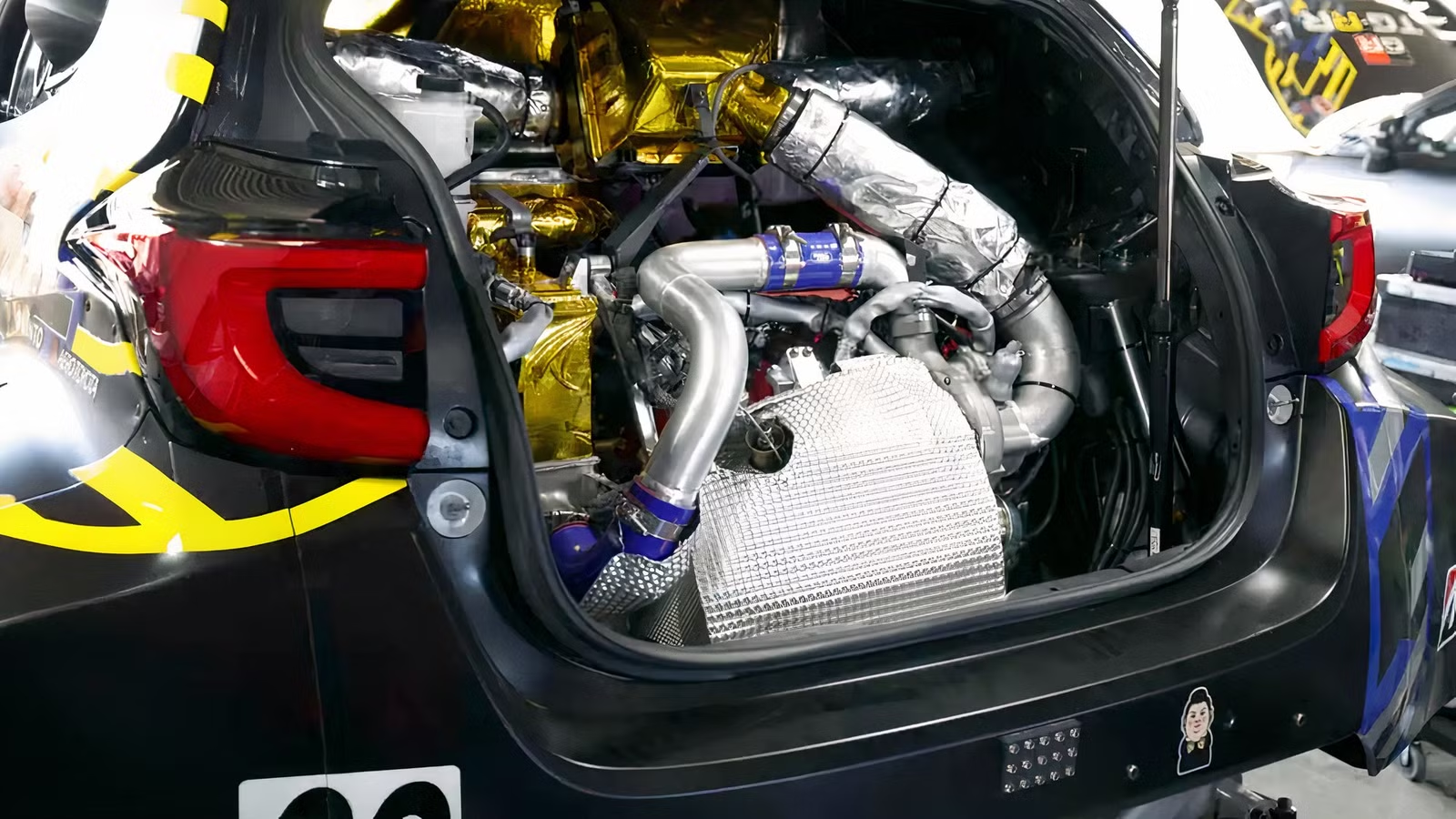
Toyota’s G20E four-cylinder is drawing serious attention from the tuning community. With the right turbo hardware, it’s reportedly capable of reaching 600 horsepower, and the comparisons to the legendary 2JZ started almost immediately.

That’s not a casual comparison. The 2JZ earned its reputation over three decades of builds, records, and street credibility. For the G20E to be mentioned in the same breath says something about what Toyota may have quietly put into this architecture. Here’s what the specs actually show, and why the four-cylinder tuning crowd should be paying close attention right now.
 57 autotech
Toyota’s Most Dangerous Car Hides In Plain Sight And America Can’t Have it
The GR Yaris looks harmless, but it’s one of the wildest homologation specials Toyota has built in decades.
What The G20E Is — And Where Toyota Is Running It

The G20E is a turbocharged four-cylinder currently deployed in Toyota’s GR lineup, most notably as the rear-mounted unit in the dual-engine GR Camry concept revealed in June 2026. That concept paired the G20E in the rear with the GR Corolla’s three-cylinder G16E-GTS up front for a combined 700 horsepower across seven cylinders — a wild engineering exercise that put the G20E’s output potential on full display.
In its current form, the G20E produces outputs in the range appropriate for a modern performance four-cylinder. But the architecture is what matters here: the block is built with the kind of internals that respond to forced induction upgrades. That’s not a theoretical maximum — it’s the figure the engine’s design can support with turbo upgrades, which is exactly the kind of hard number tuners need to start planning a build.
Why 600 HP From A Four-Cylinder Is A Big Deal

Context matters here. The original 2JZ-GTE — the twin-turbocharged inline-six that powered the A80 Supra and became the bedrock of a thousand four-digit builds — left the factory making 276 hp in Japanese-market trim, with a real-world output closer to 320 hp in U.S. spec. The engine’s ceiling wasn’t in what Toyota shipped; it was in what the block could handle. Builders eventually pushed 2JZ builds past 1,000 hp on stock internals, and the engine became synonymous with bulletproof construction and limitless headroom.
The G20E’s 600-hp turbo ceiling is obviously a different proposition — this is a four-cylinder, not an inline-six, and the displacement and configuration are fundamentally different. But the principle is the same: a factory engine that ships at one output level and holds together at multiples of that figure. For a four-cylinder to carry a credible 600-hp ceiling, the bottom end has to be engineered for it from the start. That’s not an accident. It’s a design choice.
The 2JZ Parallel — What Made That Engine Legendary, And What The G20E Shares

The 2JZ’s cultural status wasn’t built on factory specs. It was built on aftermarket support, community knowledge, and the fact that the engine was almost absurdly overbuilt for what Toyota originally asked it to do. The 2JZ-GE, the naturally aspirated sibling, has been documented running past 600 hp on its own — a testament to how much structural headroom Toyota engineered into that family from the beginning.
The G20E appears to follow a similar philosophy. A four-cylinder platform that can sustain 600 hp with turbo upgrades isn’t a stock performance engine with a little extra room — it’s a purpose-built architecture that happens to ship in a street car. The displacement and cylinder count are different, but the engineering logic tracks: build the bottom end stronger than the application requires, leave room for the tuning community to find the ceiling. That’s exactly how the 2JZ became what it became. Whether the G20E earns the same aftermarket ecosystem depends on what builders do with it, but the foundation is there.
What This Means For The Next Generation Of Four-Cylinder Tuning

The four-cylinder performance segment has been pushing hard for years. Mercedes-AMG’s 2.0-liter M139 has already demonstrated that a modern turbocharged four-cylinder can produce over 400 hp in factory trim, and the aftermarket has taken it further. The G20E enters that conversation with a higher confirmed ceiling and Toyota’s GR pedigree behind it.
For JDM purists and tuning shops, the practical implication is significant. A Toyota-sourced four-cylinder with a 600-hp turbo ceiling means a platform that could anchor a new generation of builds — lighter than an inline-six, more compact, and potentially more accessible as GR models filter into the used market. The 2JZ didn’t become a legend overnight; it took years of community development, parts availability, and documented builds to cement that status. The G20E is at the very beginning of that trajectory.
The 2JZ set the bar for what a Toyota performance engine could become in the hands of the tuning community. The G20E won’t replace it — nothing will — but a four-cylinder with a confirmed 600-hp turbo ceiling and GR Racing DNA is exactly the kind of platform that earns a legacy. Gearheads should be watching this one closely.

Related posts



Latest Post


No Comments