
Toyota Is Delaying The 2027 Electric Highlander—And Surging Hybrid Sales Are The Reason
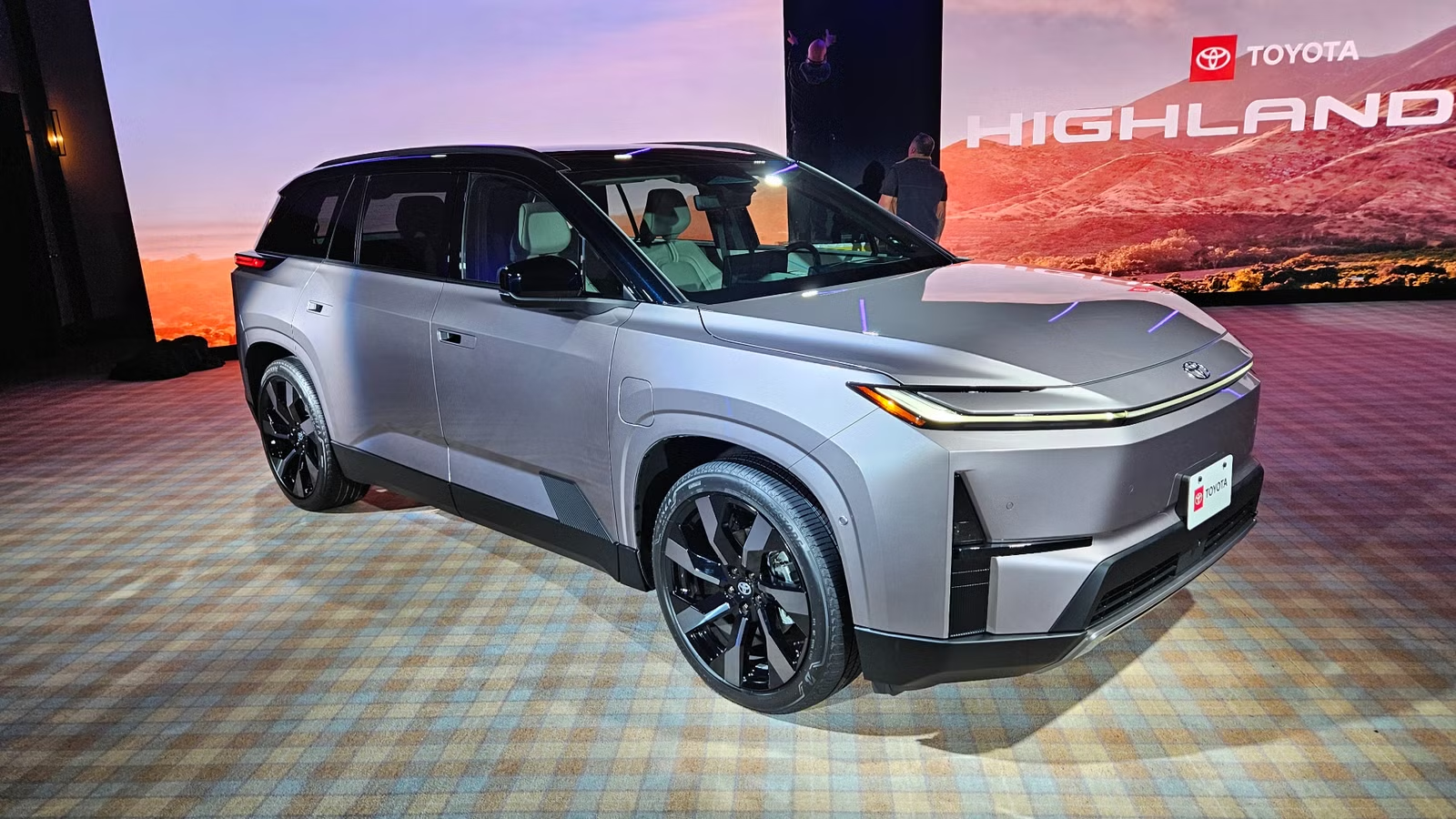
Toyota has officially pushed back the all-electric version of the 2027 Highlander, and the reason isn’t a production snag or a supply-chain headache — it’s that hybrid Highlanders are selling faster than the company anticipated. The delay, confirmed this week, signals a deliberate recalibration: Toyota is betting that three-row SUV buyers aren’t ready to go fully electric, and the sales data is backing that call.

For anyone currently shopping a 2026 or 2027 Highlander, the practical takeaway is straightforward: the hybrid lineup isn’t going anywhere, and the all-electric variant won’t arrive on the original 2027 schedule. Here’s what that means for buyers weighing their options right now.
Why Toyota Pulled Back on the Electric Highlander Timeline
Toyota’s stated rationale centers on demand signals. Hybrid Highlander sales have surged past internal projections, and the automaker concluded that launching a full battery-electric model on the original timeline would cannibalize a powertrain that buyers are actively choosing — and choosing in large numbers. Rather than push an EV into a segment where the hybrid variant is thriving, Toyota opted to extend the hybrid’s runway.

This isn’t a reversal of Toyota’s electrification commitments so much as a sequencing decision. The company has consistently argued that hybrids and plug-in hybrids serve as a practical bridge for buyers who aren’t yet ready to commit to a fully electric vehicle — particularly in the three-row family SUV segment, where range anxiety, charging infrastructure, and towing capacity concerns carry more weight than in smaller commuter vehicles. The Highlander delay reflects that calculus playing out in real time.
Which Highlander Powertrains Are Available Right Now

The current Highlander lineup continues across its full trim range: LE, XLE, Limited, and Platinum, with hybrid variants available across those grades. The Highlander Hybrid pairs a 2.5-liter four-cylinder with two electric motors for a combined output of 243 horsepower, and it’s available in front-wheel drive or all-wheel drive depending on trim. Fuel economy on the hybrid sits around 36 mpg combined in AWD configuration — a meaningful advantage over the standard gas model in everyday driving.
For buyers who want electrification without waiting for the full BEV, the Highlander Hybrid remains a compelling option. It doesn’t require a charging setup at home, offers strong real-world efficiency, and fits the practical demands of a three-row family hauler. The Platinum trim adds a more premium interior package, while the Limited hits a balance of features and price that tends to be the volume seller.

If you were holding out for the electric Highlander in the 2027 model year, the timeline has shifted and a firm new arrival date hasn’t been announced. Buyers in that position face a choice: move forward with a 2026 or 2027 hybrid variant now, or wait for clarity on when the BEV actually arrives — with no guarantee that wait is short.
For most three-row shoppers, the hybrid is the practical call in the near term. Competitors like the Kia Telluride don’t yet offer a hybrid powertrain in the same class, while alternatives such as the Nissan Pathfinder lag on efficiency. If electrification is a priority but a full BEV feels premature, the Highlander Hybrid covers that ground well. Buyers cross-shopping against the RAV4 Prime or CR-V Hybrid should note those are smaller two-row vehicles — the Highlander Hybrid remains one of the few three-row options with meaningful electrification available today.
A Broader Signal About Toyota’s Electrification Strategy

The Highlander delay fits a pattern Toyota has maintained across its lineup: prioritize hybrid and plug-in hybrid technology where buyer demand supports it, and resist rushing full BEV models into segments where the market hasn’t caught up. The company’s hybrid volumes — across the Camry, RAV4, and Highlander — have consistently outpaced industry expectations, giving Toyota both the financial footing and the market justification to hold its position.
For three-row SUV buyers, the message from Toyota is fairly direct: hybrids will remain the dominant powertrain in this segment longer than many analysts projected a few years ago. Whether that’s the right long-term bet remains to be seen, but in the near term, it means the Highlander Hybrid is the version Toyota is investing in — and the one buyers can actually get on a dealer lot.

Related posts


Latest Post


No Comments