
This Ultra-Rare Mopar Made Every Big-Block in Detroit Obsolete Instantly
1966 might as well have been 0 AD for Mopar muscle car fans. It’s the year the second-generation, 426-cubic-inch Hemi engine hit the streets in its passenger car variant. From there, icons like the Charger, Challenger, Dart, Coronet, Road Runner, and Barracuda had an engine capable of propelling them to superstardom. But did you know the street Hemi was actually a slightly muted variant of its original form? As you’ll find, its original form was a far more potent, far less civilized engine. How do we know? Well, Dodge and Plymouth managed to slip a few into a handful of road cars like a 1960s pre-alpha leak.
The Pre-Street Hemi: A Totally Different Animal

If 1966 was the year civilians first got their hands on the Gen-II Hemi, what’s the story of everything before then? Well, Chrysler had been developing ICE powerplants with hemispherical cylinder heads since at least the early 1940s, originally intending them for use in fighter planes. From there, the first Gen-I Hemi engine debuted in 1950 for the 1951 model year, powering a litany of Plymouths, Dodges, and DeSotos, including race cars for drivers like Briggs Cunningham, until 1958, when the company switched to wedge-shaped heads for a few years.
From there, the early 1960s sparked an absolute arms race on drag strips and oval speedways across America. It meant that for the first time in years, the Mopar group needed a novel means of keeping pace in the emerging crucibles of the NHRA and NASCAR, and the only way to do it was to revive the Hemi name. Fundamentally, the Gen-II race Hemi is a bit different from what you could buy in most dealerships.

For starters, Mopar engineers ditched the heavy iron components and cast a pair of massive aluminum cylinder heads. They paired those with an aggressive solid lifter camshaft and a lightweight magnesium cross ram intake manifold to create a high compression monster. We’re talking 12.5:1 compression ratios at a time when most American V8s were sitting around eight or nine. It made the official horsepower rating of 425 seem believable, but as those in the know were well aware, that number was complete bupkis. It was way higher, and not a soul in the world would call Mopar out for it.
Super Stock and Stock Car Racing: The Perfect Crucible

With the Gen-II race Hemi ready to go, Mopar unleashed it onto the track in 1964, and the results, well, they were a bloodbath. In the NASCAR Grand National Series, the 426 Race Hemi was the envy of the grid. The King himself, Richard Petty, took the monstrous engine to the Daytona 500 and absolutely obliterated the field in his Plymouth Belvedere, leading 184 of the 200 laps. He’d be NASCAR’s Cup champion by the end of the year, the first of seven cup titles to his name.
The 426 race Hemi would be a staple of the superspeedway for the next seven years until restrictor plate rules for large displacement engines brought its reign to an end. Yet, over on the drag racing side, factory-backed teams were almost downright incentivized to lie through their teeth about power figures, and Mopar was no exception. That 425 hp figure was actually closer to 550, or even more. By 1965, the NHRA had grown fed up with OEMs misrepresenting power figures in the Stock and Super Stock classes. A new rule was in place stating that if you wanted to run those massive powerplants on the strip, you had to put them in a factory-built, steel-bodied production car that an average civilian could theoretically buy from a local dealership.

Do you see the problem there? Well, Mopar had a solution. The year before the official street Hemi hit dealership showrooms, they decided to execute that homologation mandate in the most unhinged and comically spiteful way imaginable. It was, in a word, glorious.
The A990 Package: Barely Street-Legal, Could Eat Ferraris for Breakfast

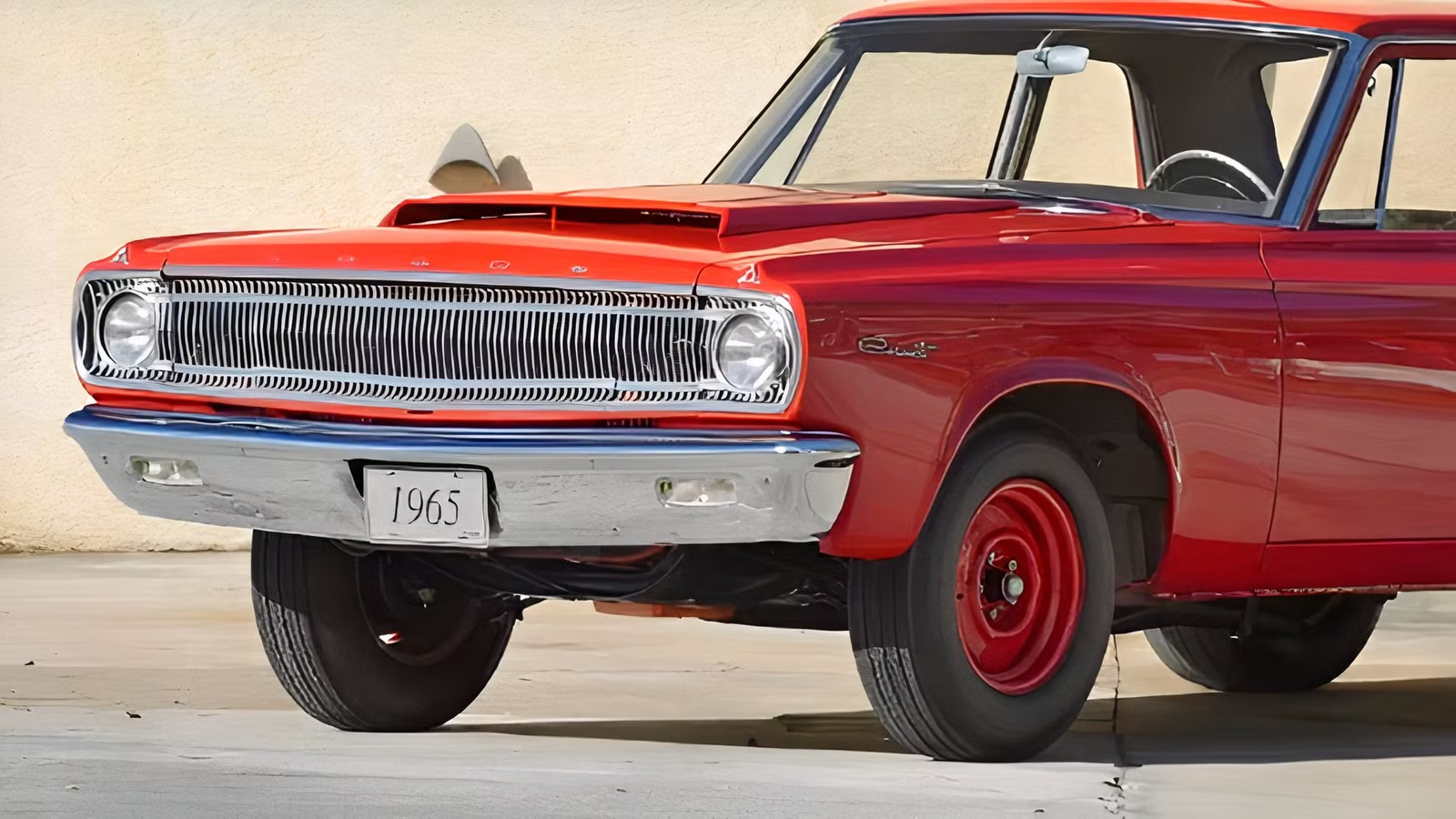
To meet those new NHRA requirements, Chrysler tookits B-Body Dodge Coronet and Plymouth Belvedere and created the A990 performance package. If you looked at one sitting in the pits or parked at a gas station, you would never guess it was a factory-backed drag weapon. They were unassuming, boxy, and almost boring cars lacking flashy racing stripes or massive rear wings.
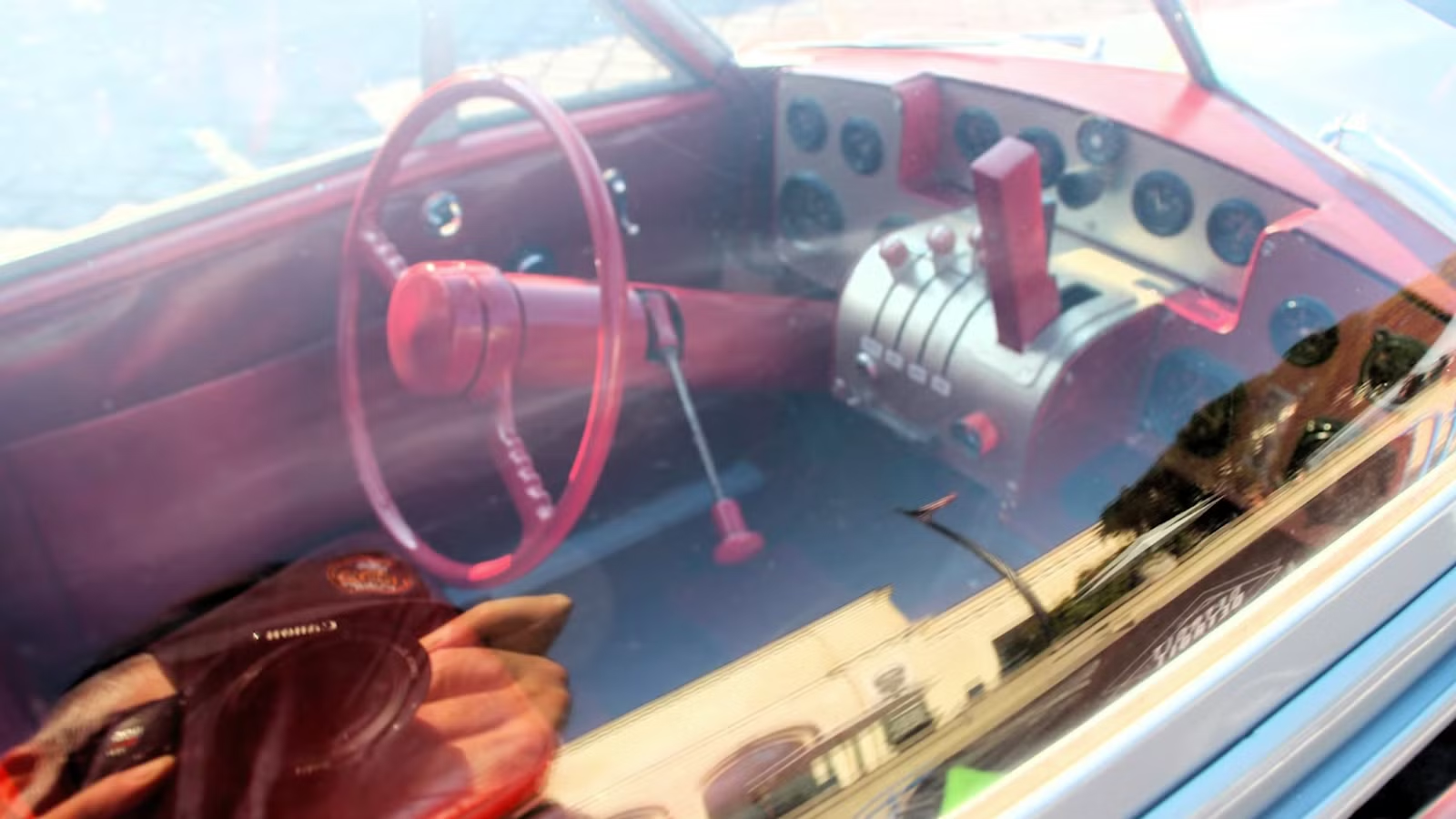
To offset the heft of that mandated steel body, Chrysler knew the chassis needed a ruthless diet to let the Race Hemi eat. Chrysler tossed the rear seats straight into the trash, completely deleted the radios, ripped out the heavy climate control heaters, and eliminated all the sound deadening material.

To shave even more mass, they removed the plush front buckets and bolted in the thinnest, flimsiest lightweight seats they could find, sourced directly from a Dodge A100 utility van. Remarkably, automatic-equipped models even lost their parking pawls. What remained was a deafening, entirely uncomfortable assassin wearing a very thin disguise. Quarter-mile times cracked the low 11s, with a zero-to-60 run in under four seconds.
Super Rare, Super Valuable

In total, only about 200 of these unhinged homologation specials were ever built, split evenly between the Dodge and Plymouth badges, and today, they’re utter collector’s items. Currently, there’s one for sale decked in a full drag kit and decals that’s been in storage since the 1980s, selling for $110,000. Another, out of Auburn, Indiana, sold for $109,200 in 2023.
A street-outfitted A990 with civilian paint and no markings just like the factory,recently had a high bid of $164,000 before the auction ended. Before too long, these will be quarter-million-dollar dream machines, and who can blame collectors for paying that much? The A990 is a caliber of car that can never be reproduced. The world has moved on, yet they remain time capsules of when life was simpler.
Sources: Mecum, Bring a Trailer, Museum of American Speed, Stellantis

Related posts



Latest Post


No Comments