
This 1971 Oldsmobile Held Onto High-Compression Muscle While Chevy and Mopar Detuned
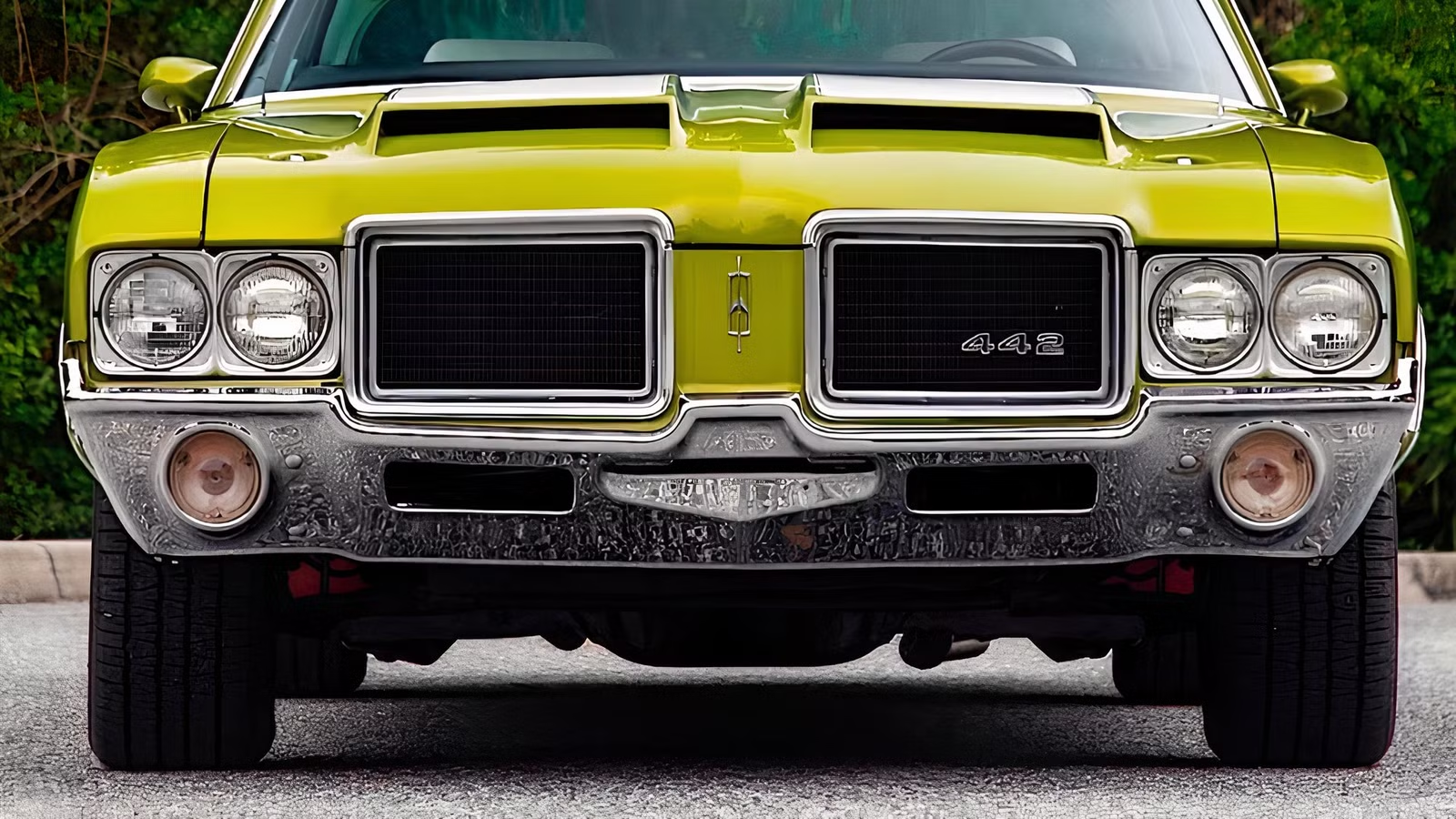
The official narrative behind the end of the muscle car wars was that a lethal combination of a global oil crisis and newly-formed EPA emissions regulations brought the whole thing crashing down by 1973. Then again, if you look at the specifics, there were certainly signs well before then. In some instances, as early as 24 months ahead of time. As far as GM was concerned, some brands started acting like it was over by then, but Oldsmobile certainly wasn’t one of them. If anything, ‘Olds was one of the last brands in America to hold on to the muscle car era before it all came to an end.
The Great De-Tuning: How Chevy and Others Gave Up on Muscle Cars

On the surface, 1971 was a pretty banger year for muscle cars. The Trans-Am 455 HO was screaming across American highways, the Plymouth Road Runner 440 Six-Pack was giving insurance adjusters fits, and the Chevy Chevelle SS 454 was proving a big car didn’t have to be slow. Yet, beneath the surface, the first cracks in a wider industry trend away from traditional muscle cars were already starting to show at General Motors in particular.
Anticipating strict federal emissions standards and the imminent arrival of unleaded gasoline, GM issued a sweeping corporate edict for the 1971 model year. Every single engine across all divisions had to be capable of running on low-lead 91-octane fuel. To comply, compression ratios plummeted across the board, dropping from the dizzying 10.5:1 highs of 1970 down to a neutered 8.5:1. Almost overnight, legendary V8s were suffocated.
Still, those in the know could read the writing on the wall. Under the hood, 1971 GM models were by and large less powerful proportional to their cubic displacement than the year before. For example, the 450-horsepower LS6 options package was cut from the Chevelle SS 454 lineup, leaving the less-powerful LS5 package with 360 horsepower as the only option. Elsewhere, on the Pontiac side of things, the high-compression, high-revving Ram Air IV was quietly shaved while the iconic 455-cubic-inch motor carried on until 1976. These little shifts weren’t enough for GM to stop the aggressive muscle car marketing, at least not yet. Meanwhile, one GM brand in particular barely reacted to trends.

1971 4-4-2 W30: One Last Gasp of Pure Oldsmobile Muscle

The W30 performance options package had been Oldsmobile’s secret weapon in the muscle car game since 1966, but by 1971, the paradigm had changed just a little bit. By then, it had stopped being a point-to-point drag strip weapon. By 1971, it had taken on the role of holding the line while other brands retreated into relative mediocrity. The Cutlass-based 4-4-2 it was applied to was still a beloved gentleman’s sports car, complete with an upscale interior full of faux wood-grain trim, supple seats, thick carpets, and ash trays for the front seats and back seats as customary for the time.
The four-barrel carburetor, four-speed gearbox, and dual exhaust tips were still present. Yet, with the reduced compression and 91-octane fuel requirement, the car was facing an uphill battle to maintain the same mythos it had enjoyed since the mid-1960s. To its credit, as the rest of GM’s muscle cars faded away, the base 4-4-2 455 still made 340 gross hp. The W30 package bumped power up to 350 horses, and enough torque to make a pickup truck blush. Performance was still admirable, quarter-mile sprints in the low 15s and zero-to-60 run somewhere in the eights. Perhaps it wasn’t quite as grand as W30s of old, but consider how much worse the equivalent Chevelle fared under its aggressive performance restrictions.

The second-generation 4-4-2 would carry on for one more year post-1971. After that, the nameplate evolved to stay firmly in the luxury cruiser category while clinging to muscle car credentials it could no longer quite deliver. That trend continued on and off for the next 20 years as Oldsmobile tried and failed to find its identity after the oil crisis put a firm end to the muscle car years. By the time the 1990s rolled around, the 4-4-2 was a meager options package for the front-wheel-drive Cutlass Calais. Oh, how the mighty had fallen by then, but the 1971 4-4-2 W30 was still the real deal. To some minds, it was the last real Oldsmobile before forces entirely out of its control turned the brand into something it was never intended to be. Boring, mundane, and without that signature flair for mid-tier premium luxury, what was left over after the oil crisis was a mere shell of what it used to be. Yet, it only made the ‘71 4-4-2 feel all the more special.
Ultra-Rare, Ultra-Valuable, and Easily Faked

A grand total of 920 4-4-2s were packaged with the W-30 for 1971; that works out to 810 Holiday Coupes and 110 drop-top convertibles. From that group, only 32 drop-tops were four-speed manuals, making them true unicorns. Genuine articles almost never roll across the auction block anymore,but when they do, they can easily sell for big money. That’s why it’s so common to see fake “tribute cars,” or downright forgeries passed off as the real thing out in the wild.
The original documentation is always a foolproof way to learn the truth, as the W-30 nomenclature is right there on the order sheet. The cast-iron cylinder heads always feature an “H” right where the number 1 spark plug is located, and there should always be an “OLDS W-30” stamped in raised text right on top of the intake manifold. Red fiberglass inner fender wells are another indicator of the real deal, and relatively difficult to fake and look authentic. Lastly, if you find a four-speed manual 4-4-2 passing itself off as the genuine article, and it has factory air conditioning, walk away immediately, because it is almost certainly not authentic. Good luck out there, and stay diligent.
Source: Mecum, Hagerty

Related posts




Latest Post


No Comments