
The V-Twin Cruiser Motorcycle That Makes 500-Mile Days Feel Easy
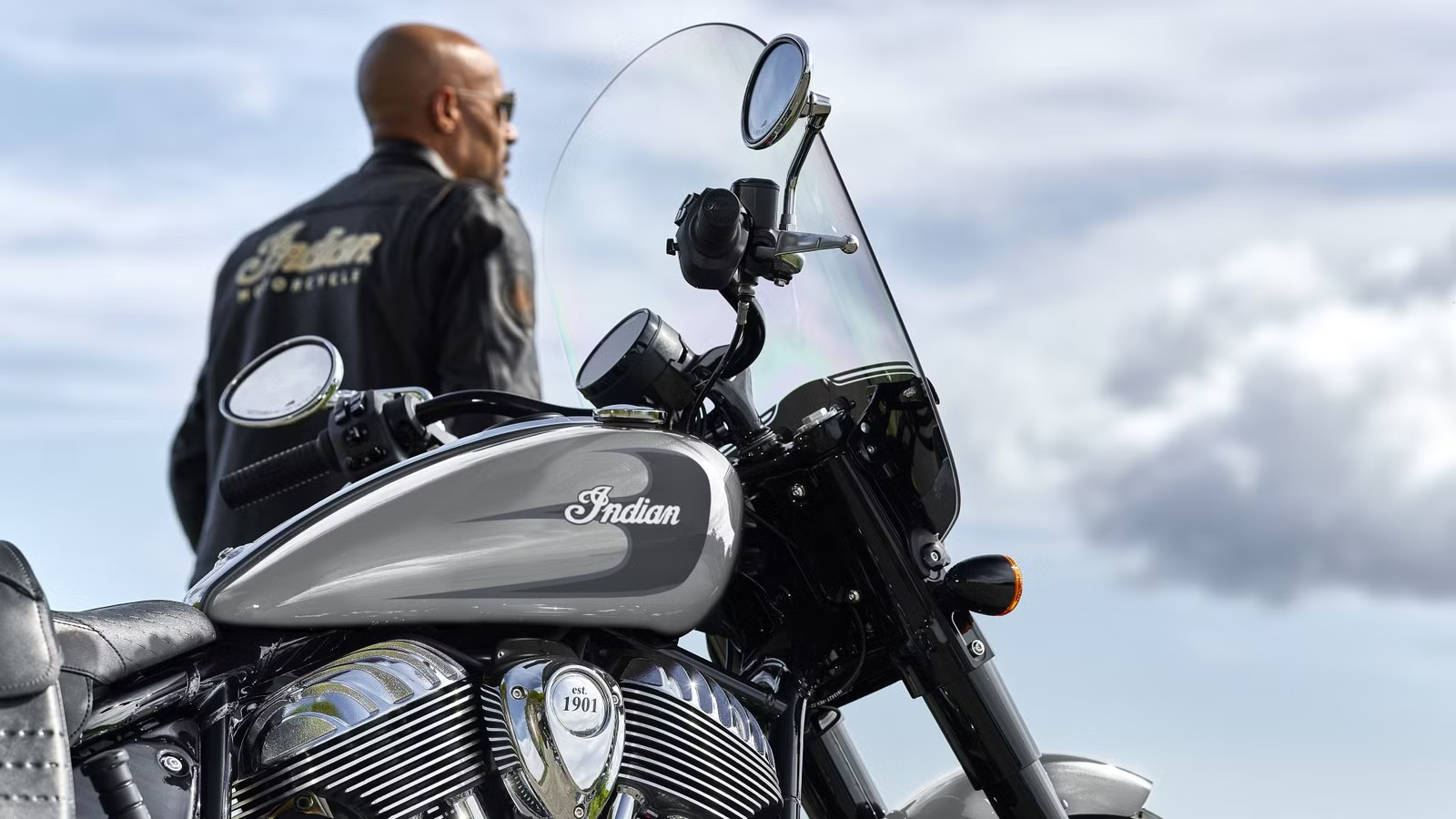
Long-distance touring on a retro-style cruiser is a dream for a lot of motorcyclists. When you get into it, though, it clashes with reality harshly. We definitely want a muscular cruiser with a massive displacement engine, but spending an entire day in the saddle can quickly expose shortcomings. Most light touring cruisers today have outdated chassis dynamics, get buffeted aggressively by crosswinds, and have instrumentation that is at best rudimentary. They might look great with their retro ethos, but raw nostalgia alone cannot keep fatigue on an interstate ride at bay. Unsurprisingly, the solution for these problems comes from an American bikemaker specializing in long-haul machines.
What A Touring-Friendly Cruiser Requires For 500-Mile Days

The retro light touring cruiser segment almost exclusively consists of middleweight cruiser motorcycles. They are as bulletproof as a battle tank, but their five-speed gearboxes and all-analog instrumentation expose their limitations out on the highway. So the first necessity is a large-capacity engine with a six-speed transmission geared for the freeway. Smoothness is a plus, too, since vibrations will make life worse on long tours.

Next, you need serious mechanical mass backed up by digital intelligence. We don’t like weight in motorcycles for obvious reasons, but when you have a lot of weight slung exceptionally low in a narrow frame, it can genuinely be useful out on the highway. There’s no more nervousness about semis going the opposite way or choppy crosswinds. When you pair it with the touring-specific components and modern-day tech, you get a properly well-rounded product for 500-mile days.
Indian Has A Solution

Rather than building another cruiser that chases lightweight or a low entry price, America’s oldest motorcycle brand, Indian, has engineered one of the heaviest and therefore most planted cruisers in its category. Then it layered all the technology it has on top. This model effortlessly bridges old-school muscle with modern interstate navigation, proving that you can have your cake and eat it too.

The Super Chief Limited Redefines Heritage Touring Practicality

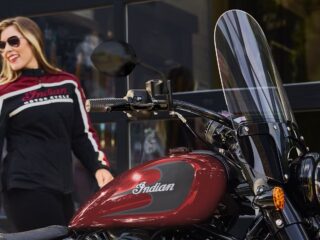
The Indian Super Chief proves that you do not need to choose between vintage attitude and genuine cross-country capability. Powered by the brand’s massive air-cooled Thunderstroke V-twin, its immense curb weight gives it freight-train composure over endless miles of open highway. Yet Indian did not stop with nostalgic iron. Hidden inside a traditional round nacelle is an anachronistic 4-inch TFT touchscreen packing full Ride Command telematics and navigation—delivering everyday touring utility unmatched by any rival in the class. For riders destined to log serious saddle time, this is the V-twin cruiser that makes weekend escapes feel effortless.
A $21,999 Base Price Delivers Standard Long-Haul Equipment

The Indian Super Chief has a base price of nearly $22,000, and that seems a little expensive when you consider that the base price of the leading competitor is lower by nearly $2,000. However, the Super Chief Limited is more capable than its looks suggest. Unlike the Heritage Classic, it offers everything that Indian has in its arsenal as standard. As such, you don’t have to spec it up from the options list if you don’t want to, and it will still be a premium, complete product.
The Thunderstroke 116 Produces Massive Low-RPM Passing Power

Indian’s Thunderstroke 116 V-twin engine is what powers the Super Chief. This is a mature design and has been known to hit 100,000 miles regularly. It displaces 1,890 cc from its 49-degree V-twin, has a compression ratio of 11.0:1, and is a torque monster (120 LB-FT) thanks to its two valves per cylinder and long-stroke design. It might read like an extremely old-school engine, but there are enough electronic controls on it to make sure that it is the equal of any modern American V-twin engine.
A Tubular Steel Cradle Prioritizes Tracking Stability Over Cornering Agility

The Indian’s frame helps it balance comfort and character perfectly. This is a double-downtube cradle frame with a 46 mm telescopic fork at the front and twin rear shocks. That is 5.2 inches of travel at the front and three inches at the rear. Preload adjustment is available at the rear, but three inches of travel is a little too little for a touring machine.

Like the chassis and suspension, the brakes also feel like they’re from a generation gone by. There is a 300 mm single semi-floating disc at the front with a four-piston fixed caliper, and a disc of the same size has a two-piston floating caliper at the rear. It uses 16-inch spoke wheel rims, but they require tubes with their tires, something that makes life difficult out on the open road.
A 64-Inch Wheelbase Guarantees Touring Serenity
The Super Chief is 90 inches long and 42.5 inches wide. As a result, you also have an extremely long 64-inch wheelbase that guarantees stability on the highway, putting comfort first. It also helps that it has an extremely low 26.2-inch seat height, but at the same time, the ground clearance is low at 4.9 inches. The fuel tank can hold four gallons, which would give it decent range if ridden sanely, but it is quite heavy at 739 pounds, a result of using a traditional cradle frame.
Ride Command Features Contrast With Missing Lean-Sensitive Aids

The Super Chief has the capability to quietly become a forever bike; however, some of its luxuries are quite visible, like the circular four-inch TFT display that has its patented Ride Command system. That means you get Bluetooth navigation and connected features that are free for the first year. Other standard features include keyless ignition, a touring seat with pillion accommodation, nine gallons of storage in leather saddlebags, a 12-volt charging socket, and all-LED lighting.

Topping this is a by-wire throttle and three ride modes. Dual-channel ABS is also present, as is an assist-and-slipper clutch in the gearbox. An interesting feature that is not present in the competition is rear cylinder deactivation, which shuts off fuel to the rear cylinder while the Super Chief is idling and in neutral; however, there is no traction control or six-axis IMU.
The Harley-Davidson Heritage Classic Rivals Indian On Heritage And Tech

V-twin cruisers will always be synonymous with American brands, and among those brands, Harley-Davidson is the foremost one. It has its own example of a V-twin cruiser that can take on 500-mile days with ease, and that is the Heritage Classic. This is a special bike, and makes every weekend feel like Independence Day. It has a base price of $19,999, which is extremely attractive, but it needs a few options added to bring it up to the level of the Indian.
A more realistic price for what you see in the images is around $23,000. It has a few things that the Indian doesn’t, like a six-axis IMU and a cross-spoke wheel that allow for tubeless tires. It doesn’t offer a TFT, even as an option, or cylinder deactivation. So it’s six of one and a half dozen of the other. However, it can have the rear shock upgraded to an Öhlins one, and that will be much better for a long day in the saddle.
Source: Indian Motorcycle

Related posts


Latest Post


No Comments