The Toyota Hybrid That Quietly Costs Less To Fuel Than Most Compact Cars
9 minutes reading
Monday, 14 Sep 2026 10:30 0 48 autotech
Buying a smaller car should mean spending less at the gas pump. That is the compromise compact-car buyers have accepted for decades: give up some passenger space, power, and highway comfort in exchange for lower operating costs. However, one midsize sedan has quietly broken that agreement. It offers more than 200 horsepower, enough room for adults in the rear seats, and a spacious trunk while using less gasoline than nearly every conventional compact car sold in 2026. The numbers are difficult to ignore, especially if you drive 15,000 miles or more annually.
Traditional gas-powered compact cars have become remarkably efficient. The 2026 Honda Civic leads the compact class at 36 mpg combined. The Toyota Corolla and Hyundai Elantra follow at up to 35 mpg combined, while the Volkswagen Jetta and Nissan Sentra can reach 34 mpg combined. This sets a high bar of fuel efficiency for any vehicle, including hybrid models, to clear. However, they also establish a relatively firm ceiling. Unless you choose a hybrid, even the most efficient gas-powered compact generally tops out in the mid-30s.
That matters because compact cars are not always as inexpensive as their size suggests. A well-equipped Civic, Corolla, or Elantra can easily approach $30,000. At that point, you may be paying midsize-sedan money without receiving midsize space or midsize comfort.
The Fuel-Cost Gap Becomes Significant At 15,000 Miles Per Year
Side shot of 2026 Toyota Camry interior showing front seatsToyota
A difference of 15 or 16 mpg may not appear dramatic when comparing window stickers. It becomes harder to overlook when translated into gallons. A car returning 35 mpg uses approximately 429 gallons to travel 15,000 miles. A vehicle achieving 51 mpg covers the same distance using roughly 294 gallons of fuel. That is a difference of about 135 gallons every year.
Using current fuel-cost calculations, provided by the EPA, the annual savings can approach $500 compared with an efficient gas-only compact. Drive that vehicle for five years, and the difference can exceed $2,500 if fuel prices and annual mileage remain similar. Higher gas prices or a longer commute make the gap even larger. The most significant aspect of this difference is that those savings come from a car that is not a compact at all.
The 2026 Toyota Camry LE Changes The Fuel-Economy Math
Its 51-MPG Rating Beats Nearly Every Gasoline Compact
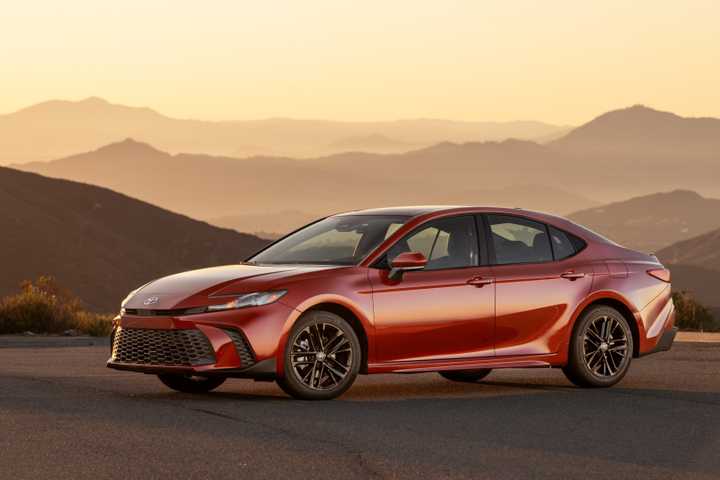
Front 3/4 shot of 2026 Toyota Camry parkedToyota
The 2026 Toyota Camry LE returns 52 city/49 highway mpg and 51 mpg combined. That gives it a 15-mpg advantage over the most efficient gas-only Civic and a 16-mpg advantage over the Corolla and Elantra.
Toyota made the current Camry exclusively a hybrid, which means you no longer have to shop for a special electrified trim or pay thousands of dollars to upgrade from the standard engine. The hybrid system is the standard powertrain, and the entry-level LE is the most efficient version. While other automakers reserve their most desirable technology for expensive upper trims, Toyota did the opposite. The least expensive Camry, starting at $30,495 before destination and options, is also the one that delivers the lowest fuel bills.
Rear-end shot of a blue 2025 Toyota Camry XLE AWDCraig Cole | TopSpeed
Its city rating is especially useful for commuters. The electric motor can move the car at low speeds, assist the gasoline engine during acceleration, and recover energy through regenerative braking. This allows you to waste much less fuel during stop-and-go traffic.
It Even Undercuts Several Compact Hybrids At The Pump
Profile action shot of 2026 Toyota Camry driving on roadToyota
The comparison becomes more interesting when compact hybrids enter the discussion. The Toyota Corolla Hybrid is rated at 50 mpg combined, while the Honda Civic Hybrid achieves 49 mpg combined. The larger Camry LE narrowly beats both. That does not make the Camry the most efficient non-plug-in car available.
The Toyota Prius can return up to 57 mpg combined, while the Hyundai Elantra Hybrid reaches approximately 54 mpg. The Kia Niro Hybrid is also rated up to 53 mpg combined. Still, the Camry sits among the most economical gasoline-electric vehicles in the country. It does so without forcing you into a compact cabin, an efficiency-focused hatchback, or an underpowered base engine. That combination is what separates it from the usual fuel-economy choices.
Toyota Did Not Sacrifice Midsize Power To Reach 51 MPG
The Fifth-Generation Hybrid System Produces 225 Horsepower
2026 Toyota Camry Rear 3/4Toyota
Efficiency usually brings another compromise: less power. That is not much of an issue with the Camry. Toyota’s hybrid system combines a 2.5-liter Atkinson-cycle four-cylinder engine with two electric motors. FWD models produce 225 horsepower, while AWD versions have a third electric motor and produce 232 horsepower. The gas-only Civic produces 150 horsepower in its most efficient configuration. The Corolla reaches 169 horsepower. Both are fine for daily driving, but the Camry’s electric assistance creates more confident passing power.
You still should not expect sports-sedan acceleration, which has never been part of the Camry’s personality, except in the TRD models that came with a V6 engine. The continuously variable transmission can also make the engine sound strained when you press the accelerator hard. Even so, the Camry has enough power to merge, pass, and carry passengers without feeling as if its fuel economy were achieved at the expense of the expected driving experience.
AWD Barely Changes The LE’s Efficiency
Front 3/4 shot of 2026 Toyota Camry Hybrid lineup parkedToyota
Adding AWD usually introduces a noticeable fuel-economy penalty. Toyota limits that loss by using a separate electric motor to power the rear wheels when additional traction is needed. There is no traditional mechanical connection running from the gasoline engine to the rear axle.
The Camry LE AWD achieves an estimated 50 mpg combined, only one mpg below the FWD model. That makes it an unusually efficient option for drivers who face snow or regularly travel on wet, poorly maintained roads.
2025 Toyota Camry front close-up of the GrilleTopSpeed
Trim selection matters more than drivetrain selection. The SE, Nightshade, XLE, and XSE use larger wheels and return lower efficiency ratings. Most FWD versions achieve approximately 46 mpg combined, while the XSE AWD can drop to around 43 mpg. Those figures are still good for a midsize sedan, but the LE is the trim that quietly costs less to fuel than most compact cars.
Compact-Car Fuel Costs Do Not Require Compact-Car Space
The Camry Provides Adult-Sized Rear Seats And A Usable Trunk
2026 Toyota Camry TrunkToyota
The 2026 Camry’s advantage would not mean much if its interior felt like that of a stretched compact. The cabin provides 99.9 cubic feet of passenger volume, 42.1 inches of front legroom, and 38 inches of rear legroom. Adults can sit in the second row without negotiating for knee space, making the Camry more useful for families, carpools, and ride-share driving.
There is also 15.1 cubic feet of trunk space. Toyota places the lithium-ion hybrid battery beneath the rear seat, preventing it from consuming the cargo area as batteries did in some older hybrids. The 60/40-split rear seat adds flexibility for longer items.
2025 Toyota Camry interior shot showing front seatsTopSpeed
A 13-gallon fuel tank gives the LE the potential to cover roughly 600 miles or more between stops, although weather, speed, traffic, and driving habits will affect the actual range. For long-distance commutes and road trips, fewer gas-station visits may be almost as valuable as the money saved.
The Cheapest Fuel Bill Comes With The Least Flashy Trim
Shot of 2026 Toyota Camry interior showing cabinToyota
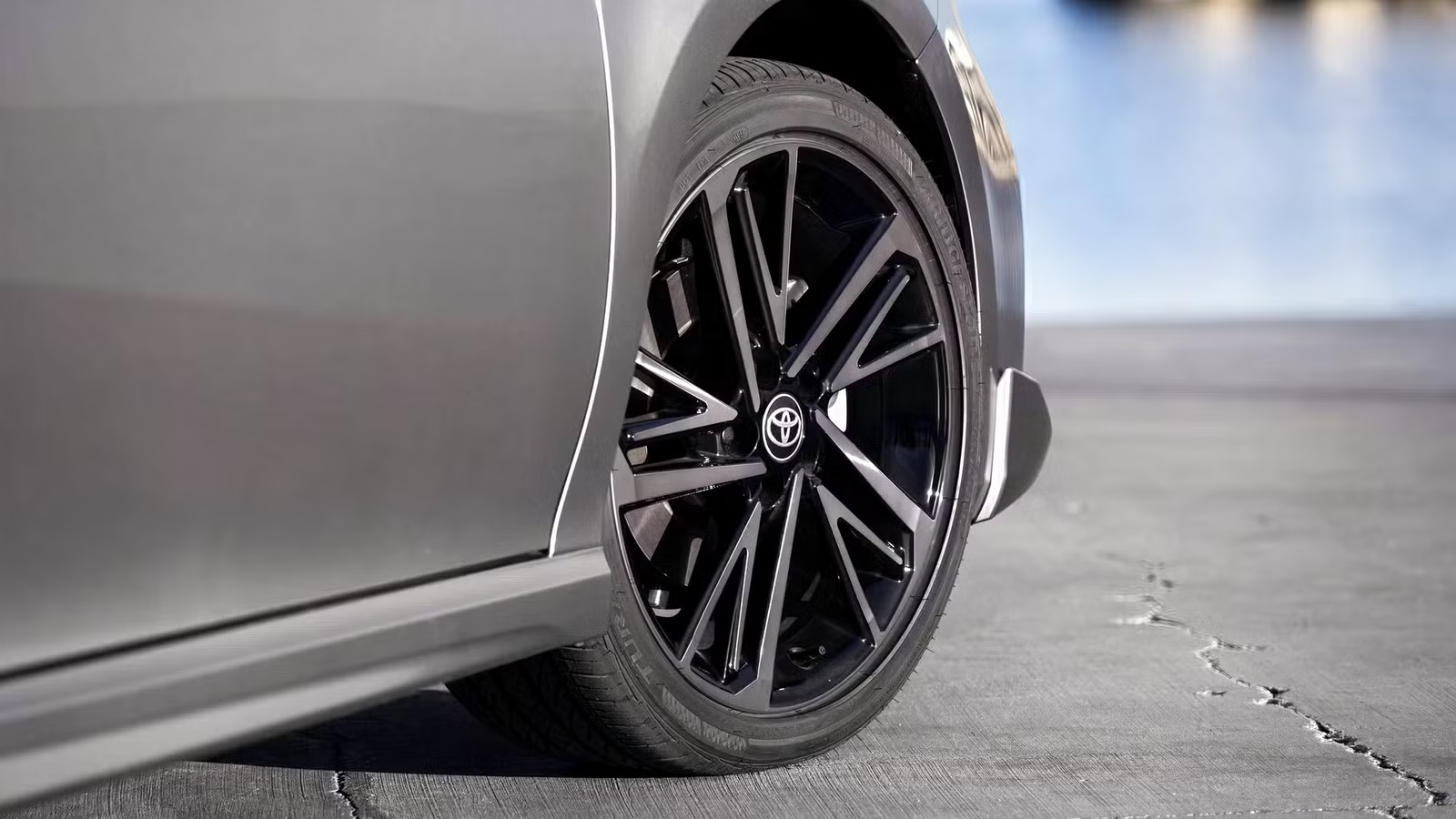
The LE’s efficiency advantage does require a little restraint. Its 16-inch wheels are not as visually dramatic as the 18- and 19-inch designs offered on higher trims. The cabin is comfortable and functional, but it lacks the richer materials and larger displays found in the XLE and XSE.
There are also recall considerations. Certain 2025 and 2026 Camry AWD models were recalled becausean improperly tightened bolt in the load torque converter assembly could loosen, causing a loss of motive power. Some Camrys equipped with the Panoramic View Monitor were also included in a separate camera-software recall. Those campaigns do not affect every Camry, but they make a VIN check essential before taking delivery.
The good news is that Toyota covers the hybrid battery for 10 years/150,000 miles. Other hybrid components receive eight years/100,000 miles of coverage, providing long-term owners with protection against some of the system’s most expensive potential failures.
The Camry LE Is The Version That Makes Financial Sense
Commuters And High-Mileage Drivers Gain The Most
Front 3/4 action shot of 2026 Toyota Camry driving on roadToyota
The Camry LE is best suited to buyers who prioritize efficiency over oversized wheels, black exterior trim, or a fancy interior. High-mileage commuters, ride-share drivers, small families, retirees, and anyone planning to keep a car for a decade can benefit from its combination of space and low fuel consumption.
The FWD LE is the strongest value. The AWD version makes sense if you genuinely need additional traction, but moving farther up the trim ladder reduces fuel efficiency, thus weakening the financial benefits. You spend more initially and consume more fuel afterward.
The Verdict: Smaller Is No Longer Automatically Cheaper
The 2026 Toyota Camry LE does not beat every compact car in purchase price, and it is not the most efficient hybrid on the market. It occupies a more useful middle ground. You get 225 horsepower, adult-friendly rear seats, a 15.1-cubic-foot trunk, and the road manners of a midsize sedan while burning less fuel than nearly every conventional compact.
That makes the Camry’s quietest accomplishment more significant than its 51-mpg rating suggests. It proves that lowering your fuel bill no longer requires lowering your expectations or shrinking the car parked in your driveway.
Base Trim Engine
2.5-liter Four-Cylinder Hybrid
Base Trim Transmission
CVTi-S CVT
Base Trim Drivetrain
Front-Wheel Drive
Base Trim Horsepower
184 HP @6000 RPM
Base Trim Torque
163 lb.-ft. @ 5200 RPM
Make
Toyota
Model
Camry
Segment
Midsize Sedan
Sources: Toyota, Fueleconomy.gov, NHTSA, Kelley Blue Book












No Comments