
The Touring Bike Built For Riders Who Go Far And Often
Every mile beyond the first hundred tells you something a spec sheet never will. Long-distance riding has a way of exposing every weakness in a motorcycle — what feels effortless on a quick weekend blast can turn into a grind after a full day in the saddle. Wind fatigue accumulates, seats stop being comfortable, and engines that once felt exciting begin to feel strained. Real touring isn’t about short bursts of fun. It’s about consistency, stability, and the ability to keep going without wearing the rider down.

Riders who regularly cover serious distances tend to look beyond the numbers. They care about how a bike feels after hours in the saddle, how planted it stays at highway speeds, and whether it can carry everything they need without drama. The bar has risen considerably, especially as more riders treat motorcycles as legitimate cross-country tools rather than occasional weekend toys.
Modern Touring Bikes Need To Balance Power, Tech, And Endurance
There was a time when touring bikes were defined mostly by size and comfort. Big seats, large fairings, and plenty of chrome were enough to get the job done. That formula doesn’t hold up anymore. Riders expect more performance, more refinement, and more technology — all without sacrificing the ability to ride all day.
The Shift From Weekend Cruisers To Cross-Country Machines


Touring bikes are no longer just for relaxed Sunday rides. More riders are pushing them harder and farther, using them for multi-day trips that span everything from high-speed interstate runs to long stretches of unpredictable road conditions. That shift has forced manufacturers to fundamentally rethink what a touring bike should be.
The modern expectations are straightforward but difficult to execute. A bike needs to feel planted at highway speeds, offer enough power to overtake effortlessly, and still remain comfortable hour after hour. It also needs to integrate technology in a way that enhances the ride instead of complicating it. That balance is what separates a good touring bike from a truly great one.
Range, Stability, And Real-World Usability Define A True Tourer

Range plays a bigger role than most people realize. It’s not just about how far a bike can go on a tank — it’s about how confidently a rider can plan a route without constantly thinking about fuel stops. A proper touring machine should make long distances feel manageable, not stressful.
What Actually Matters During Hundreds Of Miles In A Day

Stability is equally critical. At sustained highway speeds, even small inconsistencies in chassis behavior become noticeable. A bike that feels slightly unsettled at 80 miles per hour can quickly become exhausting. Add crosswinds, uneven pavement, or heavy traffic into the mix, and that instability only compounds.
Real-world usability ties everything together. Storage capacity, wind protection, rider ergonomics, and even small details like heat management all contribute to how a bike performs over long distances. These are the things riders notice after a full day on the road, and they often matter more than peak performance figures.
The Indian Challenger 112 Is Built For Riders Who Go Far And Often

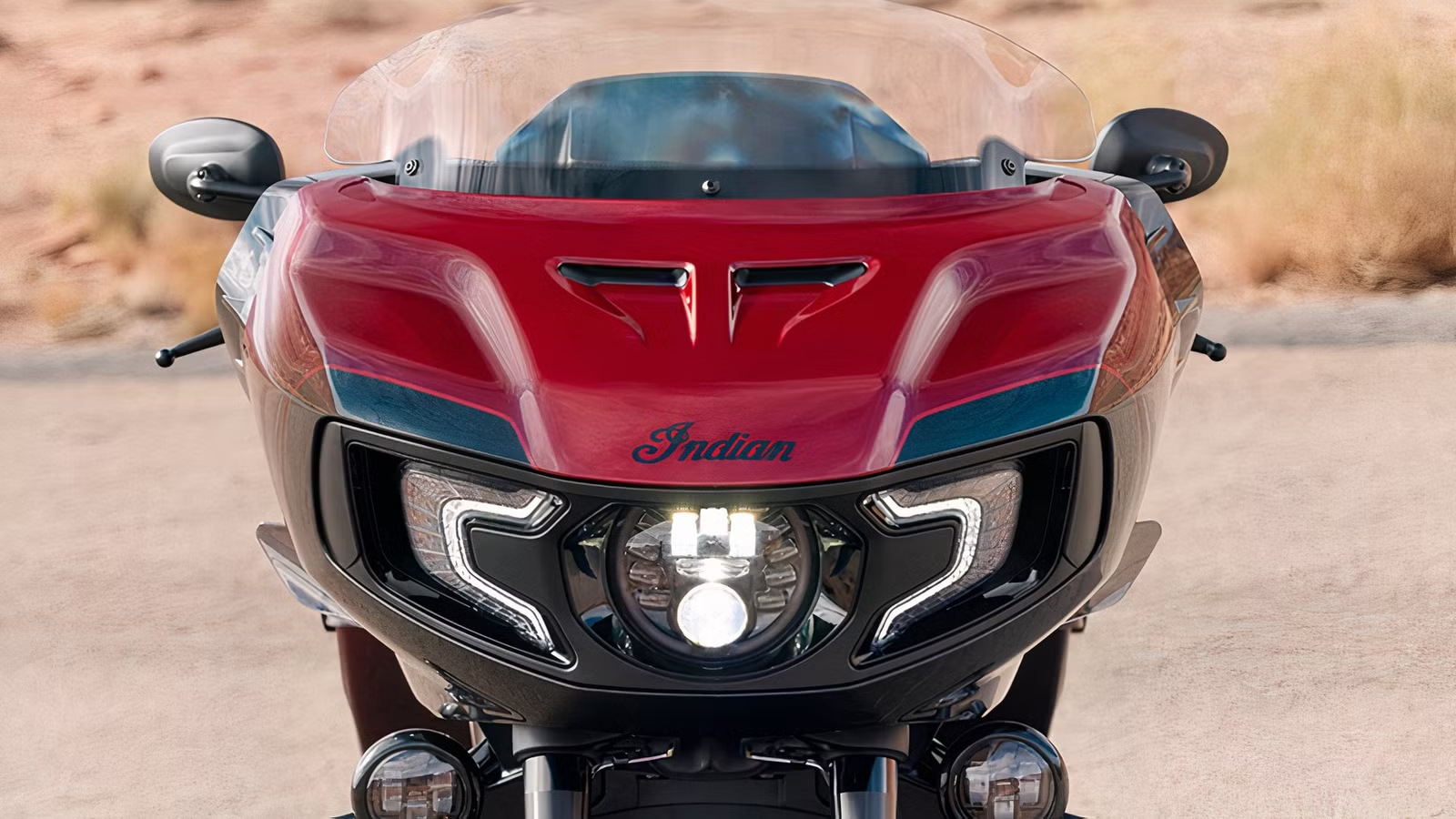
When you start looking at bikes that genuinely meet all those demands, the list gets short in a hurry. The Indian Challenger 112 stands out because it doesn’t just check the usual boxes. It approaches touring from a performance-first mindset while still delivering the comfort and refinement expected in this category.
At the heart of it is the PowerPlus 112 engine, a liquid-cooled V-twin that produces around 126 horsepower and 133 pound-feet of torque. Those numbers aren’t just for bragging rights — they translate into real-world performance that holds up even after hours of riding. Whether it’s maintaining high speeds on the highway or making quick passes, the engine delivers without feeling strained.
PowerPlus 112 Engine: Big Performance That Doesn’t Fade On Long Rides

What makes the PowerPlus 112 particularly well-suited for touring is how it delivers its power. It’s not peaky or demanding. Instead, it provides a strong, consistent pull across the rev range, making it easy to manage over extended periods. The liquid cooling system plays a significant role here as well, keeping temperatures in check and performance consistent even in heavy traffic or hot conditions.
It’s also worth noting that this is one of the few — and arguably the only true — fully liquid-cooled engine in a traditional American-style touring bike in the US market. Most competitors, especially from Harley-Davidson, still rely on air-cooled or oil-cooled setups. That difference matters when you’re riding for hours on end, as it directly affects heat management, rider comfort, and sustained performance.

Paired with a six-speed transmission and a belt final drive, the setup is built for durability and smooth operation. The gearing allows the engine to cruise comfortably at highway speeds while still holding enough reserve power when needed. It’s the kind of drivetrain that encourages long rides rather than limiting them.
|
Engine |
Liquid-cooled, 60-degree V-twin, DOHC, 4 valves per cylinder |
|
Output |
126 horsepower / 133 pound-feet |
|
Transmission |
6-speed manual, wet multi-plate clutch |
|
Final Drive |
Belt drive |
Stability At Speed Without Sacrificing Comfort
The chassis plays an equally important role. The Challenger 112 uses a cast aluminum frame combined with an inverted front fork and a rear mono-shock, giving it a level of rigidity and composure that stands out in the touring segment. This setup helps the bike remain stable even when pushed at higher speeds or loaded with gear.
|
Frame |
Cast aluminum frame |
|
Suspension |
Front: 43mm inverted telescopic fork | Rear: Preload-adjustable single shock |
|
Wheels and Tires |
Front: 19-inch, 130/60 | Rear: 16-inch, 180/60 |
|
Brakes |
Front: Dual 320mm discs, Brembo calipers | Rear: Single 298mm disc |
Despite that performance-oriented foundation, comfort hasn’t been overlooked. The suspension is tuned to absorb road imperfections effectively, reducing fatigue over long distances. Combined with a well-designed fairing and windscreen, the bike delivers strong wind protection, allowing riders to stay fresh even after hours on the road.
It’s Not Just About Distance, It’s About How Effortless It Feels

Touring isn’t just about how far a bike can go. It’s about how easy it makes the journey feel. That’s where refinement and technology come into play. The Challenger 112 features a full suite of rider aids, including ride modes, traction control, and ABS, all designed to enhance confidence without getting in the way. The bike also integrates a modern infotainment system with a large touchscreen display, navigation, and connectivity features. On long trips, having clear navigation and easy access to information can make a meaningful difference.
|
Wet Weight |
830 to 864 pounds (depending on variant/accessories) |
|
Safety |
ABS, traction control, SmartLean (lean-sensitive ABS and TC), electronically linked brakes, blind spot warning, rear collision warning, tailgate warning (*on Elite trim) |
|
Electronic Features |
7-inch RIDE COMMAND touchscreen with navigation, Apple CarPlay, Bluetooth connectivity, selectable ride modes, cruise control, keyless ignition, remote-locking saddlebags, adaptive LED lighting, 400-watt PowerBand audio system (*on Elite trim) |
Weight is always a factor in this segment, and at around 864 pounds wet, the Challenger 112 is undeniably substantial. But the way that weight is managed makes all the difference. The low center of gravity and well-balanced chassis help the bike feel more manageable than the numbers suggest, especially once it’s moving.
The Challenger Is More Relevant Than Traditional Baggers

With an MSRP starting around $31,999 for the Challenger Dark Horse with the 112 package, and around $39,999 for the Challenger Elite, it positions itself firmly at the top of the segment. That price reflects not just its performance and features, but also its exclusivity and premium finish. It’s a statement as much as it is a machine.
Compared to more traditional baggers, the Challenger 112 feels like a genuine step forward. Its combination of performance, technology, and real-world usability makes it more aligned with how people actually ride today. It’s not just about looking the part — it’s about delivering an experience that holds up mile after mile. For riders who genuinely go far and often, that difference matters.
Source: Indian Motorcycle

Related posts



Latest Post



No Comments