The Three-Row SUV That Delivers Near-Luxury Comfort Without The Near-Luxury Price
9 minutes reading
Wednesday, 7 Oct 2026 15:00 0 8 autotech
Three-row SUV shoppers face an increasingly expensive choice. You can pay luxury-brand money for a quiet cabin, comfortable seats, and enough equipment to make a daily commute feel special, or you can save money and accept an interior full of compromises. The trouble is that many premium SUVs do not feel particularly luxurious in their least expensive forms. Their most desirable seats, cameras, audio systems, and driver-assistance features often sit inside costly option packages. One mainstream SUV approaches the equation differently, delivering the comfort and equipment families actually use without requiring a luxury badge or a price approaching $60,000.
The base price of a luxury SUV rarely tells the complete story. A vehicle may enter the market in the low-$50,000 range, but AWD, upgraded upholstery, premium audio, better cameras, and additional comfort packages can quickly add thousands of dollars.
That creates a difficult proposition for buyers who want a comfortable family vehicle but do not necessarily care about the badge on its grille. Paying more can bring stronger performance, more prestigious materials, and a better dealership experience, but it does not automatically produce more room or a longer list of standard equipment.
The gap becomes particularly noticeable in three-row SUVs. A spacious cabin, quiet ride, ventilated seats, surround-view cameras, and a panoramic sunroof can easily push a premium model beyond $60,000. At that point, you are paying luxury money before accounting for taxes, dealer fees, insurance, or financing.
A luxury badge cannot compensate for a cramped third row or a harsh ride. Family-SUV comfort comes from how effectively the suspension isolates passengers, how much wind and tire noise reaches the cabin, and whether adults can sit in the rear without folding themselves into an uncomfortable position.
The featured SUV addresses those fundamentals. Its redesigned platform includes a wheelbase 2.7 inches longer than its predecessor’s, creating additional interior space. It also combines soft suspension tuning with supportive seating and a cabin designed to reduce the stress of long trips. The ride is exceptionally quiet and composed over broken pavement. Those characteristics matter more during school runs and interstate journeys than a premium emblem does, and they set the stage for one of the strongest comfort-per-dollar arguments in the three-row class.
The 2026 Hyundai Palisade Makes The Numbers Work
The SEL Premium Is The Near-Luxury Sweet Spot
Front 3/4 action shot of 2026 Hyundai Palisade driving on roadHyundai
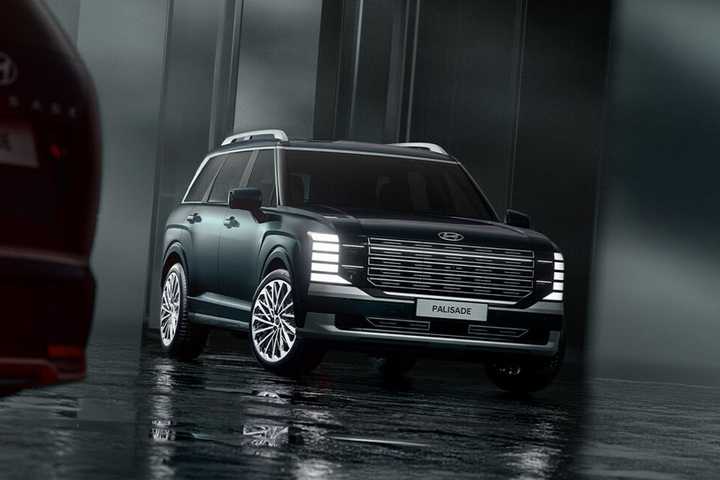
The redesigned 2026 Hyundai Palisade is the right SUV, but the MSRP of $56,780 for the Hybrid Calligraphy shows it is not the version that best supports the value argument. That distinction belongs to the SEL Premium.
At an MSRP of $45,300, the gas-powered SEL Premium adds many of the features that make the Palisade feel special. Equipment includes heated and ventilated front and second-row seats, a heated steering wheel, a surround-view monitor, a blind-spot view monitor, driver-seat memory, ambient lighting, a sunroof, and a Bose audio system.
That equipment also puts its price into perspective. A 2026 Toyota Grand Highlander Limited starts at $49,760. It adds genuine leather and a strong collection of comfort features, but it costs roughly $4,000 more than the Palisade’s original SEL Premium price. A 2026 KiaTelluride SX sits closer to the Hyundai in price and equipment, making it the Palisade’s most direct value rival rather than an SUV that the Hyundai clearly undercuts.
Current pricing should always be confirmed before signing paperwork because destination charges and manufacturer adjustments can change. Even so, the SEL Premium remains the point at whichthe Palisade’s equipment list begins to resemble that of a considerably more expensive vehicle. But a competitive price only matters if the cabin actually delivers. That’s where the Palisade either earns its comparison to near-luxury rivals — or exposes the compromises most value SUVs hide.
The Interior Looks And Feels More Expensive Than Expected
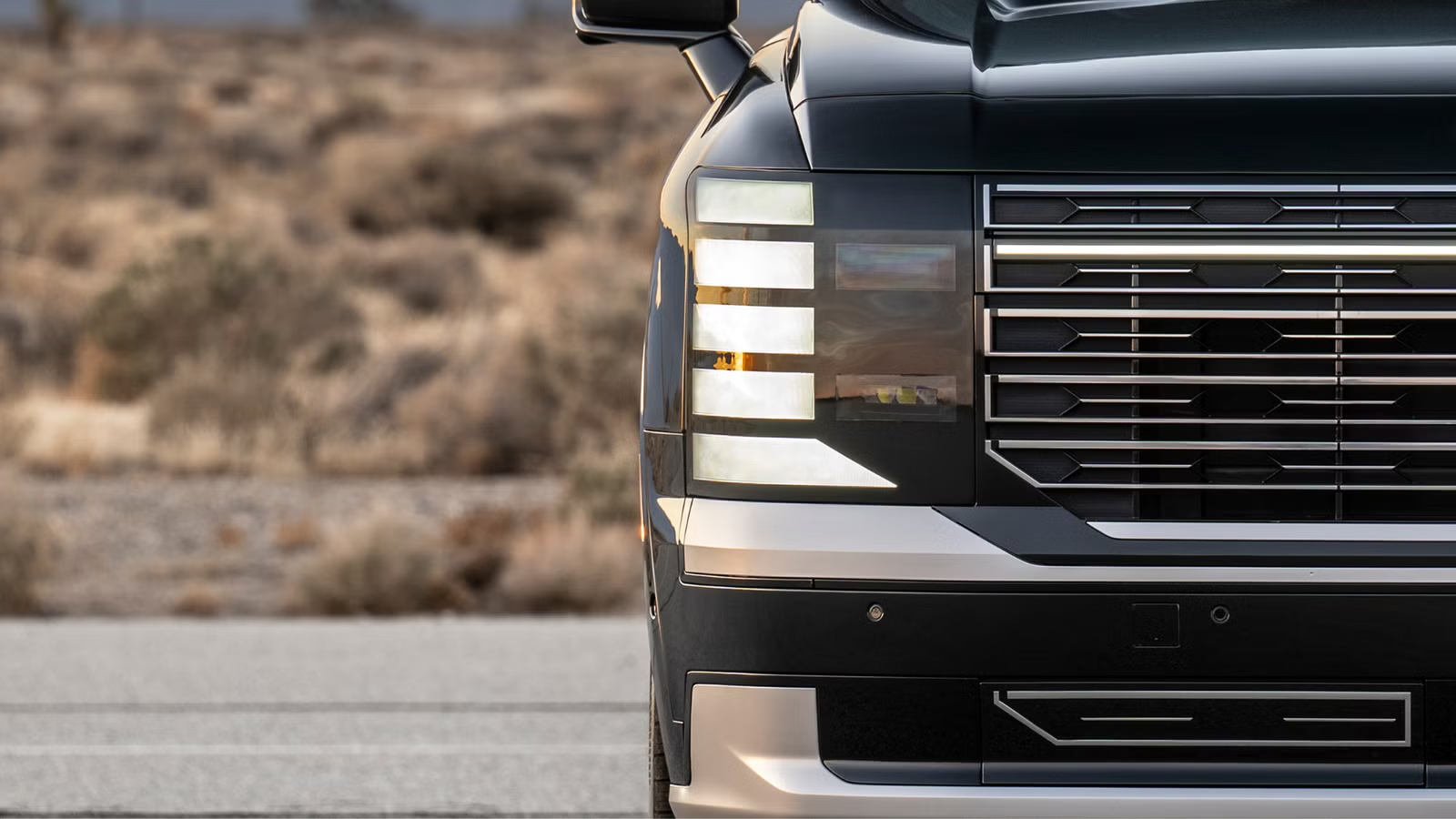
The Palisade does not rely on one oversized touchscreen or an abundance of glossy plastic to create an upscale impression. Its cabin combines two available 12.3-inch displays with physical controls for frequently used functions, reducing the need to dig through menus while driving.
A horizontal dashboard makes the interior feel wide and open, while the available second-row captain’s chairs create a more premium seating arrangement. Buyers who need maximum capacity can select an eight-passenger bench instead. Hyundai also includes storage areas and charging points designed for a cabin that carries an entire family, rather than just a driver and front passenger.
The SEL Premium uses H-Tex upholstery instead of the Calligraphy’s Nappa leather, and some of the highest-end features remain reserved for more expensive trims. However, ventilated second-row seats, ambient lighting, a premium audio system, and comprehensive camera coverage make the less expensive model feel far removed from a basic family hauler.
Real Third-Row Space Makes The Palisade More Than A Two-Row SUV
Some three-row crossovers treat their final row as a place for small children or short trips. The Palisade provides 32.1 inches of third-row legroom and 37.8 inches of third-row headroom. Those measurements will not make the back row limousine-like, but they make it useful for more than occasional emergencies.
Second-row occupants receive a generous 43 inches of legroom, while front passengers get 44.2 inches. That distribution matters because a single spacious row does not help if the remaining passengers are cramped.
The captain’s chairs also make it easier to reach the third row, although choosing them reduces total capacity from eight to seven. Families that regularly carry adults in every row should still test the rear seat personally, but the published dimensions support the Palisade’s reputation for genuine three-row usability.
Cargo Capacity Remains Useful With Every Seat Raised
2026 Hyundai Palisade cargo spaceTopSpeed | Michael Frank
Passenger space often comes at the expense of luggage capacity, but the Palisade offers 19.1 cubic feet of space behind its third row. Folding that row expands capacity to 46.3 cubic feet, while lowering both rear rows opens 86.7 cubic feet.
Those figures give you enough flexibility for groceries, luggage, or bulky home-improvement purchases without turning the Palisade into an oversized body-on-frame SUV. The Kia Telluride offers slightly more cargo space on paper, but the difference is small enough that either vehicle remains highly practical.
More importantly, the Palisade does not require you to fold the third row merely to carry a few suitcases. That is an essential distinction for a vehicle expected to transport both passengers and their belongings.
The Palisade Prioritizes Refinement Over Performance
The V6 Is Smooth But Not Particularly Quick
Front 3/4 action shot of 2026 Hyundai Palisade towing a boatHyundai
The standard Palisade uses a naturally aspirated 3.5-liter V6 producing 287 horsepower and 260 pound-feet of torque. It connects to an eight-speed automatic, with FWD standard and Hyundai’s HTRAC AWD system available.
That powertrain provides a predictable, linear response, but acceleration is not one of the Palisade’s greatest strengths. The redesigned model is larger and heavier than before, and the V6 produces less power than the outgoing 3.8-liter engine. An Acura MDX or turbocharged luxury rival will feel more energetic when merging or passing.
The Hyundai counters with smooth operation and a towing capacity of up to 5,000 pounds when properly equipped. It is sufficient for typical family duties, but drivers who prioritize performance over comfort may find its relaxed personality underwhelming.
The Hybrid Can Justify Its Premium For High-Mileage Drivers
2026 Hyundai Palisade Hybrid front quarterNicole Wakelin/TopSpeed
The available hybrid combines a turbocharged 2.5-liter four-cylinder engine with two electric motors, producing 329 horsepower and 339 pound-feet. In addition to being more powerful than the V6, it can return up to 34 mpg combined in its most efficient FWD configuration. The gas FWD model is rated at approximately 21 mpg combined.
The value-focused Blue SEL Premium Hybrid carries a $2,220 premium over the comparable gas model. On average, the hybrid model costs $1,850 per year in fuel costs while the gas-only FWD model will cost $2,950 in fuel costs. This difference makes it easy to offset the increased cost of the hybrid after only a couple of years on the road.
Actual savings depend on trim, drivetrain, local fuel prices, and driving habits. AWD and higher hybrid trims return lower mileage, while the hybrid’s towing limit drops to 4,000 pounds. It is, therefore, a compelling option for high-mileage drivers, not an automatic answer for every buyer.
Near-Luxury Value Still Comes With Important Tradeoffs
Buyers Must Confirm That Recall Repairs Are Complete
The redesigned Palisade’s launch was not problem-free. An NHTSA recall identified certain 2026 Palisade and Palisade Hybrid Limited and Calligraphy models equipped with power-operated second and third-row seats. The seats could continue moving after contacting a person, creating a risk of entrapment and serious injury.
Hyundai issued a software remedy that altered the seat operation and improved its safeguards. A separate instrument-panel software recall also affected certain 2026 Palisade models and could prevent important information from appearing on the display. Its remedy was likewise available through an over-the-air update or dealership service.
These recalls do not automatically make every Palisade unsafe to buy, and the SEL Premium does not use the same powered rear-seat arrangement involved in the mentioned recall. Nevertheless, you should enter the vehicle’s VIN into NHTSA’s or Hyundai’s recall lookup and obtain documentation showing that every applicable repair has been completed.
The Palisade Is For Comfort Buyers, Not Badge Buyers
Front 3/4 action shot of 2026 Hyundai Palisade driving off-roadHyundai
The Palisade cannot duplicate everything a true luxury SUV provides. Its V6 lacks urgency, its steering prioritizes ease over feedback, and the Hyundai badge will not carry the status of an Acura, Lexus, or Volvo. Buyers who value sharp handling or brand prestige may consider the additional cost worthwhile.
For everyone else, the SEL Premium makes a persuasive case. It combines heated and ventilated seating in two rows, useful third-row dimensions, nearly 87 cubic feet of maximum cargo room, a quiet ride, and an upscale cabin for less than many comparably equipped alternatives.
The 2026 Hyundai Palisade does not deliver near-luxury comfort by pretending to be something it is not. It simply puts the features and refinement families notice most into a trim that remains below $50,000. That may not give you a premium badge, but it makes paying extra for one considerably harder to justify.









No Comments