
The S-10 Baja: The Truck That Predated the ZR2
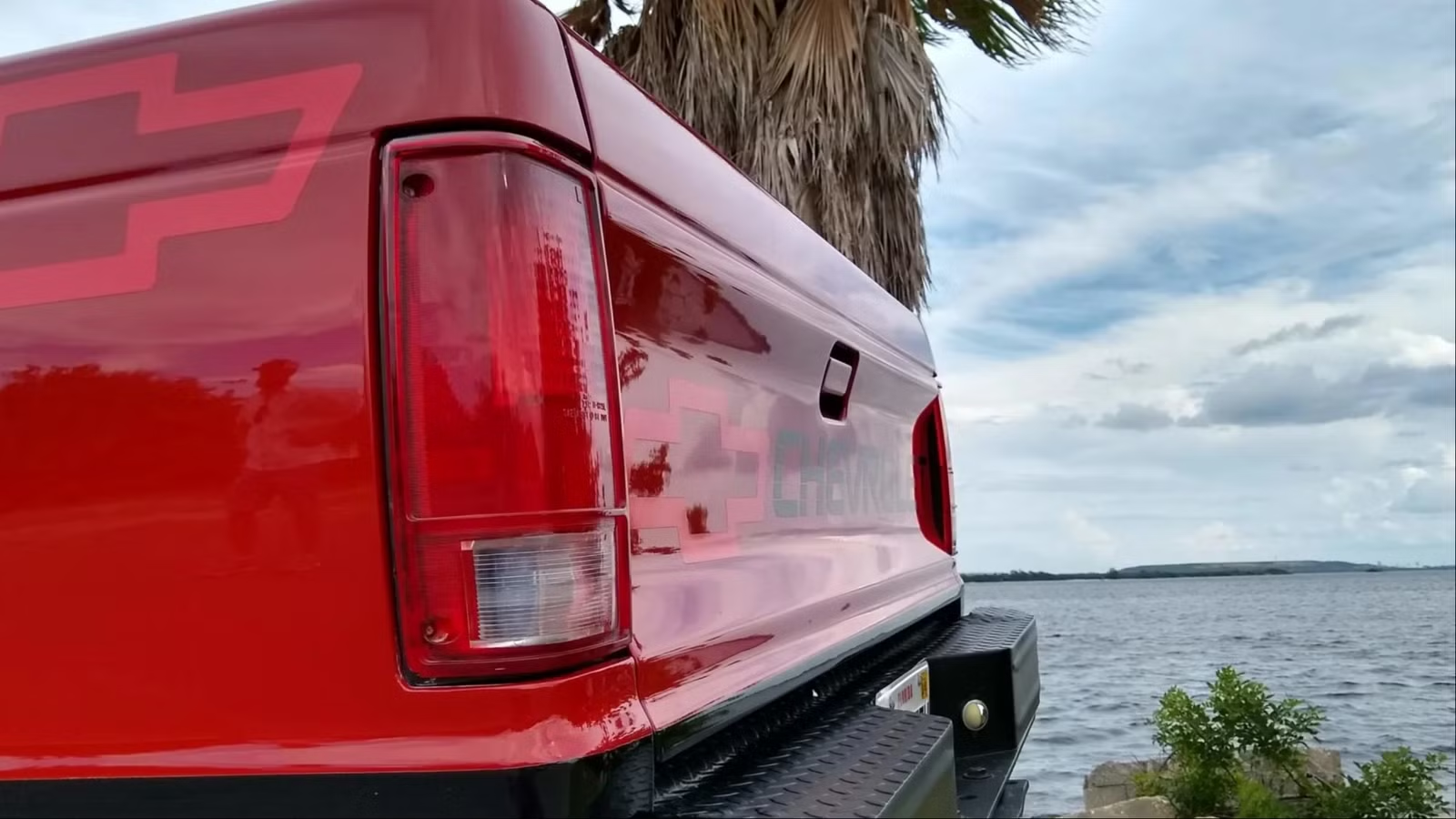
When you look back at cool truck history, it’d be easy to take the first time a ZR2 badge landed on an S-10 and consider it the origin story of the usable pickup turned factory-equipped off-roader. The ZR2 looked the part, but it was more than an expensive way to buy stickers. It also had capability, giving it the factory hardware it needed to play in the mud all weekend and still show up to work on Monday.

The combination stuck. The ZR2 designation has evolved from an options package for the S-10 that delivered a distinct look with surprising off-road chops to a small family of modern off-road Chevy models with genuine trail credibility. Today you can buy ZR2 variants of the Colorado, Silverado 1500, and Silverado HD. Just like the first ZR2, they feature significant and legitimate performance upgrades that do a lot more than look good. It’s a fairly enduring approach where, for once, a manufacturer doesn’t seem to be trying to get away with anything: make a truck people can drive every day, equip it for the trail, and lean hard enough into the aesthetics that nobody mistakes it for the base model. It just wasn’t the first time Chevy had been down this particular road.
Chevrolet Had Tried The Idea Before
In 1988, before anyone had heard of a ZR2, there was the Back Country. It was technically an S-10 appearance package, per the Chevy literature, but there’s actually more to the story than that, because you couldn’t order it on just any S-10. There was no choosing the Back Country on anything other than a 4X4 model, and there were several other performance-related prerequisites, including the 2.8-liter V6 and an off-road chassis package.

Once a buyer had optioned their S-10 with suitably stout underpinnings, they were allowed to add the Back Country option, which included a grille guard, brush hoops, and trail lights, plus some purely cosmetic bits like black-chrome wheel accents and stripes (because of course there were stripes). So far, Chevy had put the look and the capability on the same order sheet. The next year, it would make the whole package hard to ignore.
The S-10 Baja Made Off-roading Feel Like a Lifestyle

Meet the S-10 Baja, introduced for 1989. While the Back Country gave off the energy of a truck that is probably happy off road, the Baja looked like it might be genuinely uncomfortable on pavement. On the front was a tube grille guard and fog lights. In the back, another off-road bumper and a lightbar. The comparatively subtle stripe of the Back Country was now a full graphics package that included the windshield, and the whole thing was available in Midnight Black, Apple Red, or Frost White. For 1991, bucket seats with Baja branding and some additional cosmetic bits were added.
There Was Useful Hardware Under The Graphics

Chevrolet still called it an appearance package, but the Baja equipment group included the off-road hardware alongside the graphics. So let’s nerd out and talk option codes. The Baja included the underbody shield package (ZM5) and an off-road suspension package (ZM6), and explicitly spelled out that no deletions were allowed, just in case you had any ideas about optioning your way to the look without the capability. If you bought a Baja, Chevy was making sure you had more than just the stuff people could see from across the parking lot.
The ZM5 package included skid plates for both the transfer case and the front differential, as well as protection for the fuel tank and steering components. It’s the kind of stuff that’s high on the priority list for someone who actually plans to drive over rough ground and meaningless for someone who wants a truck that looks good and never leaves the pavement.
As for the ZM6 package, you got Bilstein shocks, an upgraded torsion bar, larger bump stops (the kind made for hitting), and front tow hooks. The tires were P235/75R15 and designed for on or off-road use. More than the undercarriage protection, these all gave the truck some additional curb appeal, but it’s still the kind of hardware that you’d pick for legitimate off-road adventuring.
What A Baja Buyer Could Actually Order

We’ve talked a lot about elements of the Baja where Chevy refused to negotiate, but there was still room for buyers to make the truck their own. The regular cab included different bed length options, and an extended cab was also available.
Once that was sorted, buyers could move on to equipment. Under the hood was the 2.8-liter V6, which could be upgraded to a 4.3-liter. There are some misconceptions out there on this, specifically the claim that the 4.3-liter was required for the Baja package, but we did manage to dig the ordering paperwork out of the General Motors archive and confirmed that you could buy it with the 2.8, at least for the 1989 model year. The bigger motor cost an extra $255 at the time. The engine choice also determined the transmission in Chevrolet’s 1989 Baja ordering chart: a five-speed manual with the 2.8, or a four-speed automatic with the 4.3.
With that settled, another powertrain decision was on the table. The Baja didn’t come with a locking rear differential, but you could opt for one, leaving room for owners to debate the merits.
Finally, buyers could also select aluminum wheels, cargo netting, and an in-bed spare tire mount. There was enough flexibility in the ordering process that today it’s worth taking a close look at any Baja you spot to see what’s going on.
The ZR2 Took The Formula Further

Five model years after the Baja arrived came the ZR2 S-10. Perhaps the Baja (and maybe the Back Country) invented the basic formula, but it was the ZR2 that made it stick. It was a compact pickup with an unmistakable off-road aesthetic and the factory equipment to back it up.
But beyond that, the ZR2 elevated the game, with Chevy making choices that required more of an engineering commitment than simply adding parts and colors to a truck they were building anyway. Its 31-inch tires didn’t fit under the existing S-10, so the front end was lifted and reworked, all the way down to the suspension mounting points. Like the Baja, the ZR2 picked up skid plates and beefy Bilstein shocks. While the Baja had taken the platform far without too much re-engineering, the ZR2 put more work on the table and made room for additional capability, both literally and figuratively.
So maybe there’s room to argue about where to draw the line or assign the credit when it comes to the birth of the sporty off-road truck. Perhaps you think all of the above is revisionist history at the expense of the ‘87 Ford Ranger STX High Rider. But the evolution that took place in the Chevy lineup from the Back Country to the ZR2 was real, and it effectively nailed a formula that would carry through until present day. The Baja deserves to be remembered as more than the one with the graphics. It had the hardware to make those graphics mean something.
Sources: Chevrolet, Ford, Car and Driver

Related posts


Latest Post


No Comments