
The Rarest Supercharged Pontiac Is Vanishing Before Anyone Notices
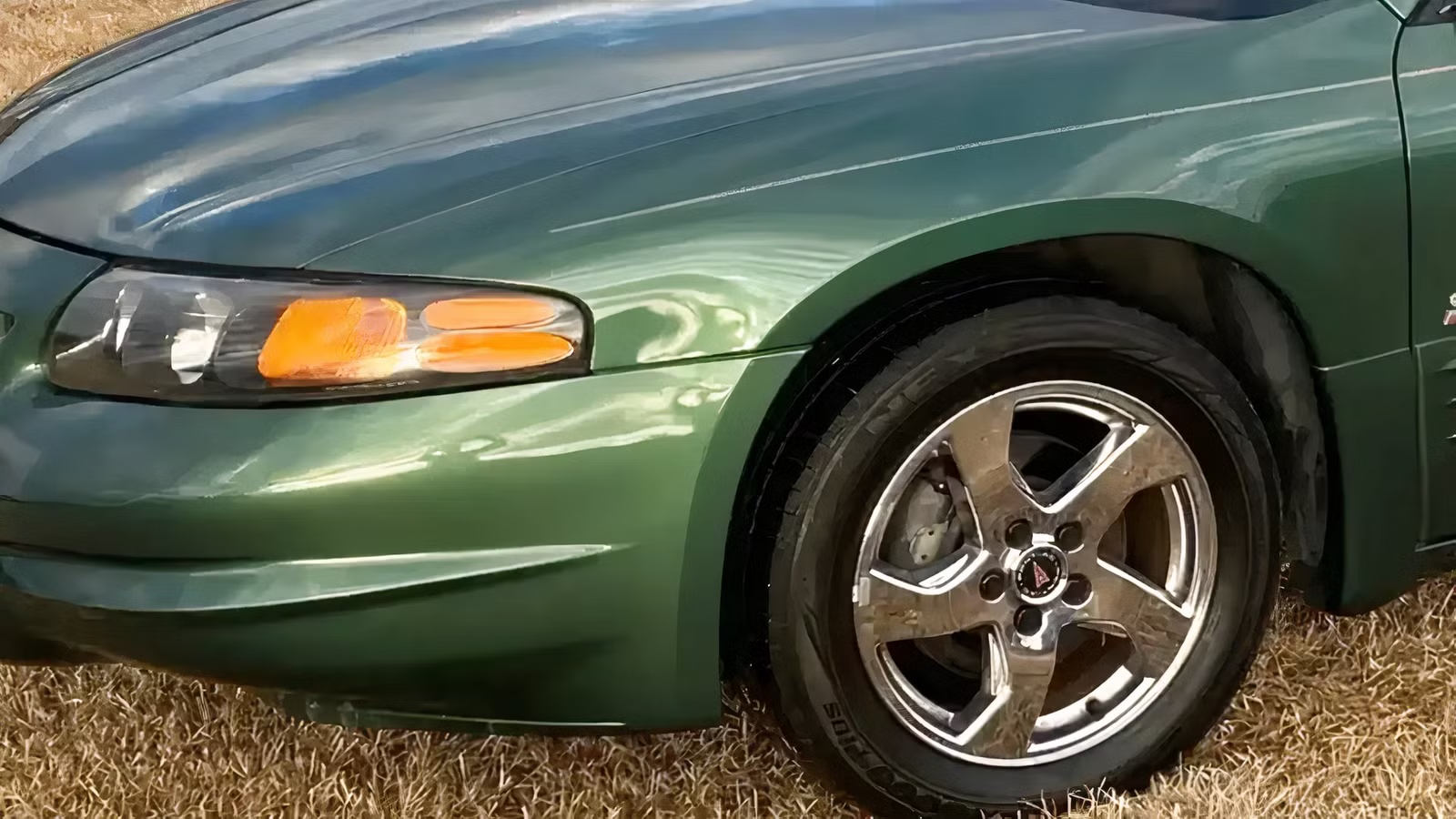
What if I told you that Pontiac built a family sedan weighing over 3,600 pounds and measuring over 200 inches in length could run from 0 to 60 mph in 7.5 seconds? What if I told you this boring-looking car could run the quarter-mile in 15.8 seconds at 89.6 mph?

You’d probably be surprised, or at least expect this car to look a bit like a sports sedan. But this one was almost totally hidden due to its family-sedan styling.
The Formula: A Supercharger Turns An Iconic V6 Into a Sleeper Sports Sedan
The automaker featured here took a venerable, reliable, popular V6 and bolted a supercharger on to it. That led to sports-car numbers from an upscale family hauler. The kind of sleeper car that harked back to the 1960s muscle-car days in attitude, but still coddled its occupants—and was still plenty useful for the daily commute.

It wasn’t just about the supercharger. Pontiac offered upscale features and options, such as a 12-way articulating seat, that were considered appropriate for a sport sedan with a touch of luxury.
Orange instrument lighting and a head-up display also lent an air of futuristic style. Head-up displays are commonplace now, but they were not back then, and they nodded toward fighter pilots.
Even with the sporty tweaks, the car’s relatively sedate styling and interior comfort kept it in the sleeper category. Not only that, but it made it a highway cruiser as opposed to an outright muscle car.
Sleeper-Car Specs In A Sport Sedan

We’re talking about the 2000–2003 Pontiac Bonneville SSEi. It ended up being a true sleeper car, and its prodigious power was totally hidden due to its innocuous shape.
The SSEi trim of the Pontiac Bonneville paired a supercharger with General Motors’ venerable 3800 V6. The addition of the Eaton M90 supercharger in 1992 bolstered the power numbers. It started at 205 hp for 1992 and 1993, then jumped to 225 in 1994 and 1995. Then it reached 240 hp with the Series II 3800 and stayed there from 1996 to 2003. Pontiac moved the Bonneville to GM’s G-platform with the Buick LeSabre and Oldsmobile Aurora for the 2000 model year.
Background On The Pontiac Bonneville SSEi

That move was huge, because the car was de-cladded somewhat. Some body cladding remained, but the SSEi looked more like a sleeper car than its predecessor.
The 3800 also had a reputation for durability, which added to the SSEi’s appeal—especially since durability becomes more important when forced induction is added.
A supercharged family sedan with plenty of power and understated looks? Those who selected the SSEi were getting a sleeper.
The Key Numbers At Play

The performance stats are impressive for cars of the time: 7.5 seconds to 60 mph from a dead start, and a quarter-mile run of 15.8 seconds with an 89.6 mph trap speed. Those numbers are for the 2000 model year. They don’t sound like much today, but for the late 1990s and early 2000s, those were good for a heavy family sedan.
The car’s price was about $32,240. That’s a little under $61K in today’s dollars. If you could afford entry luxury back then, the Bonneville SSEi provided some value compared to the competition.
Previous Bonnevilles had lots of body cladding. Future Bonnevilles went in a different strategic direction as Pontiac focused on the GXP performance trim.
As Always, There’s A Catch: In This Case, It’s A Steering-Shaft Clunk

A steering-shaft clunk in some models might give anyone looking at a Bonneville SSEi on the collector-car market some pause. This issue is unrelated to the 3800, so it has no effect on the engine’s reputation for reliability. You shouldn’t think less of the 3800 just because of a potential issue with the steering, though it is an issue to look out for if you’re interested in buying one of these vehicles.
The SSEi’s positive reputation for reliability centers on the drivetrain. But that’s limited to just the engine, transmission, and related parts. It doesn’t mean the rest of the car is free from worry. The drivetrain is unlikely to be a problem, but other parts of the car could be.
With The GXP, Pontiac Changes The Sporty Bonneville Formula

Pontiac replaced the Bonneville SSEi with the GXP in 2004. This also meant there was a new engine underhood—the naturally aspirated 4.6-liter Northstar V8.
Now the GXP had more traditional V8 power to appeal to performance-oriented enthusiast buyers.
That makes the 2000–2003 model years the final chapter for the modern Pontiac Bonneville with supercharged power and a sleeper reputation. The GXP was too obviously a performance machine.
Additionally, the Northstar was known for head-gasket problems.
That’s something to keep in mind if you’re looking to buy one of these. Both the SSEi and GXP were performance luxury sedans. But only one made it obvious.
The SSEi Is The Bonneville Few Think About

Let’s go back to that image we started with—the large, slightly luxurious family sedan. An unassuming large family car that can scoot to 60 mph in 7.5 seconds, or run the quarter-mile in 15.8 seconds.
That’s not to say the SSEi is the fastest Pontiac ever. What makes the SSEi so memorable isn’t pure speed or pure power; it’s that the car is a sleeper.
Sleeper cars have appeal because they blend into traffic and then can blow someone’s doors off. As for value on the collector-car market, that can be harder to evaluate: some sleeper cars command a bit less money because they don’t look as fast, while others command more money because buyers know what’s under the hood.
For the curious, Kelley Blue Book lists the 2002 Pontiac Bonneville SSEi as having a fair purchase price of $3,700.
Before the V8-powered GXP entered the scene, the SSEi existed as a quietly supercharged sleeper, and that made it appealing to so many.
Sources: Kelley Blue Book, Pontiac, Car Gurus

Related posts


Latest Post


No Comments