
The One Harley-Davidson Most Riders Completely Overlook
American motorcycling is often reduced to a few familiar images: a big V-twin, chrome, a low seat, and an open highway stretching toward the horizon. Harley-Davidson helped create that image, but the modern American rider isn’t necessarily looking for the biggest, flashiest, or most heavily equipped motorcycle in the showroom. There is a difference between a motorcycle that looks American and one that captures what American motorcycling is actually about. Finding that distinction means looking past the obvious icons and asking a simpler question: What does an American motorcycle really need to be?
What American Motorcycling Really Means

The American motorcycle has never been about one particular engine, silhouette, or badge. It is about what the motorcycle lets the rider do. It needs enough muscle for the open road, enough comfort to spend real time in the saddle, and enough mechanical character that riding it still feels like an activity rather than simply getting from one place to another.

That definition has evolved as riders have come to expect modern safety equipment and the ability to handle interstate speeds without breaking a sweat. But an American motorcycle doesn’t necessarily need a massive fairing, integrated luggage, a touchscreen, or every electronic convenience available. Those things can make a motorcycle better at a particular job without necessarily making it more representative of the broader riding culture.
More Than Muscle And Chrome

Accessibility matters, too. The motorcycle that best represents the culture shouldn’t have to be the most expensive one in the showroom. It should be approachable enough for a wide range of riders and adaptable enough that owners can put their own stamp on it. That willingness to customize has been part of American motorcycle culture for generations.


The ideal, then, is a balancing act. It needs character without being trapped in nostalgia, performance without being defined by it, and enough capability for serious road work without becoming a rolling collection of equipment. The challenge is finding a Harley that gets all of that right.
The Harley That Fits The Definition of American Motorcycling

Harley-Davidson has no shortage of motorcycles that could make a credible claim to representing American motorcycling. The Fat Boy has the visual presence and cultural history to qualify, but its modern identity leans toward performance, presence, and attitude. It is an icon, but that isn’t quite the same thing as representing the broader experience.

The Heritage Classic comes even closer. Its upright cruiser proportions, saddlebags, windshield, and old-school styling capture the traditional American formula almost perfectly. The problem is that it deliberately leans into the past. That’s part of its appeal, but it makes the Heritage feel more like a celebration of what American motorcycling was than a statement about where it is today.
A Different Kind Of American Classic

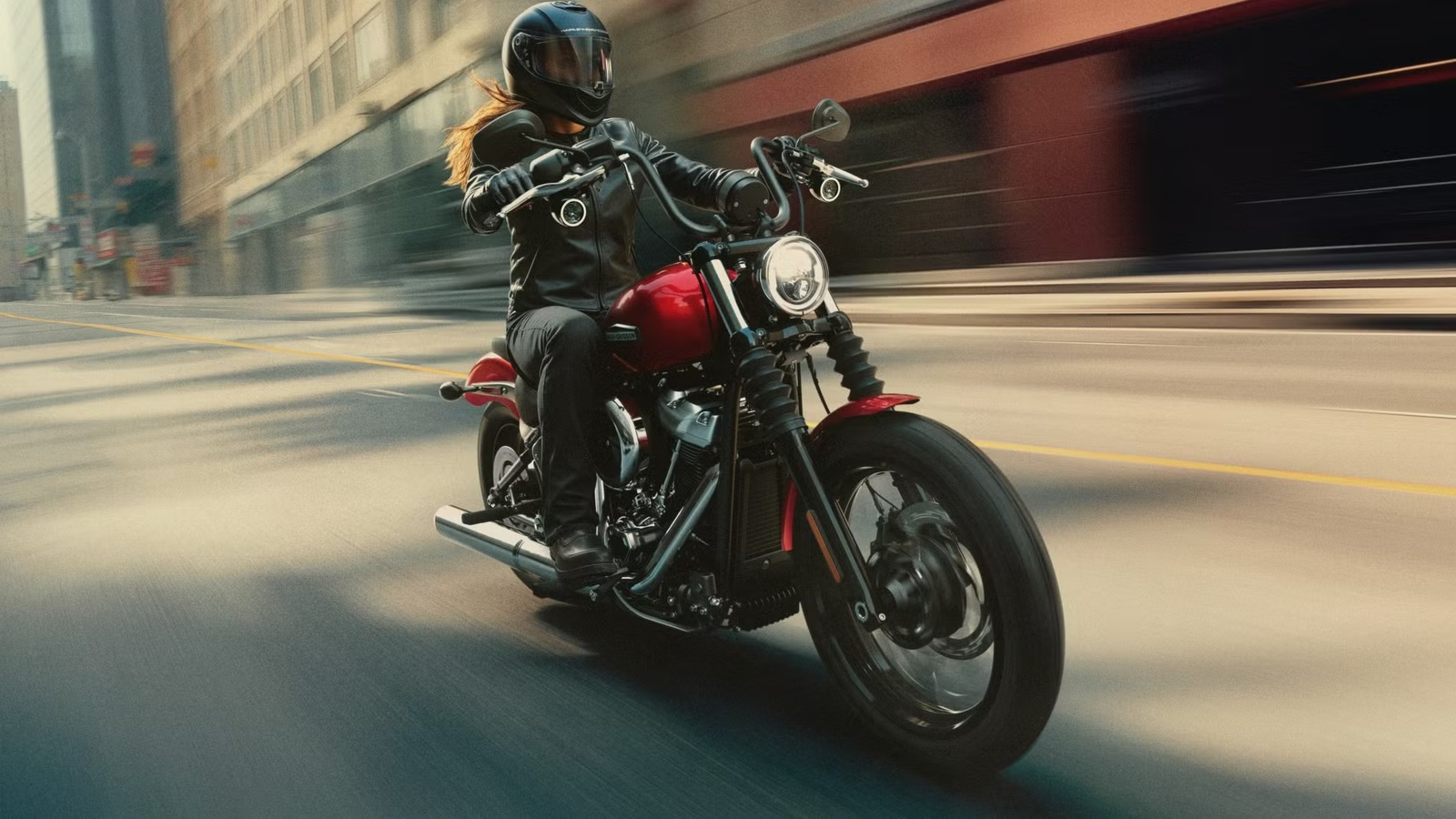
That leaves room for a motorcycle that doesn’t need nostalgia or sheer visual bulk to make its case. The Street Bob strips the formula back without stripping away the character that makes a Harley recognizable. There is no heavy touring bodywork, no attempt to recreate a particular decade, and no need to dress the bike up as something it isn’t.

Instead, it offers the basic ingredients that matter: a big American V-twin, two wheels, modern rider-oriented electronics, and enough open space around the motorcycle for the owner to decide what comes next. That’s why the Street Bob fits the definition better than the obvious choices. It doesn’t simply look like an American motorcycle. It leaves room for the rider to decide what an American motorcycle means to them.
Why The Street Bob Gets The Balance Right

The Street Bob’s stripped-down appearance isn’t the result of Harley-Davidson leaving things out because it couldn’t afford to put them in. It is the point. The second-generation Softail frame keeps the hardtail-inspired look while using modern suspension underneath, giving the bike the visual simplicity of an old-school cruiser without requiring the compromises that came with one.

The low 25.8-inch seat and mid-mount controls create a relaxed riding position that works for a broad range of riders. The mini-ape handlebars add to that upright posture without turning the bike into a caricature of a custom cruiser. It is a straightforward layout, but one that makes sense when the goal is spending time on the road rather than admiring a specification sheet.
Big-Twin Capability, Blank-Canvas Character

Then there’s the Milwaukee-Eight 117. With 120 pound-feet of torque and 98 horsepower, the Street Bob has considerably more capability than its minimalist presentation suggests. It has the grunt to settle into sustained highway speeds and enough roll-on to make passing slower traffic uneventful.

That matters because simplicity only works when the motorcycle underneath it is capable enough to stand on its own. The Street Bob doesn’t need a fairing, luggage, or a long list of touring equipment to justify its place on the road. It can handle the job as delivered, while its open-ended design gives owners plenty of room to take it somewhere else. That might mean cosmetic changes, performance upgrades, or simply leaving it alone.
Does The Street Bob Make Sense To Own?

Start with the price. At a $14,999 starting MSRP for 2026, the Street Bob sits at the accessible end of Harley-Davidson’s Big Twin cruiser range. That matters because a motorcycle can’t credibly represent the approachable side of American motorcycling if getting into one requires moving to the expensive end of the lineup. The Street Bob gives buyers a Milwaukee-Eight 117 without making them pay for the fairings, luggage, infotainment, and other equipment that define Harley’s more specialized machines.

That minimalist approach does come with practical trade-offs. The 3.5-gallon fuel tank isn’t designed for maximum range, and the lack of built-in storage means riders who regularly travel loaded down will need to add their own solutions. Those aren’t defects so much as consequences of the Street Bob’s mission. If you need a factory-equipped touring motorcycle, there are better Harleys for the job.
Room To Make It Yours

For everyone else, the Street Bob’s simplicity creates an advantage. Harley-Davidson offers a broad selection of genuine parts and accessories, along with authorized dealer service and warranty support, so the motorcycle can be adapted rather than replaced when an owner’s needs change. A rider can add the equipment that matters to them without starting with a motorcycle already configured around somebody else’s idea of the perfect ride.

That’s what ultimately makes the Street Bob more than a stripped-down Harley. It is accessible enough to buy, capable enough to use every day, and open-ended enough to become something more personal over time. It delivers the essential American motorcycle in a form that still makes sense to buy, ride, and personalize in 2026.
Source: Harley-Davidson

Related posts
Latest Post


No Comments