
The Naked Bike That Excels At Almost Everything
The middleweight naked bike class has quietly become one of the fiercest battlegrounds. Nearly every major manufacturer claims to have built the one bike that can handle weekday commutes, weekend canyon runs, the occasional road trip, and even a first track day. The promise is simple: Buy one motorcycle and stop wondering whether you picked the wrong tool for the job. The reality, however, is usually a little messier.

Versatility is much harder to engineer than outright performance. Building the fastest bike, the lightest bike, or the most comfortable bike is relatively straightforward. Building one that does almost everything well without becoming forgettable is a different challenge. Yet one Japanese motorcycle has managed to find that balance by avoiding extremes altogether and focusing instead on getting nearly every important detail right.
Why Being Good At Everything Is Harder Than Being Great At One Thing
Motorcycles are built around priorities, and every priority comes with a compromise. Increase horsepower, and you’ll usually add weight, heat, or fuel consumption. Chase razor-sharp handling and long-distance comfort often suffers. Prioritize beginner-friendly manners, and experienced riders may eventually want more excitement. Every engineering decision nudges a motorcycle toward one corner of the spectrum while moving it away from another.

Designing an all-rounder means resisting those temptations. Instead of chasing class-leading numbers or headline-grabbing technology, manufacturers have to focus on how every individual component works together. The result isn’t always the fastest machine on paper, but it often becomes the motorcycle owners actually ride the most because it rarely gives them a reason to leave it in the garage.
The Hidden Cost Of Building A “Jack Of All Trades”

The phrase “jack of all trades” isn’t always a good thing, and it’s easy to see why. Plenty of motorcycles marketed as versatile end up being merely adequate at everything. That’s often because they’re designed around market segments instead of how people actually ride. Real riders don’t separate commuting, spirited riding, errands, and touring into neat little categories. Most motorcycles have to handle all of those jobs during the same ownership experience.
The motorcycles that truly succeed are the ones that never constantly remind you what they’re supposedly built for. They simply adapt to whatever the day demands. That’s a surprisingly difficult quality to achieve because it relies less on spectacular individual features and more on thoughtful engineering that often goes unnoticed until you’ve spent months or years living with the motorcycle.
The Middleweight Class Has Become Motorcycling’s Sweet Spot

That philosophy explains why the middleweight category has exploded in popularity over the past several years. Riders have realized they don’t need 180 horsepower to enjoy a winding back road, nor do they need an ultra-light race replica to carve through traffic. A motorcycle with manageable power, sensible weight, comfortable ergonomics, and modern electronics often delivers a better ownership experience than something far more expensive or specialized.
The 700cc to 900cc segment has become especially competitive because it strikes that balance almost perfectly. These bikes are powerful enough for highway touring, compact enough for city riding, and entertaining enough that experienced riders rarely outgrow them. Instead of chasing bigger numbers every few years, many owners simply keep riding them because they continue delivering exactly what they need.
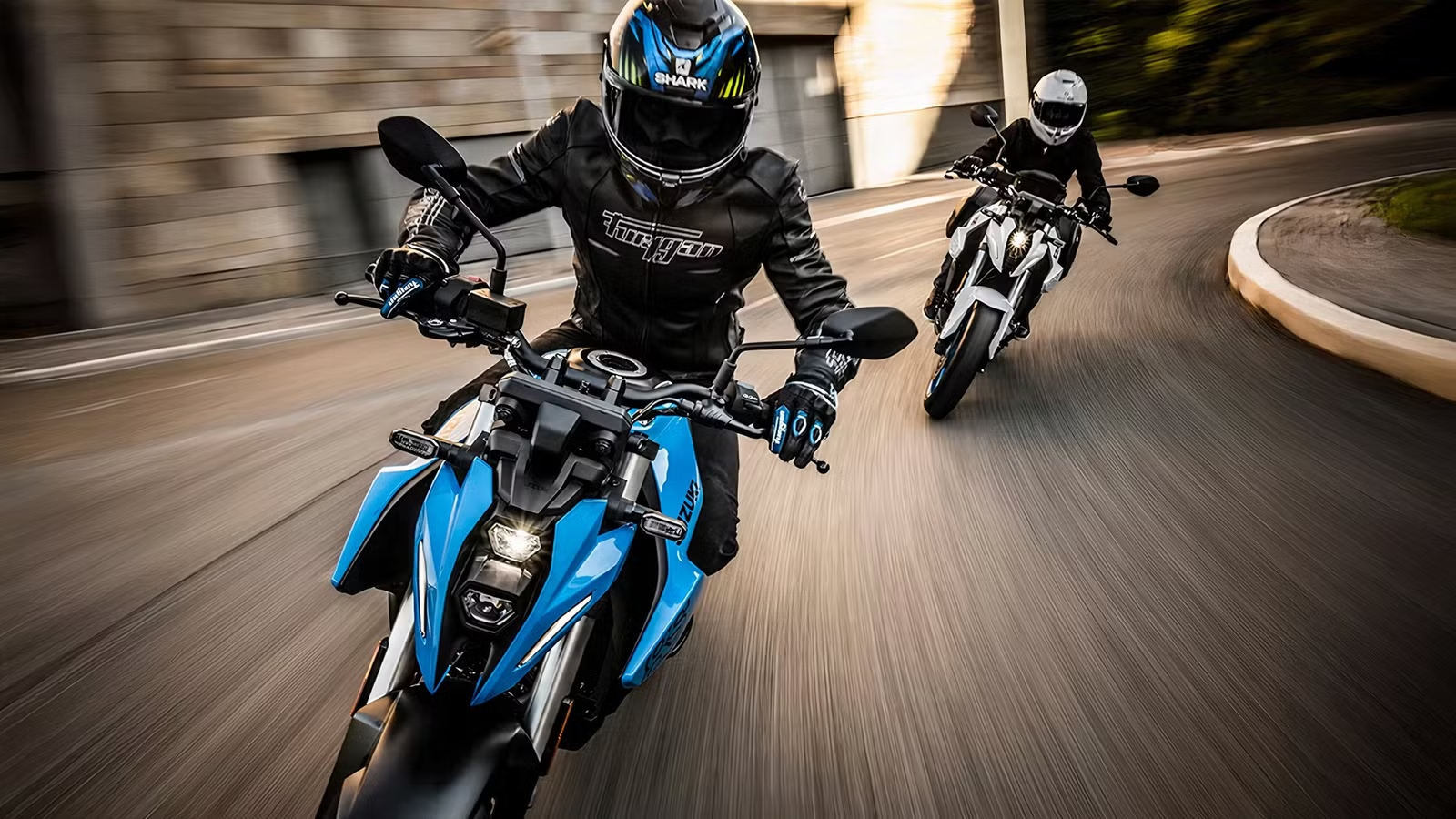
The Suzuki GSX-8S Excels At Pretty Much Everything

That brings us to the Suzuki GSX-8S, a motorcycle that embraces balance better than almost anything else in its class. Carrying a current MSRP of $9,249, it doesn’t promise to dominate spec-sheet comparos or claim class-leading performance. Instead, Suzuki focused on building a motorcycle that’s consistently enjoyable regardless of where or how it’s ridden. That may sound like faint praise until you realize how difficult that balance actually is to achieve.
Rather than designing the GSX-8S around one standout feature, Suzuki treated the motorcycle as a complete package. Every major component complements the others instead of competing for attention. Nothing about it appears excessive, but nothing feels underdeveloped either. The result is a naked bike that’s remarkably difficult to criticize because every compromise has been carefully considered instead of accidentally created.
Every Major Component Was Chosen For The Same Goal

Power comes from Suzuki’s 776cc liquid-cooled DOHC parallel twin featuring a 270-degree crankshaft that produces 82 horsepower at 8,500 rpm and 57 pound-feet of torque at 6,800 rpm. The engine also uses Suzuki’s patented Cross Balancer system, which reduces vibration while keeping the engine physically compact. That allows for a narrower chassis and improved mass centralization without sacrificing refinement during longer rides.
The steel frame works alongside a lightweight aluminum swingarm and KYB suspension consisting of a 41 mm inverted fork and a preload-adjustable rear shock. Stopping power comes from dual 310 mm front discs with radial-mounted Nissin four-piston calipers and a 240 mm rear disc backed by standard ABS. The bike rolls on Dunlop Roadsport 2 tires wrapped around lightweight cast aluminum wheels, while the curb weight comes in at a manageable 445 pounds.
Suzuki also gave the GSX-8S a generous helping of modern technology without making it overwhelming. Standard equipment includes a bi-directional quickshifter, ride-by-wire throttle, Suzuki Intelligent Ride System with three ride modes, four traction control settings including off, Low RPM Assist, Easy Start, and a full-color five-inch TFT display. An 810 mm seat height, upright ergonomics, tapered aluminum handlebar, 3.7-gallon fuel tank, stacked LED headlights, and full LED lighting round out a package that’s equally comfortable in traffic, on back roads, or cruising down the interstate.
It Doesn’t Win Every Category, Yet Somehow Wins The Overall Experience

It’s true that other motorcycles can outperform the GSX-8S in specific areas. Some produce more horsepower. Others weigh a little less, cost a little less, or deliver sharper handling on a racetrack. But that’s also missing the point. Very few motorcycles manage to combine performance, comfort, technology, refinement, affordability, and day-to-day usability into one cohesive package without allowing one strength to overshadow another.
That balance becomes even more valuable the longer you own the motorcycle. Instead of constantly wishing for better comfort, more manageable power, or improved practicality, owners spend more time riding and less time thinking about what they’d change. That’s arguably the greatest compliment any all-rounder can receive because it proves the engineering priorities were aimed at real riders rather than marketing brochures.
The Bike You Appreciate More The Longer You Own It

The motorcycles that leave the biggest impression aren’t always the fastest or the flashiest. They’re the ones that continue making sense every time you open the garage door. They’re comfortable enough for everyday use, exciting enough for spirited weekends, and dependable enough that you stop questioning whether you bought the right machine in the first place.
The Suzuki GSX-8S fits that description remarkably well. It may never dominate every comparison chart or top every performance metric, but it rarely gives up meaningful ground in any category either. In an era where many motorcycles specialize in doing one thing exceptionally well, the GSX-8S stands out by proving that getting almost everything right can be even more impressive. That’s exactly what makes it one of the easiest naked bikes on today’s market to recommend.
Source: Suzuki Cycles

Related posts
Latest Post


No Comments