
The Motorcycle That’s Built For Real Life

The insatiable desire for more versatile motorcycles has forced manufacturers to focus most of their developmental resources in that direction. While these do-it-all bikes are great, they are also compromised as street bikes. The good thing about this newfound fascination with all things versatile is that these bikes almost always share a platform with a naked bike of some sort. Which, in the real world, usually makes a degree more sense.
Naked Bikes Offer A Better Balance Than Most

Back when the Ducati Monster was first introduced, it really was a “naked sport bike.” We can credit it for effectively renaming the standard motorcycle class. Naked bikes of all shapes and sizes have since followed, all offering varying degrees of sporting pretensions and daily practicality. Initially, manufacturers tried to just remove the fairings from existing sport bikes, and while this worked a treat for the bigger bikes, it didn’t really work at all for the middleweight class.

Ducati had punchy twins to work with, but most of the other manufacturers were making use of inline-fours that had precious little low-down grunt. The solution was to develop more versatile twins (and in some cases, triples) that could be used in a variety of motorcycles in an effort to keep costs down. Out of all these modern middleweight naked bikes, it is the Yamaha that offers the best balance between fun and everyday practicality.


10 Naked Bikes That Punch Above Their Price Tag
From sub-400cc pocket rockets to over-1000cc hyper nakeds, each of these naked bikes promises an ace up its sleeve compared to its rivals
The Yamaha MT-07 Is Built For The Real World
MSRP: $8,599

With the MT-07, what you see really is what you get. It is a relatively straightforward motorcycle in most respects, but a recent update has certainly brought it back into the conversation. While the additional features are great, the reason why this has become one of the most popular motorcycles of our generation is because of its CP2 engine.
In this crowded space, it really is a major point of difference thanks to how it is able to deliver reliable performance on a budget. It also offers a pretty low, accessible seat height, comfort-oriented ergos, and a lightweight chassis, which makes it a genuinely fun bike to ride.
The Legendary CP2 Is The Perfect Modern Middleweight Engine
Power: 72 Horsepower

The CP2 is widely recognized as the single most reliable motorcycle engine currently in production. It offers riders the kind of peace of mind that can’t really get a dollar value attributed to it. On paper, it might not look all that impressive when compared to its direct cross-plane parallel-twin-equipped rivals, but motorcycles are not ridden on paper.
Rider Engagement Meets Metronomic Reliability

In the real world, for a middleweight of this size and weight, 72 horsepower is more than sufficient. Especially when it packs a meaty midrange like this. With virtually all of its torque available early on in the rev range, the MT-07 is a genuinely fun bike to ride within the confines of the city limits, down a canyon road, or pretty much anywhere speed limits exist. The recent addition of a ride-by-wire throttle now allows for ride modes, but Yamaha didn’t stop there.
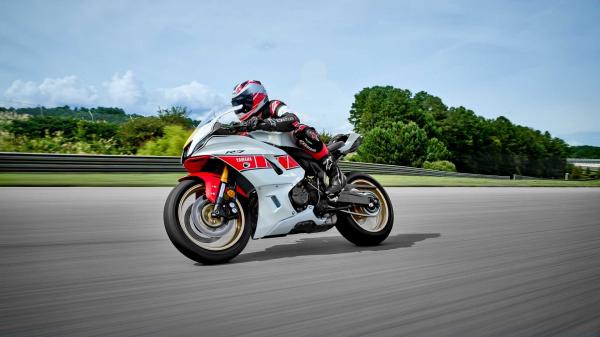
Why Yamaha Put The CP2 Engine In Everything
The parallel-twin CP2 engine has made its way into several models in Yamaha’s lineup for all the right reasons
The Latest MT-07 Comes Packed With More Features Than Ever

Along with the ride-by-wire throttle, it also gets ABS, switchable traction control, and a TFT dash with smartphone connectivity. When compared to some bikes in this class, this might not seem exceptional, but this is without doubt the most feature-rich MT-07 yet. Since inception, the MT has always been a more affordable back-to-basics offering.
While there will be some that lament the gradual demise of more simplified motorcycles, the MT is just moving with the times, as competitors all offer a similar level of specification. For those that prefer a more simplified option, the XSR700 exists for a reason. It doesn’t even get a slipper clutch, let alone modern electronics! It also offers an altogether more tasteful design, with the MT boasting the same “Transformer” motif all the Japanese brands fell in love with for some unknown reason.
A Nimble Urban Warrior

While the MT certainly doesn’t have the most advanced chassis, it does have a relatively high-spec KYB-supplied suspension. It offers a level of adjustability that will help you get it set up for your weight and riding style. The bike has also always been nimble thanks to how compact and light it is, with a short wheelbase that makes it flickable and fun to ride.
Unfortunately, it is not particularly fond of keeping its front wheel planted, and high-speed stability is not its biggest strength. That is not what this bike was designed for. It is designed to be the ideal street bike that can handle the weekday commute, and then take on your favorite mountain pass over the weekend. With a claimed fuel economy of 57 MPG and that untarnished reliability record, it will accomplish both of these tasks without a fuss.

Naturally, the MT-07 won’t be for everyone. For those looking for a bike that can munch highway miles, Yamaha will be quick to point you towards the Tracer 9 (or Tracer 7 in other markets). For those looking for a bike with more dynamic track-focused handling, the YZF-R7 is there, and the list goes on.
What makes the MT exceptional is that it pretty much splits the difference, offering us a more balanced package that will appeal to a wide range of riders. There is no denying the fact that there are cheaper bikes out there, with longer features lists, but none offer the same proven track record you get here. As much as the latest trend suggests a versatile motorcycle should have a modicum of off-road ability, we feel the MT just makes that much more sense.
Chassis, Suspension, And Weight Specifications
|
Chassis |
Steel diamond |
|
Front Suspension |
41mm KYB inverted fork (5.1-in travel) |
|
Rear Suspension |
KYB single shock, adjustable preload and rebound damping (5.1-in travel) |
|
Weight |
403 lbs |
Source: Yamaha Motorsports

Related posts


Latest Post


No Comments