
The Most Beginner-Friendly Harley-Davidson You Can Buy In 2026
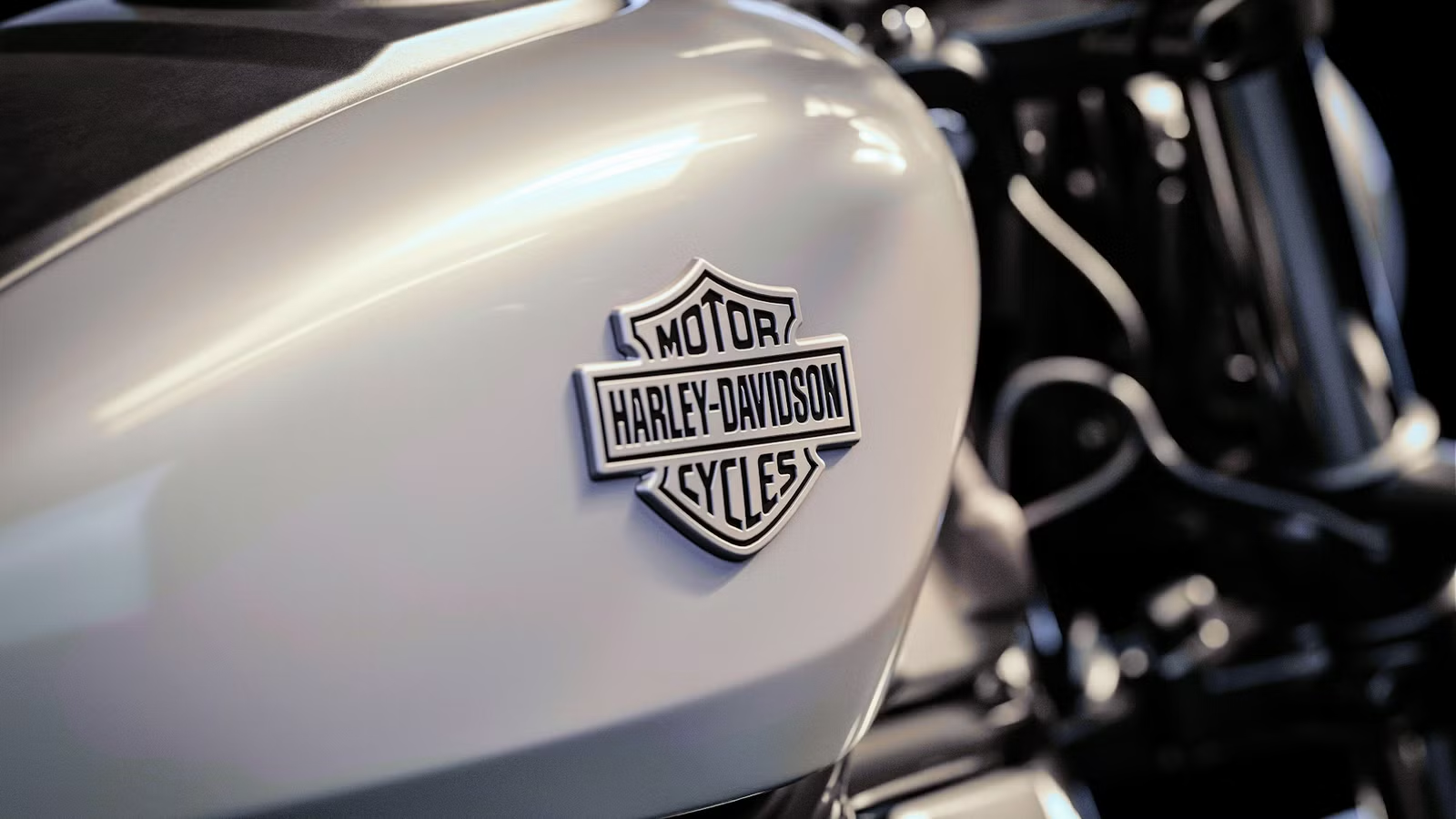
For someone buying their first Harley-Davidson, the obvious temptation is to look at the price tag. But the least expensive motorcycle isn’t automatically the easiest one on which to learn. Weight, seat height, power delivery, ergonomics, low-speed handling, and even how much motorcycle a rider can realistically manage all matter. A good beginner bike should inspire confidence without becoming something its owner quickly outgrows. Harley’s 2026 lineup offers some possibilities, but one stands out when all those factors are considered.
What Actually Makes A Harley Beginner-Friendly?
Why Weight And Power Delivery Matter More Than MSRP For New Riders

Being beginner-friendly is about more than putting a low price on a motorcycle. A new rider needs a machine that builds confidence rather than constantly asking the rider to overcome it. Harley-Davidson’s own material backs up several of those points, emphasizing low seat height, manageable weight, a low center of gravity and rider-focused technology as parts of a bike’s confidence-building character.
That makes sense. A low seat can make a rider more comfortable at a stop, while less weight makes a motorcycle easier to balance at walking speeds, move around a garage, and lift off its side stand. Where that weight sits matters, too. A motorcycle with a low center of gravity can feel easier to manage than its scale weight suggests.

Power requires a similar distinction. A beginner doesn’t necessarily need a weak motorcycle. But predictable power is easier to learn on than an engine that constantly demands restraint. Good ergonomics matter for the same reason: the rider should feel naturally positioned to reach the controls and manage the motorcycle, rather than fight its dimensions.
A Beginner Still Needs Room To Grow


There’s also a less obvious consideration: room to grow. The ideal first Harley shouldn’t be so intimidating that a novice struggles to learn, but it shouldn’t feel like a motorcycle the rider has already outgrown after gaining a little experience. Put all of that together, and the best beginner Harley isn’t necessarily the cheapest one. It’s the motorcycle that makes the physical and mental parts of learning to ride feel as manageable as possible while still giving its owner a reason to keep riding after those first skills become second nature. That framework points to one specific bike in Harley’s 2026 lineup — but it’s not the one most people would guess first.
The Harley That Almost Makes The Cut
A Bigger Harley Can Still Be Approachable

The Street Bob makes a legitimate case for a new rider. Its low 25.8-inch laden seat height can make getting a foot down at a stop less intimidating, while its straightforward cruiser layout doesn’t surround a beginner with unnecessary complexity. It also has the performance to remain interesting long after the rider has mastered the basics.
But beginner-friendly isn’t just about how easily someone can reach the ground. The Street Bob weighs 646 pounds ready to ride, and its Milwaukee-Eight 117 produces 120 pound-feet of torque. That’s a substantial amount of motorcycle for someone still learning how to balance, steer and control a motorcycle at walking speeds.

A heavier motorcycle isn’t automatically a bad first bike. An experienced rider can make a large Harley feel remarkably manageable. The problem is that beginners don’t yet have those instincts. Every extra pound can become more noticeable when maneuvering into a parking space or trying to keep a motorcycle upright after a slow-speed mistake. However, there’s another bike in the lineup that makes life easier for new riders.
The Nightster Makes A Stronger Case
The Nightster Pairs Real Performance With A Weight Penalty New Riders Can Actually Handle

That’s where the Nightster separates itself. At 481 pounds ready to ride, the Nightster gives a new rider considerably less motorcycle to manage than the Street Bob, while its 27.1-inch laden seat height keeps the bike approachable without making the rider feel cramped.
The Nightster also avoids the trap of being labeled beginner-friendly simply by lacking performance. Its Revolution Max 975 engine produces 91 horsepower and 72 pound-feet of torque, giving a new rider plenty of motorcycle to grow into. Selectable ride modes and Harley’s Rider Safety Enhancements add another layer of forgiveness as that learning process takes place.

The Street Bob proves that another Harley can come close. The Nightster, however, brings more of the right characteristics together in one package. That’s what makes it the stronger candidate for the title.
A First Harley That Doesn’t Feel Like A First Bike
It Doesn’t Feel Like A Compromise

The Nightster’s biggest strength as a first Harley may be what happens after the rider stops being a beginner. Harley didn’t make it approachable by giving it a watered-down engine or stripping away the features that make its larger motorcycles appealing. The Revolution Max 975 also means the Nightster doesn’t become irrelevant once the rider has learned the basics. There’s enough performance here to keep the motorcycle interesting as confidence builds.
That matters because the best first motorcycle isn’t necessarily the one that’s easiest to outgrow. A new rider can buy the Nightster because it’s less intimidating than a large Softail, then discover six months or a year later that the motorcycle still feels like a Harley worth owning rather than a stepping stone to something else.
The Best Beginner Harley Also Happens To Be The Cheapest One In The Lineup

At $9,999, the Nightster also happens to be the least expensive motorcycle in Harley-Davidson’s 2026 U.S. lineup. That’s important, but it’s not the entire argument. While low MSRP can get someone through the showroom door, it can’t make a heavy motorcycle easy to learn on. The Nightster doesn’t demand a large financial commitment while still delivering the performance, technology, and character you’d expect from a Harley-Davidson.
The Nightster doesn’t win because it’s the cheapest Harley. It wins because Harley managed to make its least expensive motorcycle an unusually complete one for new riders.
How Long Will The Nightster Keep The Crown?
The Sprint And A New Sportster Could Displace The Nightster By 2027

The Nightster’s position at the bottom of Harley-Davidson’s 2026 lineup may not last forever. Harley has announced a new Sportster with a target price of around $10,000, but the company has identified it as a 2027 model. The more immediate question is the Sprint. Harley has specifically positioned it as an entry-level motorcycle designed to make the brand more accessible to new riders. The company has said it expects to begin shipping the Sprint near the end of 2026, but as of September, it isn’t part of Harley-Davidson’s U.S. 2026 lineup.

That makes the Sprint particularly interesting. Harley isn’t simply preparing another inexpensive motorcycle; it’s deliberately targeting the point where new riders enter the brand. But until the production motorcycle is actually available and Harley provides its complete specifications, there’s no sound basis for declaring it more beginner-friendly than the Nightster.
For Now, The Nightster Has The Advantage

That’s why the 2026 part of this title matters. The Nightster is the motorcycle Harley-Davidson actually offers in its current U.S. lineup at $9,999, and Harley’s own beginner guidance identifies it as a strong choice for new riders, pointing to characteristics such as its nimble handling and low center of mass.
The Sprint may eventually change the answer. In fact, it’s probably the motorcycle to watch most closely if we’re asking what could eventually take the Nightster’s place. But a future Harley doesn’t get to win a 2026 comparison on promises, projections or rumored specifications. For riders shopping the 2026 Harley-Davidson lineup today, the Nightster remains the strongest answer. It’s approachable enough to learn on, capable enough to grow into, and affordable enough to make that first step into Harley ownership considerably easier.
Source: Harley-Davidson

Related posts
Latest Post


No Comments