
The Mazda CX-70 Is Nearly Perfect Outside Of One Cold, Unresolved Flaw
Premium engineering should make an SUV easier to recommend. Yet a strong engine, an expensive-looking cabin, and an ambitious chassis lose some of their shine when the transmission interrupts your morning commute with an awkward shift.

That is the problem hanging over this premium Japanese SUV as attention turns toward 2027. The hardware deserves a serious look, but the recurring low-speed complaint deserves one too, and an expected carryover is not proof that the latest version has either retained or eliminated it.
Luxury Credentials Have To Survive The Morning Commute
An Inline-Six And A Premium Cabin Only Tell Half The Story
You can understand the appeal of a luxury SUV without caring about its badge. Confident acceleration, substantial controls, and a chassis that responds cleanly make ordinary driving feel more satisfying.

An inline-six and a longitudinal engine layout strengthen that appeal, particularly when the price is below that of established German alternatives. But a premium parts list cannot do the entire job; those components also have to cooperate when your right foot requests barely more than walking speed.
That is where the distinction between impressive engineering and polished execution becomes useful. You should not need an empty highway to discover why your SUV feels expensive.
The Most Revealing Test Happens Before The Engine Warms Up

A brisk acceleration run makes a memorable showroom demonstration. Pulling gently out of a parking space reveals something you will probably experience more often.
Cold starts and creeping traffic ask a transmission to manage small changes in speed without turning each engagement into an event. If the vehicle hesitates and then takes off abruptly, the cabin’s quilted leather cannot absorb the irritation. This is why low-speed refinement deserves more attention than another horsepower comparison. The expensive part of luxury is often how little you notice the machinery working.
The Mazda CX-70 Delivers Hardware Worth Taking Seriously
The Turbo S Gives You The Headline Inline-Six

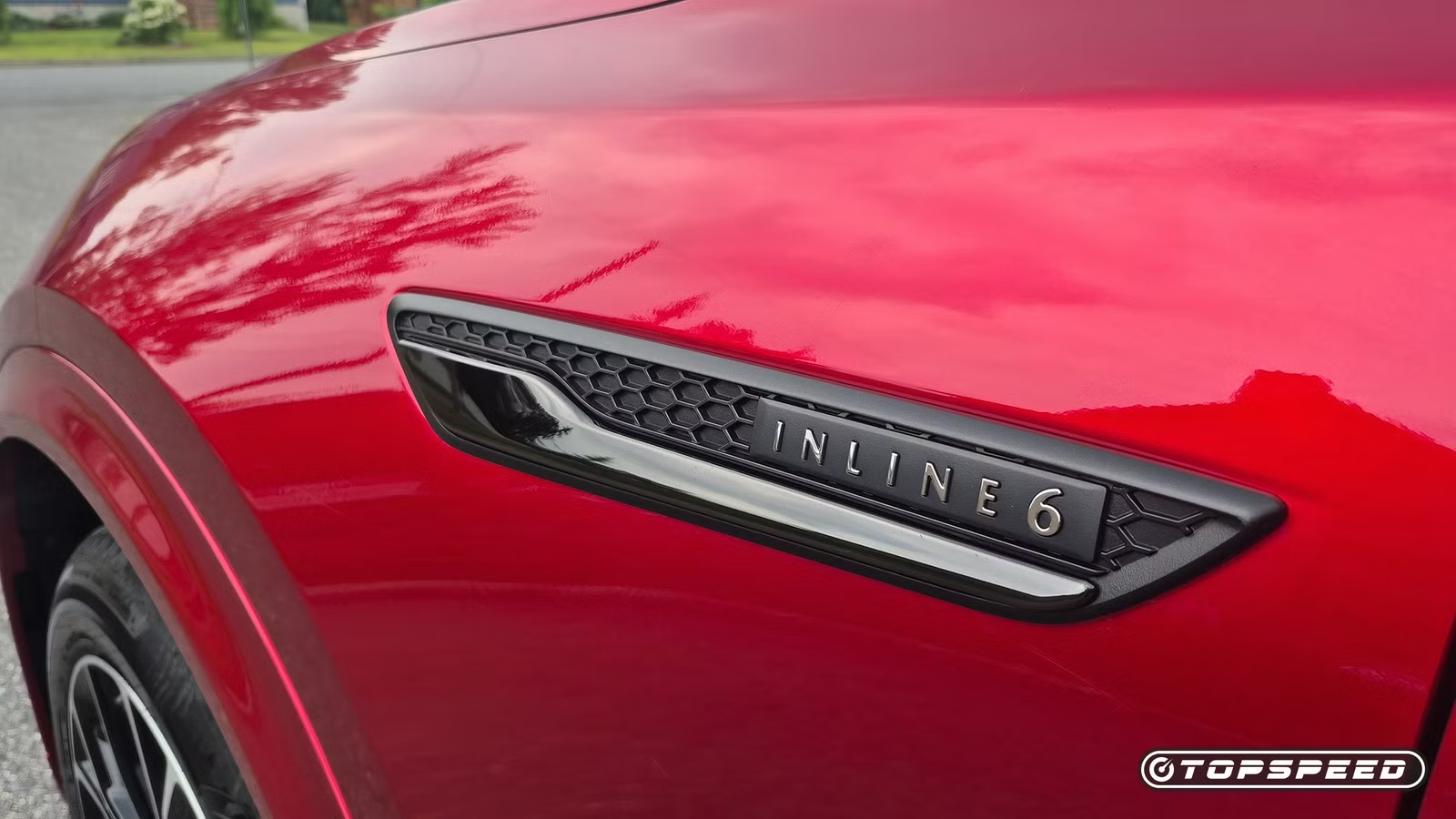
The Mazda CX-70 makes a convincing case on paper. It’s a two-row, five-seat body that rides on Mazda’s longitudinal platform with RWD-biased AWD, and the 3.3-liter turbocharged inline-six uses a 48-volt mild-hybrid system. For the 2026 lineup, the standard 3.3 Turbo produces 280 horsepower and 332 pound-feet of torque on regular fuel. Turbo S models deliver 340 horsepower and 369 pound-feet of torque with premium gasoline.
MotorTrend recorded a 6.3-second run to 60 mph in its 2025 Turbo S Premium test. That is useful acceleration for merging and passing, although it does not turn this substantial family SUV into a bargain sports car.
The Chassis And Cabin Make The Luxury Comparison Credible
Mazda’s appeal extends beyond the engine compartment. The Drive praised the 2026 model year’s steering response and highway stability, while finding its suspension less accommodating on broken winter roads.
At the top of the lineup, Turbo S Premium Plus adds quilted tan Nappa leather and suede dashboard inserts. Those are tangible upgrades, and they explain why a buyer might consider Mazda alongside more expensive brands. Still, the luxury comparison needs limits. The Drive also found the inline-six less refined than BMW’s, so “premium hardware” should describe the layout and ambition without promising an identical driving experience.
The Eight-Speed Automatic Undercuts The Premium Experience
The Cold First-To-Second Shift Is The Recurring Complaint

MotorTrend’s yearlong CX-70 test makes it difficult to dismiss the criticism as a momentary annoyance. Its reviewer described abrupt first-to-second shifts when cold, accompanied by head toss, with occasional low-speed harshness remaining after warm-up.
The Drive subsequently reported uneven 1–2 and 2–3 shifts in a 2026 CX-70, particularly when cold. The earlier MotorTrend low-speed update placed troublesome behavior around 5–8 mph, although that reported window should not be treated as a guaranteed trigger in every vehicle.
The distinction matters because this is the territory of driveways and parking lots. You are not asking the transmission to perform an exotic maneuver; you are asking it to get through second gear without making a fuss.
Mazda’s Wet-Clutch Design Explains The Engineering Trade

Mazda developed its eight-speed automatic around its electrified longitudinal powertrains. Instead of a conventional torque converter, it uses a wet clutch, with Mazda citing more direct response as a benefit. That design choice is not inherently a defect. The criticism concerns how smoothly the system manages engagement and shifting, rather than whether a wet clutch belongs in a premium vehicle.
The PHEV also uses an eight-speed automatic, and MotorTrend reported related refinement complaints in its earlier CX-90 PHEV test. Switching powertrains, therefore, does not guarantee an escape from this transmission family’s reported behavior, although it does not prove that every version behaves identically.
Separate software recalls also belong in the ownership picture. Campaign 24V817 covered certain 2025 CX-70 PHEVs for potential loss of drive power in EV mode, while 24V814 covered certain 2025 CX-70s for dash-control faults affecting functions including the defroster and surround-view monitor. These campaigns have software remedies and should not be presented as evidence that the harsh shift causes transmission failure.
The Carryover Question Makes A Cold Test Drive Essential
An Expected Carryover Is Not Proof That Nothing Was Fixed

Mazda has addressed cold-start complaints with software on the related platform. Bulletin 05-004/24, issued in June 2024, covers specified early-production 2024 CX-90 inline-six models and identifies improper hydraulic-pressure control during cold 1–2 shifts. Its remedy includes revised transmission-control software and learning procedures. That bulletin does not establish a repair for every CX-70, but a blanket claim that Mazda never attempted to improve the behavior is inaccurate.
Car and Driver currently describes the 2027 CX-70 as an expected carryover and its prices as estimates. Without confirmed 2027 calibration details or a representative cold-start test, the defensible conclusion is that earlier complaints remained evident in 2026 testing, not that every 2027 example is conclusively unfixed.
Compare The Turbo S With The X5 xDrive40i
Comparing an entry-level Mazda price with the flagship’s 340 horsepower combines two different buying decisions. Mazda’s updated 2026 pricing lists the CX-70 Turbo S Premium Plus at $56,870 before the $1,645 destination charge, bringing the delivered MSRP to $58,515. Kelley Blue Book lists the 2026 BMW X5 xDrive40i at $72,050, including destination, leaving a $13,535 gap.
The Mazda also enters this comparison with its upper-trim cabin equipment already included. You can reasonably view it as a route to desirable hardware at a lower price, while recognizing that the BMW’s extra cost cannot be reduced to the emblem on its hood.
Decide Whether The Price Gap Pays For The Refinement You Give Up

Arrange a test drive before the vehicle has been warmed up. Use gentle acceleration, repeated stops, and parking-lot speeds, then repeat those maneuvers once it reaches operating temperature.
Ask the dealer to verify applicable updates for that VIN and explain any pronounced hesitation or shift shock. A vague assurance that the behavior is normal is less useful than a clear explanation and a second vehicle for comparison.
The CX-70 gives you credible reasons to keep Mazda on the shopping list. But the savings only become satisfying when you like the vehicle those savings buy, and second gear should not require a daily pep talk.
Sources: Mazda, Car and Driver, Kelley Blue Book, The Drive, MotorTrend, NHTSA

Related posts




Latest Post


No Comments