
The Last Manual Lexus Sedan Is Far Harder To Find Than The BMW It Trailed
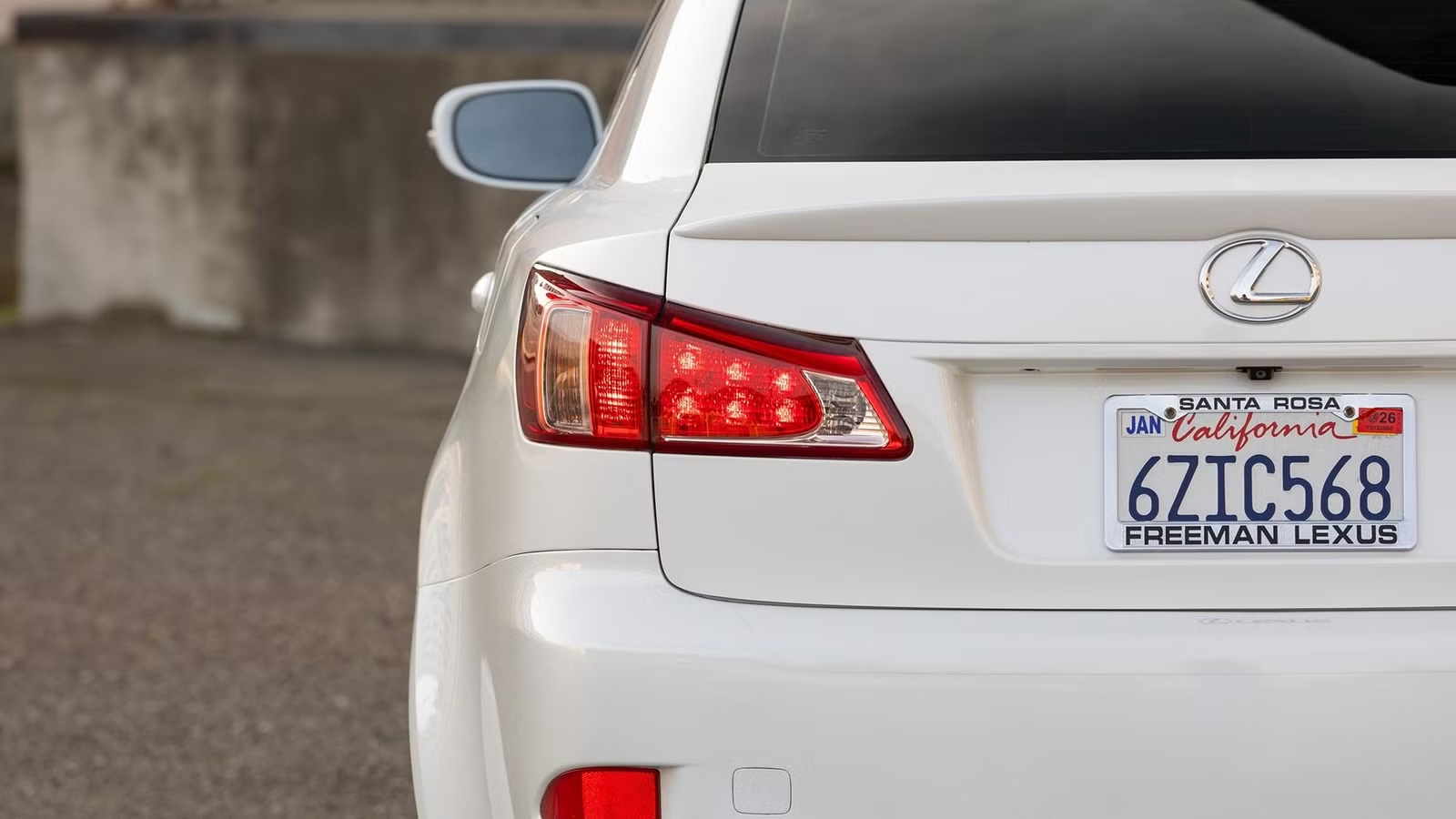
For most of the 2000s, BMW was the obvious answer for drivers who wanted a luxury sedan with three pedals. A Japanese rival offered the same basic recipe: rear-wheel drive, a six-speed manual, and a comfortable cabin, but it never quite matched the German car’s pace or reputation for sharp handling. Now the tables have turned in one surprising way: finding the overlooked Japanese sedan with a clutch can be harder than finding its better-known rival. Its rarity makes it interesting, but a simple drivetrain upgrade might make it even more tempting.
BMW Dominated The Manual Sports Sedan Market For A Reason

Manual transmissions still mattered to sports sedan buyers in the mid-2000s. The E90-generation BMW 3 Series, launched for 2006, showed why. Its rear-wheel-drive chassis, communicative steering, balanced handling, and six-speed stick made everyday drives feel special. It was also composed enough for highway miles, which meant enthusiasts didn’t have to sacrifice comfort to enjoy the chassis. The 325i delivered those qualities without demanding the price of a high-performance model.
Its 3.0-liter inline-six produced 215 horsepower and 185 lb-ft of torque, with peak torque available at just 2,750 rpm. The manual can hurl itself from 0-60 mph in just 6.1 seconds. BMW also had years of experience tuning its pedals and suspension as one cohesive system. Japanese luxury brands could offer a manual transmission, but matching BMW’s blend of response, performance, and driver involvement required much more than a third pedal.
The Rarer Stick-Shift Sedan Couldn’t Match BMW’s Performance


One Japanese automaker built a rear-wheel-drive luxury sedan with a six-speed manual, but its priorities leaned toward comfort. It offered a quiet cabin, solid build quality, and an easygoing ride. Where BMW chased road feel, this rival aimed to make daily driving smoother and quieter. Its naturally aspirated 2.5-liter V6 made 204 horsepower and 185 lb-ft of torque. Unlike the BMW, however, it reached peak torque at a relatively high 4,800 rpm.
That difference showed up on the road. Contemporary testing put the Japanese sedan about one second behind the 325i in the sprint to 60 mph. Its shifter also drew criticism for notchy engagement, while testers found the clutch less predictable than BMW’s. Drivers could still enjoy winding roads, but the gearbox never made an ordinary shift feel particularly rewarding. The car had genuine rear-drive appeal, but its drivetrain controls lacked the polish enthusiasts expected from a serious 3 Series challenger.
The 2006–2012 Lexus IS 250 Was America’s Last Manual Lexus

That underdog was the 2006–2012 Lexus IS 250, the final Lexus sedan sold in America with a factory manual. Lexus dropped the six-speed stick for the 2013 model year, ending its U.S. three-pedal era. The related IS 250C convertible also offered a manual through 2012. Both disappeared from the manual market just as enthusiasts were starting to appreciate the combination.
Under the hood sat the direct-injected 2.5-liter 4GR-FSE V6, producing 204 horsepower and 185 lb-ft. Only rear-wheel-drive IS 250 buyers could choose the six-speed manual. All-wheel-drive versions used automatics, as did every U.S.-market IS 350, despite its stronger 306-hp engine. Independent testing recorded a 7.1-second 0–60 mph run in the manual IS 250, beating Lexus’s own 7.9-second estimate but trailing the 325i by a full second. The payoff came inside: comfortable seats, quality materials, and a quiet, well-finished cabin. The lighter IS 250 also offered a more approachable character than its quicker, big-engine sibling.
The bigger surprise is how few remain for sale. In a July 2026 snapshot, Jalopnik found roughly three manual IS 250 listings on Autotrader, 10 on iSeeCars, and 11 on CarGurus. CarGurus alone showed around 80 manual E90 BMW 3 Series listings.
A Toyota 86 Differential Swap Gives The IS 250 A Second Life

The IS 250 left the factory with an open rear differential, which can struggle to put power down when the inside rear wheel loses grip. Owners discovered a useful workaround: a Torsen limited-slip differential assembly from a Toyota 86, Subaru BRZ, or Scion FR-S. The Autopian reports that the swap can also replace the stock 3.72:1 final drive with a 4.10:1 or 4.30:1 ratio. Because the donor comes from another Toyota-family sports car, the swap sounds almost factory-planned. It wasn’t, so prospective owners still need to check parts compatibility.
Those shorter ratios increase wheel-torque multiplication by roughly 10% to 16% in the same gear, making the modest V6 feel livelier. The limited-slip unit also improves power delivery out of corners. It adds no horsepower, though, and higher cruising rpm can hurt fuel economy while reducing gearing-limited top speed.
Finding A Manual IS 250 Might Be Harder Than Justifying Its Price

A rare gearbox doesn’t guarantee a cheap purchase, though. In January 2025, The Autopian highlighted a 2008 manual IS 250 with 129,000 miles and a $10,495 asking price. That was hardly a steal for an aging compact sedan, especially when an E90 BMW could cost as much or less.
Lexus’s durability reputation helps, yet the direct-injected V6 can suffer carbon buildup on its intake valves, sometimes requiring cleaning. Buyers should also inspect clutch wear, suspension condition, and maintenance records.
In the end, the IS 250 never offered BMW-level acceleration, a perfect shifter, or class-leading steering. Instead, it combined rear-wheel drive, manual control, luxury, and scarcity in an unusually understated package. When Lexus abandoned the clutch pedal in America after 2012, it made that combination impossible to buy new again.
Source: Lexus, BMW, The Autopian, CarGurus, , Jalopnik

Related posts



Latest Post


No Comments