
The Last Great Lincoln Sedan is Now a Total Bargain
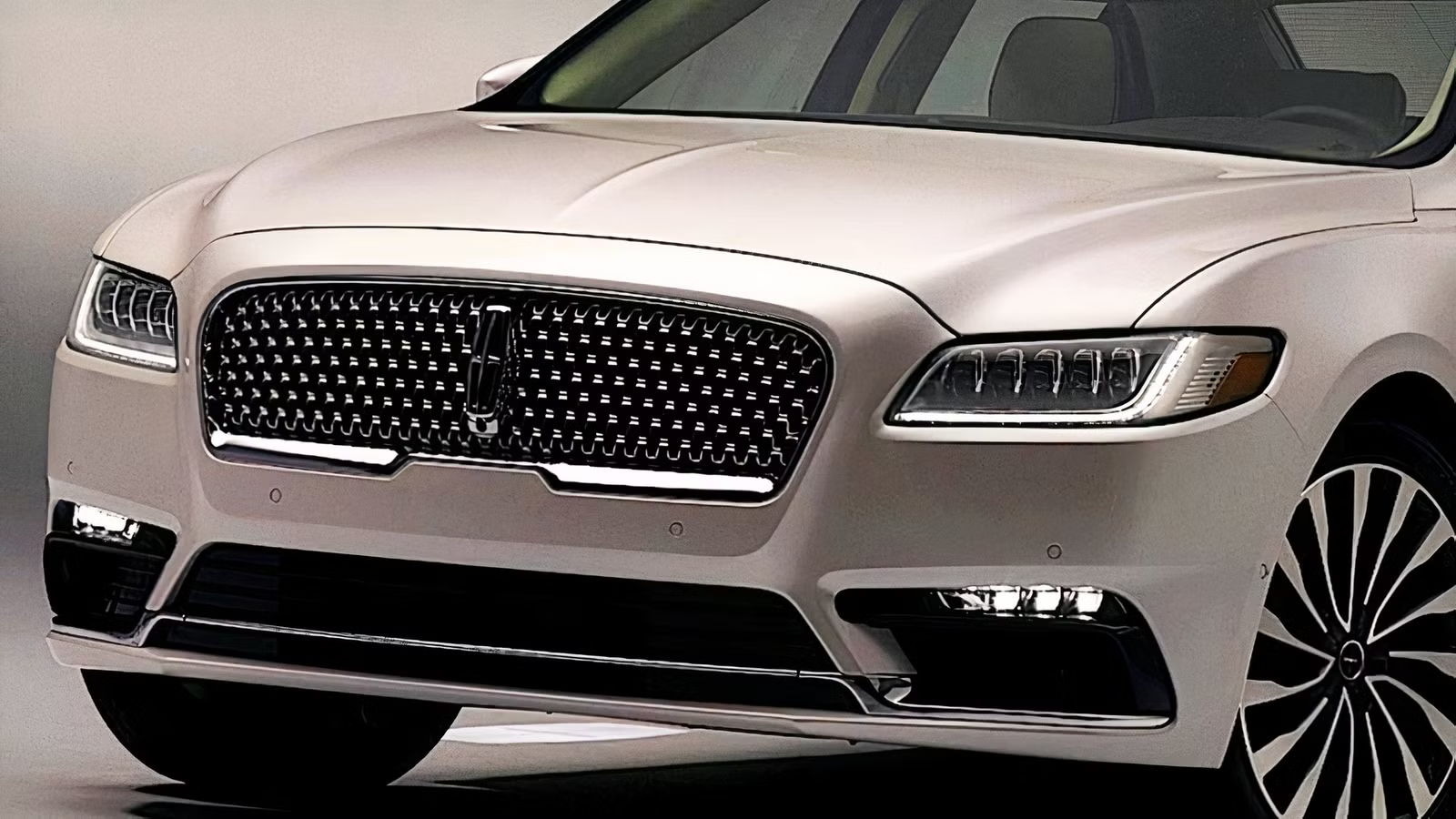
Today, Lincoln’s lineup is a little thin, don’t you think? You have the Navigator full-size SUV that you can’t even touch for under $90,000, and a cohort of three smaller crossovers in the Aviator, Nautilus, and Corsair. It’s not an awful lineup, especially compared to other brands. Yet, without a sedan, it’s hard not to feel like there’s something missing. Lincoln hasn’t sold a sedan in North America since 2020, but its last flagship was a truly special machine.
The Continental: A Flagship Without a Home

The Continental was Lincoln’s bread and butter for the better part of 60 years before the mid-2000s. Nine generations came and went in that time, evolving from a glamorous coachbuilt cruiser in the ‘40s and ‘50sto a luxurious behemoth in the ‘60s and ‘70s, before emissions and fuel economy regulations forced it to downsize in the ‘80s and ‘90s.
By the time the ninth-generation arrived in 1995, the Continental bore very little resemblance to what it was when it debuted just before World War II kicked off. Sure, it still had a V8, something the previous generation bungled by using the same Essex V6 found in the Taurus, but the chassis was front-wheel drive, an affront to the format the ‘Conti had followed since day one.

The last Gen-IX Continental left the production floor in the summer of 2002. From there, the story of Lincoln sedans would enter a 15-year dark period marked by the woefully mundane MKS and MKZ. It was an uninspired “alphabet soup” naming convention where the brand’s supposed flag carriers felt like Ford Tauruses and Fusions with nicer grilles and softer leather. Well, it’s because that’s exactly what they were.

Flipping the Script With EcoBoost Power and a Stretched Chassis

By most accounts, the years immediately after the ninth-generation Continental went away were some of the darkest in the company’s history. The MKZ and MKS were badge-engineered facsimiles of luxury sedans, and apart from the Navigator SUV, the lineup inspired about as much passion as a rental car. This was just as true on the non-Navigator SUV side of things, where the MKT and MKX felt just as uninspired. But for the 2017 model year, Lincoln finally decided it’d had enough.
Just as domestic automakers were preparing to abandon their passenger car lineups in favor of high-margin crossovers, Ford’s luxury arm made one final, no-expenses-spared bid at the traditional sedan segment before it disappeared forever. Instead of trying to imitate a stiff, track-focused German sports sedan, the reborn 10th-generation Continental embraced Lincoln’s “Quiet Flight” design ethos. It was an unapologetic return to effortless cruising, supreme isolation, and the sheer imposing road presence of classic American luxury.
Using relatively new EcoBoost architecture introduced by the previous generation of Lincoln sedans, it can be argued the new engines were the lone bright spot of those years. As for the chassis, the new sedan rode on a heavily modified, stretched, and widened iteration of the corporate CD4.1 architecture, the same platform that underpinned the European Ford Mondeo and the American Ford Fusion. But where previous Lincoln sedans of the 2000s felt like they were barely refined before receiving a luxury badge, their replacement buried the platform under layers of genuine refinement. In 2017, the result of all this was as good as a Lincoln sedan’s been in half a century.
Tenth-Generation Lincoln Continental: A 400-Horsepower Swan Song

On visuals alone, the last-generation Continental looked every bit like the luxury machine its nameplate implied. By refining the design of the facelifted MKZ into something wider, longer, and more stately, Lincoln created a sedan that finally captured the essence of what made ‘Contis of old so loveable. The grille was large but not ungainly, the headlights were angular but not squinty, and the rear quarters had that classic American sedan look, optimized for the late 2010s.
Under the hood, the base and mid-trim gen-Xs were serviceable enough, with a 3.7-liter naturally aspirated V6 producing 305 horsepower and a mid-tier 2.7-liter EcoBoost V6 making 335 horsepower, respectively. But looking past those reveals where this car truly shines: a top-tier, Lincoln-exclusive 3.0-liter twin-turbocharged V6. Producing 400 horsepower and 400 lb-ft of torque, the big sedan possessed genuine sleeper-car performance on par with the BMW 540i xDrive and Mercedes-Benz E400 4MATIC. We’re talking zero to 60 in the mid-5s and a quarter mile in the upper 13s thanks to native AWD.

Inside, the Continental also held its own against German competitors, and the heavily marketed “Perfect Position” heated and cooled massaging front seats with 30 points of power adjustability were a flagship feature. Entry and exit were handled by clever electronic E-latch door handles seamlessly integrated into the chrome window beltline, while an optional 19-speaker Revel Ultima audio system turned the hushed, acoustic-glass-isolated interior into a rolling concert hall. 41.3 inches of rear legroom across all trims was truly SUV level, and the ultra-rare coach door variant stretched the wheelbase by a full six inches and brought back true center-opening “suicide” doors for the first time since the early 1960s. It sounded great on paper, but American buyers didn’t bite, sticking with trusted German and Japanese luxury brands instead.
The Brutal Luxury Depreciation Curve

Unable to turn the tide against German rivals, the last Continental rolled off a dealer lot in 2020, ending the nameplate’s lineage. But while its premature death was a tragedy for Ford’s accountants, it created a cheat code for second-hand buyers. Big luxury sedans are notorious for plummeting in value, and the crossover craze made the Continental’s depreciation curve brutal.
A fully loaded Reserve or Black Label trim that originally stickered between $65,000 and $75,000 has shed as much as 60 percent of its MSRP on the secondary market. Today, well-maintained 2017 to 2020 models packing that 400-horsepower twin-turbo V6 regularly trade hands in the low-to-mid $20,000s.
Sources: Ford/Lincoln, Car Gurus

Related posts



Latest Post




No Comments