
The Lancer Evo Revival Everyone Wants Is Blocked By One Brutal Reality
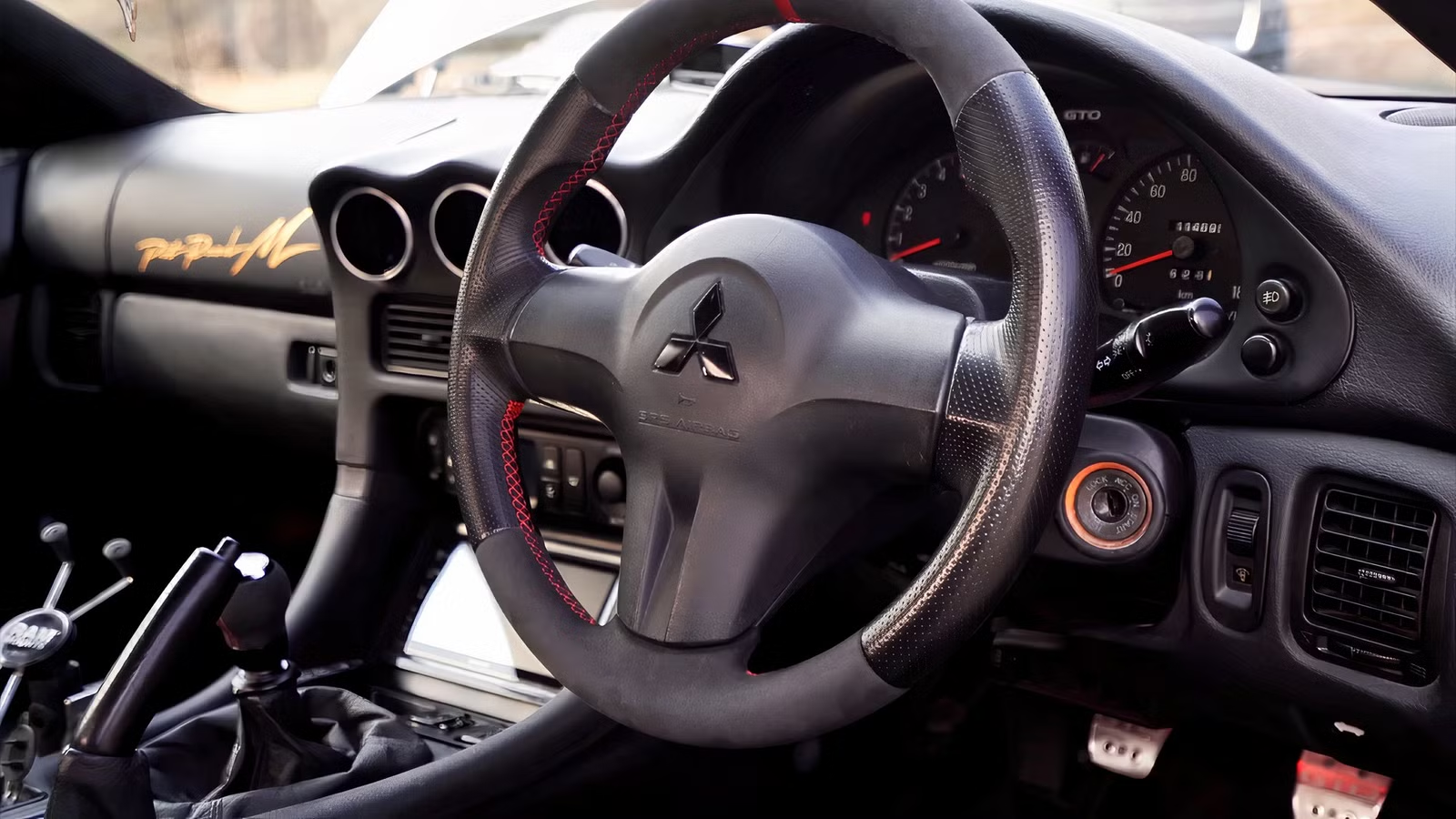
Mitsubishi‘s new president made the most encouraging statement Evo fans have heard from inside the company in years — he’d love to build another Lancer Evolution. It’s the kind of quote that lights up forums and gets collectors checking their garage space. But enthusiasm from the top and a production-ready sports sedan are two very different things, and the gap between them is wider than it’s ever been.

The statement, reported today, frames the sedan as a company “treasure” — genuinely important to Mitsubishi’s identity. What it doesn’t come with is a platform, a powertrain, a homologation target, or a timeline. This is the reality check the tuner community deserves: here’s what a real Evo would need, and here’s exactly where Mitsubishi stands on every one of those requirements.
What Made An Evo An Evo — And Why Those Standards Still Apply
The Lancer Evolution wasn’t a performance trim slapped on a family sedan. It was a homologation special, built to satisfy World Rally Championship Group A regulations, which required manufacturers to produce a minimum number of road-going versions of their rally cars. That lineage — from the Evo I through the Evo IX — meant every generation carried a purpose-built turbocharged 4G63 (later 4B11) engine, a sophisticated all-wheel-drive system, and suspension geometry tuned around stage-rally demands. The road car existed because the rally car needed it to.

For Evo purists, that heritage isn’t just nostalgia — it’s a specification. A modern Evo without a turbocharged four-cylinder, a proper AWD system with active yaw control, and some meaningful connection to competitive motorsport isn’t really an Evo. It’s a fast Mitsubishi. The nameplate carries weight precisely because those requirements were never compromised across ten generations.
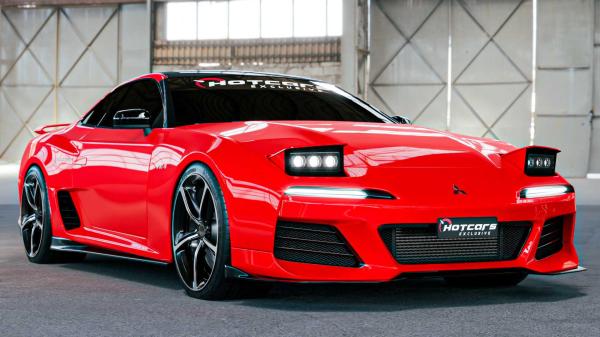
The New 3000GT VR4 Mitsubishi Should Make
The Mitsubishi 3000GT VR4 was one of the quickest cars of the ’90s, and making a successor makes more sense than you think.
Mitsubishi’s Current Platform Reality Leaves No Room For A Sports Sedan

Here’s where the math gets brutal. Mitsubishi’s current lineup is built almost entirely around SUVs and crossovers — the Outlander, Eclipse Cross, and Outlander Sport. The platforms underpinning those vehicles are shared with Renault-Nissan Alliance partners and are optimized for tall-riding, family-oriented hardware. None of them are candidates for a low-slung, performance-focused sports sedan.
Building a proper Evo from scratch would require either developing a bespoke platform — an enormous capital investment for a brand Mitsubishi’s size — or sourcing one from within the Alliance that could plausibly support a driver-focused, AWD performance car. Neither path is simple, and neither is currently on the public roadmap. The president’s comments were aspirational precisely because the infrastructure to execute them doesn’t exist yet.
The Powertrain Problem: Electrification Cuts Both Ways

Mitsubishi’s powertrain strategy has pivoted hard toward plug-in hybrid technology. The Outlander PHEV has been the brand’s flagship technology showcase, and the Alliance’s broader direction points toward electrification across new model development. That creates a genuine dilemma for an Evo revival.
A turbocharged four-cylinder with a mechanical AWD system — the Evo’s traditional recipe — doesn’t fit neatly into a brand narrative built around PHEVs and eventual EVs. A hybrid Evo is theoretically possible, and electrification can add performance, but it also adds weight and complexity that cut against the Evo’s reputation for being a scalpel. The Evo X Final Edition tipped the scales at around 3,400 pounds; a PHEV variant would almost certainly be heavier. Whether that’s acceptable to the community is a debate worth having — but it’s a debate Mitsubishi hasn’t publicly entered.
The Performance Car With Honda Reliability And Porsche Performance
This Nissan is the ultimate combination of speed and dependability. With it, you could thrash tracks and runaround town without missing a beat.
Ralliart’s Return Signals Intent, But Not Commitment

Mitsubishi did revive the Ralliart sub-brand, which had been dormant since 2010. The reception from enthusiasts has been cool, and for understandable reasons — the revival has amounted to appearance packages and badging on existing SUVs rather than any genuine performance hardware. It signals that the brand knows its motorsport heritage has commercial value, but it hasn’t yet translated that knowledge into engineering investment.
A credible Evo revival would require Mitsubishi to re-enter competitive rally or circuit motorsport in a meaningful way — not just to satisfy purists, but because the original car’s development was inseparable from its competition program. Without that commitment, any future car wearing the Evo name risks the same lukewarm reception that’s followed the Ralliart badges. The president’s words are the right sentiment. The follow-through is what’s missing.
The Evo faithful deserve honesty more than they deserve hype. Mitsubishi’s president saying he wants another Evolution is meaningful — it confirms the nameplate isn’t forgotten inside the company. But wanting something and having the platform, powertrain, and motorsport infrastructure to build it right are entirely separate conversations. Until Mitsubishi can answer those questions with hardware instead of sentiment, the Evo stays exactly where it’s been since 2016: a legend on a pedestal, and a dream that hasn’t found its road car yet.
Sources: Carscoops

Related posts





Latest Post


No Comments