
The Kawasaki Cruiser Bike That’s Perfect For A First-Time Buyer
Every new rider faces the same wall of noise: dozens of models, conflicting forum advice, and the nagging suspicion that whatever bike you choose, you’ll wish you’d picked something else. The decision gets even harder when you’re not yet sure which corner of motorcycling will eventually claim you — touring, sport, adventure, or something in between. If you already know the style of riding you’re after, buy that bike. Simple.

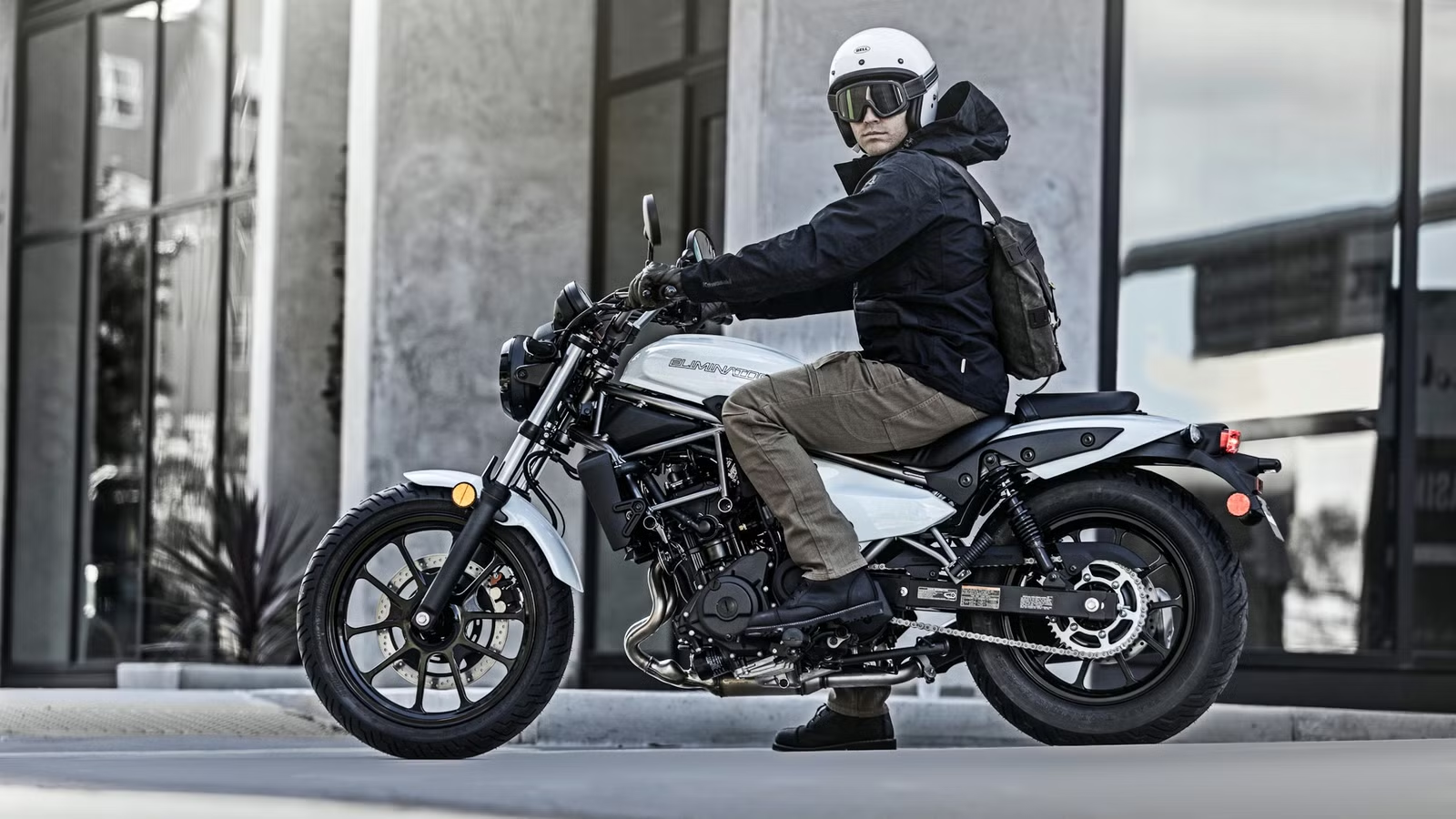
But if you don’t, this is where we find the Kawasaki Eliminator earning its keep. The overall layout is consistent with small-displacement American sport-cruisers, but with a definite metric mien, not entirely unlike Honda’s Rebel line, for instance. Kawasaki bills the Eliminator as an approachable bike with non-threatening power delivery and an affable nature that is ideal for newer riders.
The entry price won’t break the bank while you dip your toe into the motorcycling world, which matters — because if you decide riding isn’t for you, you won’t be stuck eating a large depreciation hit to unload it. In short, the Eliminator is arguably the best all-around beginner’s bike in all the most important ways.
The Kawasaki Eliminator 450 Has A High-Revving Cruiser With Precision Engineering
Ample Torque With A Smooth-Shifting Six-Speed Transmission

Power for the Eliminator comes from a parallel-twin engine that doubles as a stressed member to complete the frame structure. It’s laid out with a 70 mm bore and 58.6 mm stroke for a total displacement of 451 cc and an 11.3-to-1 compression ratio — one that prefers premium fuel at fill-up time to avoid misfire issues. Dual overhead cams time the valvetrain, and liquid cooling handles waste heat while also keeping mechanical noise from the cases in check.
Kawasaki Eliminator Engine And Performance Specifications
|
Engine |
Parallel-twin liquid-cooled |
|
Displacement |
451 cc |
|
Compression |
11.3 : 1 |
|
Power |
52 HP @ 10,000 RPM (claimed) |
|
Torque |
31.7 LB-FT @ 7,500 RPM (claimed) |
|
Top Speed |
102.5 MPH (reported) |
A six-speed transmission and chain-type final drive complete the drivetrain, paired with a slipper clutch that adds backtorque mitigation and a broad friction zone for ease of control — exactly the sort of feature a new rider can benefit from. Worth noting: since torque peaks at 7,500 RPM within a 10,000 RPM rev range, this is a relatively peaky engine that rewards riders who aren’t afraid to use the upper gears.
The Kawasaki Cruiser Offers Lightweight Agility With A Chopper-Inspired Stance
Steering Geometry And Well-Balanced Suspension Deliver Stability And Maneuverability
Steel tubing makes up the exposed trellis frame on the Eliminator. That frame uses the engine as a stressed member to replace the downtube/cradle section of the structure and help the skeleton reach its final rigidity. The steering head sets a rake angle of 30 degrees that pairs with 4.8 inches of trail for a custom- chopper look that is still fairly nimble without being twitchy.
Kawasaki Eliminator Chassis And Suspension Specifications
|
Frame |
Trellis/stressed engine |
|
Front Suspension |
41 mm telescopic, hydraulically-dampened |
|
Rear Suspension |
Coil-over shocks |
|
Rake/ Trail |
30°/ 4.7 inches |
|
Wheels |
Cast-alloy |
|
Front Tire |
130/70-18 |
|
Rear Tire |
150/80-16 |
|
Front Brake |
310 mm disc, twin piston caliper |
|
Rear Brake |
220 mm disc, single piston caliper |
A set of 41 mm RWU telescopic forks float the front end on 4.7 inches of travel, while out back, the dual coil-over shocks provide a 3.1-inch stroke. Cast wheels mount a 130/70-18 front tire and a 150/80-16 rear. At 388 pounds wet for the ABS-equipped model, this is a genuinely lightweight machine, so the single front brake is more than adequate. It features a 310 mm disc with a twin-pot caliper up front and a 220 mm disc with a single-piston caliper out back. ABS is available as an option.
A Sport-Cruiser Style With Custom-Fit Comfort Ups The Ante
Adjustable Ergo-Fit Ergonomics And A Confidence-Boosting Riding Position
Sport-cruiser DNA is on full display to make the Eliminator a lively-looking bike, and there are even some hints of custom/ bobber treatment in the smallish front fender, heavily bobbed rear fender, and generous blackout treatment. Kawasaki’s Ergo-Fit system is in full effect, so you can dial in the rider’s triangle to find your ideal combination of handlebar, seat, and footpeg positions. In general, the rider’s pegs are mounted fairly far to the rear — almost sport-bike-like — which can be confidence-inspiring for newer riders, as their heels sit below their hips.
Kawasaki Eliminator Design Specifications And Dimensions
|
Length |
88 inches |
|
Width |
30.9 inches |
|
Height |
43.3 inches |
|
Seat Height |
28.9 inches |
|
Wheelbase |
59.8 inches |
|
Ground Clearance |
5.9 inches |
|
Fuel Capacity |
3.4 gallons |
|
Curb Weight |
388.1 lbs (ABS) / 385.9 lbs (non-ABS) |
A pillion pad and folding passenger footrests mean you can carry a passenger straight from the showroom. The seat height of just 28.9 inches off the deck puts the rider in a commanding, planted position that boosts control and confidence at low speeds and in parking lots. Honestly, the Eliminator also bears more than a passing resemblance to the newer line of Sportsters, though the similarities end right there. Sure, the Sporty is a viable option for a first-time buyer as well, but it’s considerably more powerful, sophisticated, and expensive than the Eliminator.
Kawasaki Eliminator Vs. Vulcan S: Sport-Cruiser Siblings Compared
The Eliminator Offers Beginner-Friendly Agility, While The Vulcan S Delivers More Power And Presence
Kawasaki’s Eliminator is an only child, at least for the time being. But it finds a close relative in the Vulcan S sport-cruiser model. It looks like an Eliminator that spent the off-season in the gym — same exposed framing concept and bobbed rear fender, but with a larger engine and a bit more visual mass. There’s also a pleasing flow to the design that’s most apparent along the flyline. The suspension is comparable to the Eliminator’s, as are the brakes, and like the Eliminator, ABS is optional. Kawasaki also applies its Ergo-Fit system here, delivering the same ergonomic flexibility.
Eliminator Vs. Vulcan S Engine And Performance Specifications
|
Model |
Eliminator |
Vulcan S |
|
Engine |
Parallel-twin |
Parallel-twin |
|
Displacement |
451 cc |
649 cc |
|
Compression |
11.3 : 1 |
10.8 : 1 |
|
Power |
52 HP @ 10,000 RPM |
61 HP @ 7,500 RPM |
|
Torque |
31.7 LB-FT @ 7,500 RPM |
46.3 LB-FT @ 6,600 RPM |
|
Top Speed |
102.5 MPH |
115 MPH |
At 649 cc, the parallel-twin engine in the Vulcan S produces more punch, with 46.3 pound-feet of torque at 6,600 RPM — making it a peaky engine rather than a torque-heavy one. Because of its greater performance, weight, and price, the Vulcan S is a less natural first bike than the Eliminator, but it remains a solid option if the Eliminator doesn’t tick all your boxes.
Kawasaki Eliminator vs. Honda Rebel 500: Battle Of The Beginner Cruisers
With Similar Power, Styling, And Features, These Small-Engine Cruisers Go Head-To-Head
It turns out there’s a narrow gap in the small-engine cruiser market at this particular displacement break, and direct competitors are genuinely rare. Honda fills the void with its Rebel 500, which is also a strong candidate for a new buyer, so let’s see how it stacks up. Right off the bat, the design of the current generation of Rebels is very chopper-esque, with exposed framing members and a high steering head to complement its slightly kicked-out 28-degree rake angle. Honda leans heavily on blackout paint, making this a rather dark ride overall.
Eliminator vs. Rebel 500 Engine And Performance Specifications
|
Model |
Kawasaki Eliminator |
Honda Rebel 500 |
|
Engine |
Parallel-twin |
Parallel-twin |
|
Displacement |
451 cc |
471 cc |
|
Compression |
11.3 : 1 |
10.7 : 1 |
|
Power |
52 HP @ 10,000 RPM |
45.6 HP @ 8,500 RPM |
|
Torque |
31.7 LB-FT @ 7,500 RPM |
31.9 LB-FT @ 6,000 RPM |
|
Top Speed |
102.5 MPH |
105 MPH |
It comes stock with a solo seat, so carrying a passenger requires an additional purchase. The engine is a 471 cc parallel-twin — nearly equal to the Eliminator — producing 45.6 horsepower at 8,500 RPM and 31.9 pound-feet of torque, falling just short on power despite its slight displacement advantage. It’s heavier as well, though still considered light at 408 pounds wet. It boasts a six-speed transmission with a slipper clutch and all the usual benefits, once again drawing even with the Eliminator. The Rebel 500 is priced comparably to the Eliminator, so price alone won’t settle the debate between these two.
Sources: Kawasaki, Honda

Related posts



Latest Post


No Comments