
The Harley-Davidson Engine Generations I’d Consider Before Buying Used
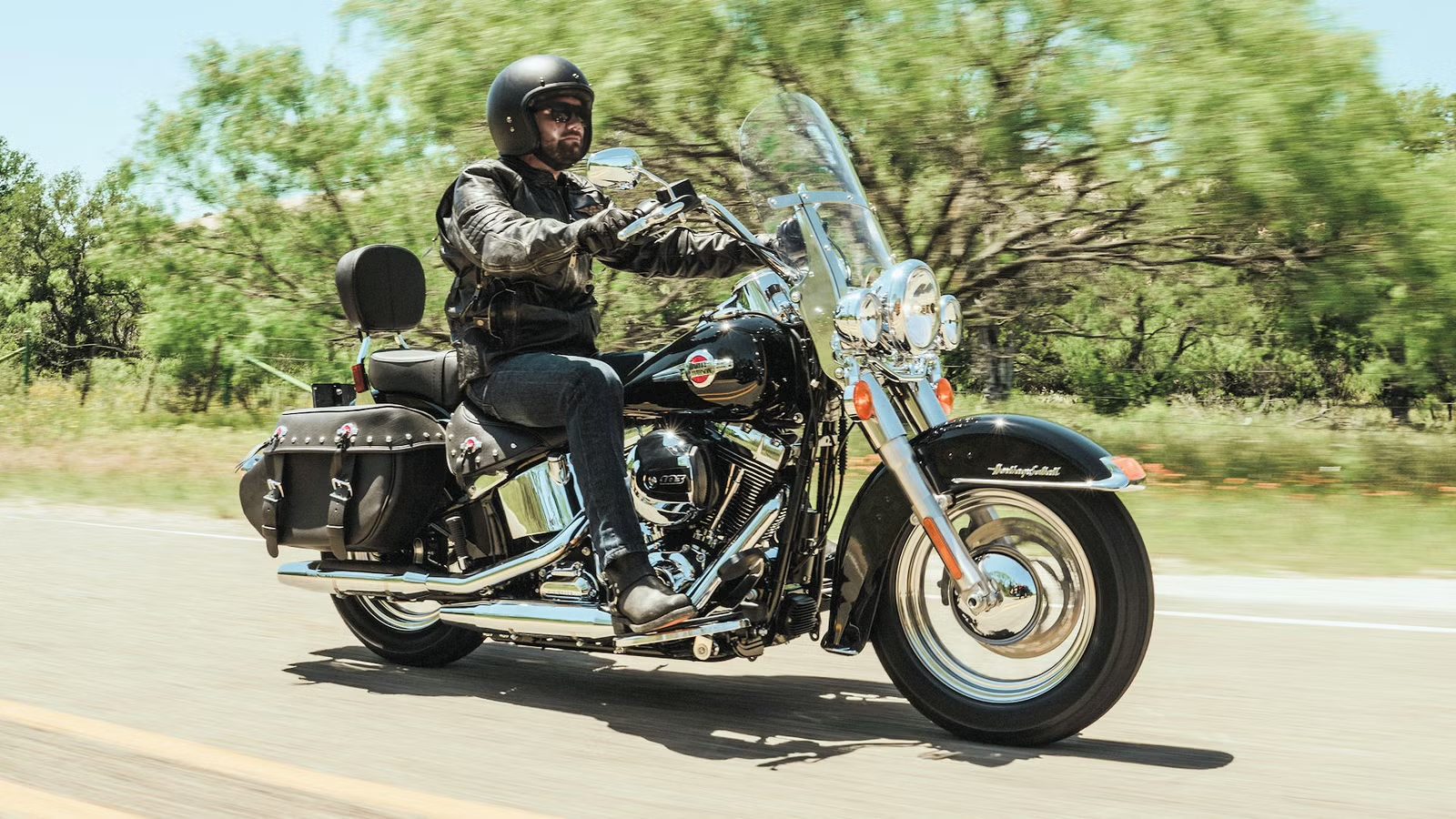
Buying a used Harley-Davidson involves more than finding the right model at the right price. The engine generation can make a considerable difference in performance, maintenance requirements, and long-term ownership costs. Some Harley engines have earned reputations for exceptional durability, while others have known trouble spots. After spending decades working on these motorcycles, there are several engine generations I’d be comfortable considering when shopping used. Here’s what I’d look for, what I’d watch out for, and which versions would make my list.
5
Evolution Big Twin
Year Range: 1984 – 1999

The Evolution Big Twin is one of the first engines I’d consider when shopping for an older used Harley-Davidson. Introduced in 1984, the 1340cc V-twin replaced the Shovelhead and represented a substantial improvement in reliability, oil control, and heat management. Its relatively straightforward construction also makes it easier to service than some later generations.
When inspecting one, I’d pay particular attention to oil leaks around the rocker boxes and cylinder bases, crankcase breathing, and charging-system condition. I’d also want to know how long the motorcycle has been sitting and whether it has received regular maintenance. Age-related deterioration can be just as troublesome as mechanical wear.
I’d lean toward a well-maintained 1990s example, but I wouldn’t let the model year outweigh condition or maintenance history. The Evolution offers traditional Harley character, mechanical simplicity, and a reputation for durability that makes it a worthwhile used-bike candidate.

4
Evolution Sportster
Year Range: 1986 – 2022

The Evolution Sportster deserves serious consideration if you’re shopping for a used Harley-Davidson, particularly if you want something smaller and lighter than a Big Twin. Available in 883cc and 1200cc versions, the engine benefited from decades of refinement and earned a reputation for durability. Its relatively straightforward construction also makes it a good candidate for riders who prefer doing their own maintenance.
I’d pay close attention to rocker-box and base-gasket leaks, charging-system condition, primary-chain adjustment, and clutch operation. I’d also listen for unusual valvetrain noise and look for evidence of excessive oil consumption. The 2004 introduction of rubber-mounted engines was a significant improvement in rider comfort, although it added some complexity.
Transmission And Fuel-Injection Changes

The five-speed transmission arrived in 1991, making those models worth considering over the earlier four-speed versions. Later Sportsters also benefited from fuel injection, introduced in 2007, eliminating the carburetor and changing the way the engines deliver fuel. Neither development automatically makes a newer motorcycle a better purchase, but both are worth considering when comparing used examples.
Both displacements have their merits, but I’d lean toward the 1200. The 883 is perfectly capable of highway riding, but the additional displacement gives the 1200 more flexibility when accelerating, passing, or carrying a passenger. I’d also investigate any 883 that has been converted to 1200 displacement, particularly if the owner can’t document who performed the work and what components were used. A well-maintained, rubber-mounted 1200 would be high on my used-bike shortlist.
3
Twin Cam
Year Range: 1999 – 2017

The Twin Cam is probably the broadest used-bike shopping opportunity on this list. Introduced in 1999, it replaced the Evolution Big Twin and remained in production until 2017. Harley-Davidson offered several displacements during that time, giving buyers plenty of choices depending on their performance expectations and budget.
The Twin Cam 88 is the one I’d approach with the most scrutiny. Its spring-loaded cam-chain tensioner shoes are known wear items, and ignoring them can lead to serious engine damage. I’d want to see documentation of a tensioner inspection or replacement, preferably an upgrade to the later hydraulic arrangement. There is an important exception: 2006 Dyna models received the revised system before the rest of the lineup.
The Twin Cam 96 arrived for 2007, bringing increased displacement and revised cam-drive components. Six-speed transmissions were also becoming standard across more of the lineup, although Dyna models had already received one for 2006. The 103 followed in broader production, becoming a popular choice in Touring, Dyna, and Softail models. The 110, primarily found in CVO motorcycles and select performance-oriented models, offers more displacement and performance but can come with a higher purchase and maintenance cost.
The Twin Cam 110 And Heat Management

The 110 also deserves a closer look before buying. Its additional displacement delivers stronger performance, but it can generate considerable heat, particularly in heavily loaded Touring models. Some later versions used liquid-cooled cylinder heads to help manage temperatures. I’d want to know which version I’m looking at and whether its cooling system has been properly maintained.
I’d be comfortable considering any of these engines with a good maintenance history. The 96 and 103 would probably be my first choices for an everyday used Harley, but I wouldn’t pass over a properly maintained 88 or 110. I’d pay particular attention to compensator operation, cam-chest condition, oil leaks, and evidence of engine modifications. With the Twin Cam, knowing which version you’re buying is just as important as knowing how many miles are on it.
2
Milwaukee-Eight
Year Range: 2017 – present

The Milwaukee-Eight would absolutely make my shortlist when shopping for a used Harley-Davidson. Introduced in 2017, it replaced the Twin Cam in Touring models before moving into the redesigned Softail lineup for 2018. Its four-valve cylinder heads improve airflow, while the single camshaft and internal counterbalancer help deliver a smoother, more refined riding experience. Available in 107ci, 114ci, and 117ci versions, it offers plenty of choices depending on the motorcycle and intended use.
I’d pay particular attention when looking at early production examples, especially 2017 – 2019 models. Oil-sumping concerns affected some early engines, making it important to determine whether the motorcycle experienced the problem and, if so, whether the updated oil pump was installed as part of the repair. I’d also listen for abnormal valvetrain noise and inspect the rocker-box areas for oil leaks.
When evaluating an M-8 bike, I’d be comfortable considering any displacement, but the 107 and 114 would be my starting points. The 117 offers more performance, but I wouldn’t pay a premium for displacement alone. Maintenance history and evidence of proper repairs would carry more weight in my buying decision.
1
Revolution Max
Year Range: 2021 – present

The Revolution Max represents a significant departure from Harley-Davidson’s traditional V-twin engines, but I wouldn’t overlook it when shopping for a used motorcycle. Introduced in 2021, this liquid-cooled, 60-degree V-twin features dual overhead camshafts, four valves per cylinder, and variable valve timing. Available in 975cc and 1250cc versions, it delivers considerably more high-rpm performance than the traditional Big Twins.
I’d pay particular attention to the electrical system, starting operation, and service history on early examples. Harley-Davidson issued several technical updates addressing starting difficulties and electrical and diagnostic issues on 2021 – 2023 motorcycles. I’d also verify that applicable updates have been completed and check for outstanding recalls.
I’d consider either displacement, depending on the motorcycle. The 1250 offers substantially more performance, while the 975 provides a more approachable alternative. These engines are considerably more electronically complex than their predecessors, so I’d want a complete service history and access to a dealer familiar with the platform.
Source: Harley-Davidson

Related posts


Latest Post


No Comments