
The Genesis Coupe 3.8’s Used-Market Price Makes It The Cheapest Way Into A 350-HP RWD V6 Right Now
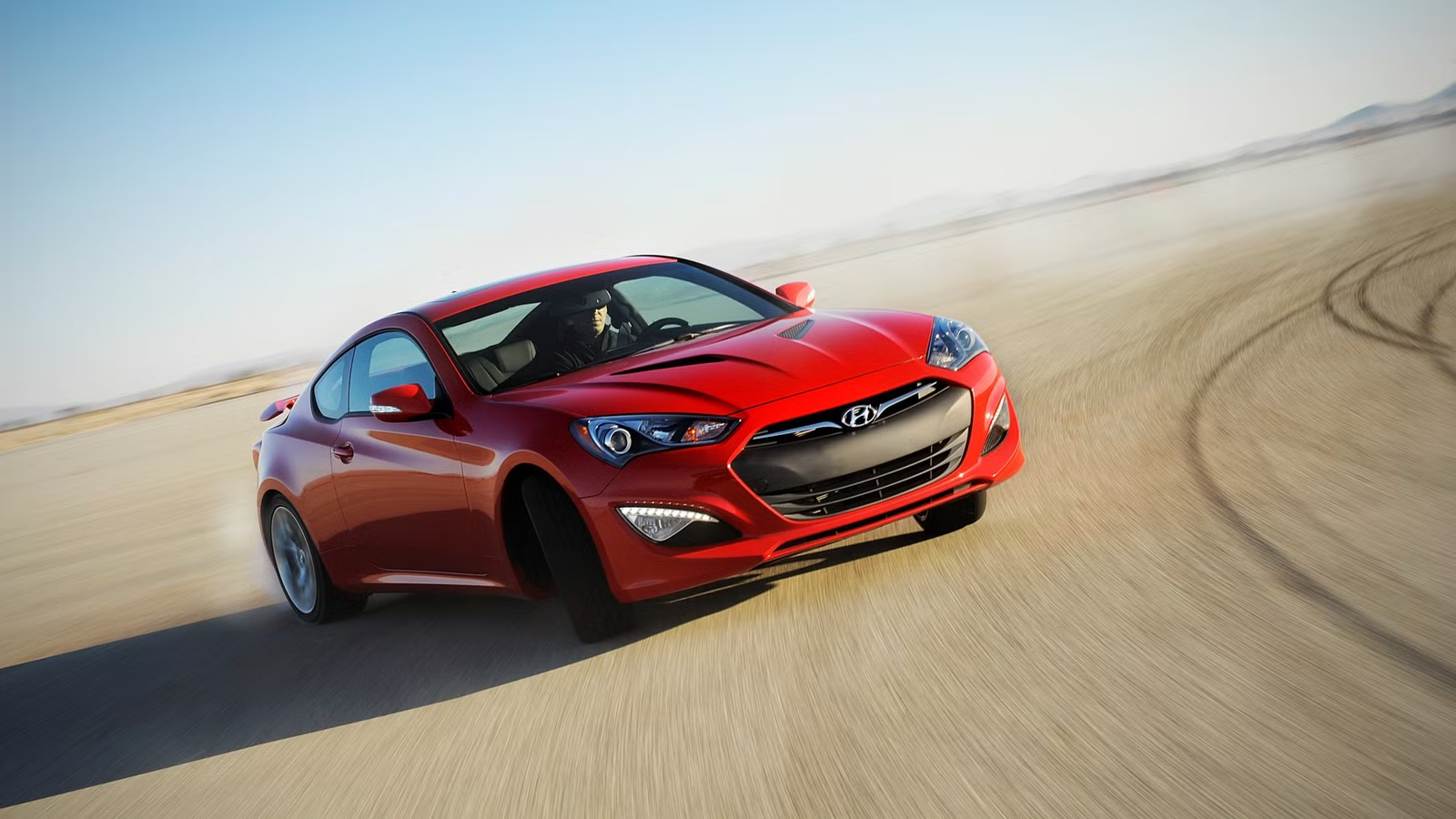
The Hyundai Genesis Coupe never got the respect it deserved, and that’s exactly why it’s one of the smartest used buys on the market right now. Post-refresh 3.8 models made 348 horsepower and 295 lb-ft of torque from a naturally aspirated V6, sent power to the rear wheels, and came with an independent rear suspension and four-wheel disc brakes. Clean examples routinely sell for under $20,000.
Why The Genesis Coupe Got This Cheap

Hyundai had never built anything like the Genesis Coupe before it arrived for 2009. The brand’s sportiest car up to that point was the front-drive Tiburon, topping out around 172 hp, so a rear-wheel-drive coupe with a V6 pushing past 300 hp and a Torsen limited-slip differential on tap was a real departure. The problem was timing: Hyundai in 2009 still carried the budget-brand stigma, and no amount of bulging fenders or Brembo brakes was going to erase that overnight.
The interior didn’t help. Plastics felt cheap next to Japanese rivals, and the six-speed manual earned a reputation for a notchy, rubbery shift action. None of that changes the hardware underneath, but it explains why resale values collapsed.
What The Money Actually Buys

The launch Genesis Coupe 3.8 made 306 hp and 266 lb-ft from its naturally aspirated V6, matching the contemporary Nissan 350Z and beating the 210-hp V6 Ford Mustang of the same era outright. By 2012, Ford had bumped the base Mustang to 305 hp, closing that gap, but Hyundai answered with the 2013 refresh. Direct injection pushed the 3.8-liter V6 to 348 hp and 295 lb-ft, enough to beat the 332-hp Nissan 370Z on paper and stand as one of the most powerful naturally aspirated V6s in any sports car of its time.
Every Genesis Coupe came with MacPherson strut front suspension and a five-link independent rear. The Track and R-Spec trims are the ones to actually hunt for. They add a Torsen limited-slip differential in place of the standard open unit, stiffer springs and anti-roll bars, and Brembo four-piston calipers clamping 13.4-inch front rotors. Post-refresh R-Spec and Track cars even gained adjustable camber plates, aimed squarely at owners who intended to track the car rather than just look fast parked outside a diner.
Which One To Actually Buy

The turbocharged 2.0-liter four-cylinder got its own twin-scroll upgrade in 2013, jumping to 274 hp and 275 lb-ft, which makes it a cheaper entry point if you’re planning to modify the engine down the road. If you don’t intend to touch the powertrain, the 3.8 V6 is the one to chase. Either way, look for a post-refresh R-Spec, Track, or Ultimate trim, since those combine the Brembo brakes, limited-slip diff, and sport-tuned chassis that make the Genesis Coupe worth owning in the first place. The pricing reality hasn’t changed: a 348-hp rear-drive coupe with factory Brembos and a Torsen diff for less than a new Corolla is still one of the better-kept secrets in the used market.

Related posts

Latest Post



No Comments