
The Forgotten Oldsmobile Wagon That Hid A 442’s Rocket 455 V8
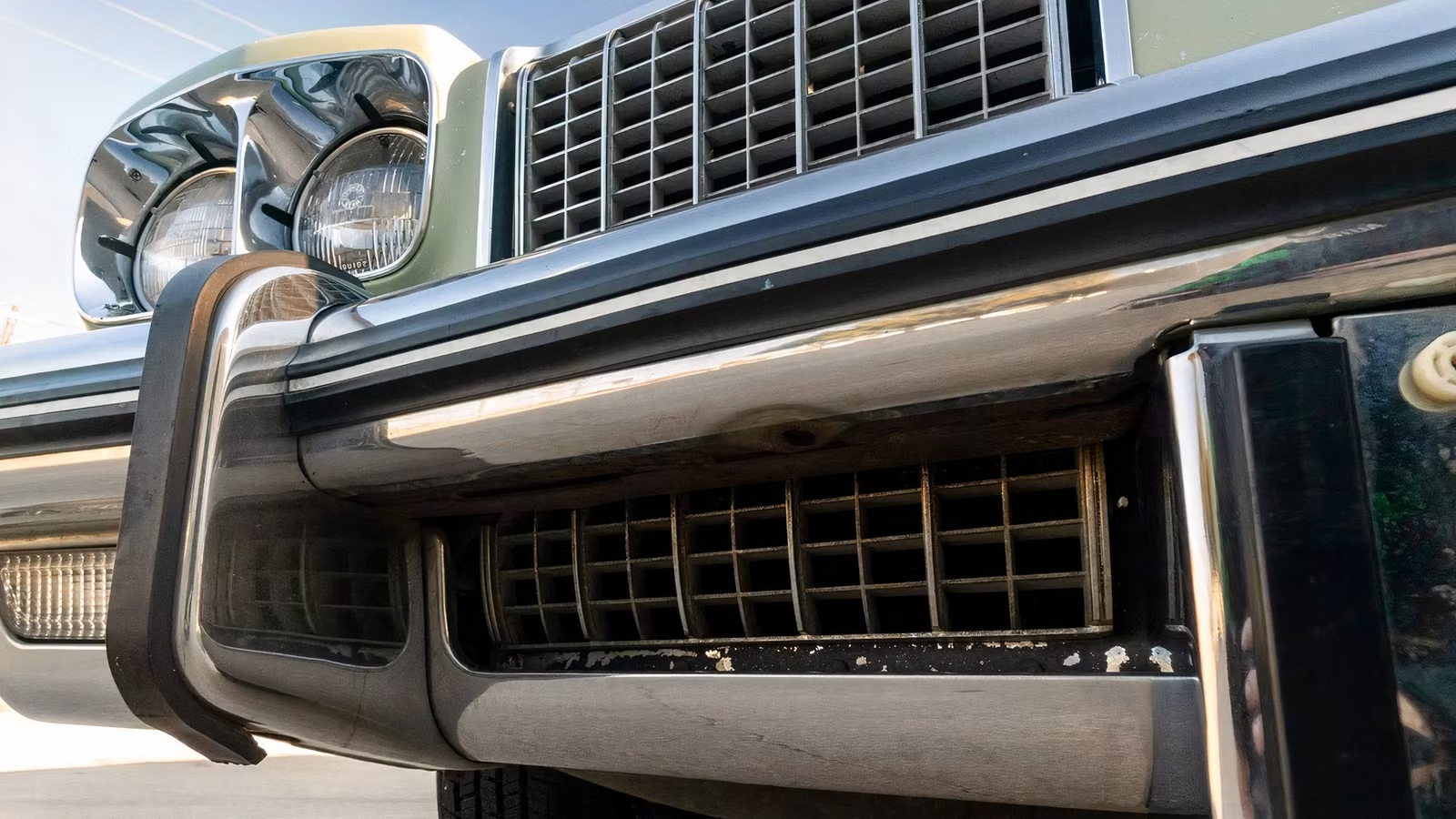
It was a sad time to be around, but by 1972, Detroit’s muscle car boom was losing oxygen. Compression ratios were dropping, federal emissions rules were tightening, and the horsepower figures Americans bragged about were suddenly getting much smaller. In the midst of all this, though, one enormous family wagon still carried 455 cubic inches under its hood. It had room for the kids and enough woodgrain to furnish a den, but its engine belonged to a far more exciting part of Oldsmobile history.
The Rocket 455 Was Running Out Of Road

Oldsmobile’s Rocket 455 V8 arrived in 1968 and quickly became one of the company’s most important performance engines. When General Motors finally lifted its 400ci limit on intermediate cars for 1970, the 455 could officially move into the Oldsmobile 442. The result helped create some of the most memorable American muscle cars of the era, topped by the fearsome 442 W-30.
In 1970, the standard 442’s 455 produced 365 gross horsepower, while the W-30 raised output to 370 hp and a massive 500 lb-ft of torque. The hotter engine also received serious hardware, including an aluminum intake and specially prepared components. Oldsmobile wasn’t merely dropping its largest V8 into a smaller body and hoping for the best. The W-30 was the expensive, carefully developed version built for people who considered rear tire life somebody else’s problem.
Down, But Not Out
Then Detroit’s rulebook changed quickly. For 1971, Oldsmobile dropped the W-30’s compression ratio from 10.5:1 to 8.5:1 as the industry adapted to unleaded fuel and stricter federal emissions requirements. The move to SAE net horsepower ratings made the numbers look even more dramatic because engines were now measured with the equipment they actually used in a vehicle.

By 1972, the W-30 455 was rated at 300 net horsepower and 410 lb-ft of torque. Those figures looked tame beside the gross ratings of only two years earlier, but the Rocket 455 hadn’t suddenly forgotten how to move a heavy Oldsmobile. American performance was changing, and the big Olds V8 was being forced to evolve with it.
Oldsmobile Refused To Save The 455 For Muscle Cars

Here is where things get more interesting. The company never treated its largest V8 as something that belonged exclusively behind a 442 badge. Variations of the Rocket 455 appeared throughout the Oldsmobile lineup, including the luxurious 98 and the front-wheel-drive Toronado.
The basic architecture could therefore serve very different missions. A 442 W-30 received the hotter induction system and carefully selected performance hardware, while other Oldsmobiles used milder versions designed around effortless low-rpm power. Sharing 455 cubic inches didn’t make every Oldsmobile a W-30, but it created a pretty cool family connection between the company’s Muscle Cars and its luxury machines.
Either Or

That versatility came naturally to an engine with a 4.25-inch stroke. The Rocket 455 didn’t need to scream toward the upper reaches of the tachometer to make something large feel considerably less large. Oldsmobile could tune it for straight-line performance in one model and relaxed cruising in another, which proved useful at a time when plenty of cars wearing the Rocket badge had roughly the dimensions of municipal buildings.
And Oldsmobile’s definition of ‘large car’ still had room to grow. If a 455 could make sense in a 442 and an upscale sedan, there was apparently little reason it couldn’t haul an entire American family and their luggage as well. That decision produced one of the most overlooked classic Oldsmobiles of the early ’70s.
The 1972 Custom Cruiser Put 442 DNA Under Woodgrain

The subject here is the 1970s Oldsmobile Custom Cruiser, a full-size station wagon that came standard with the 455 Rocket V8. That fact alone gives this forgotten Oldsmobile wagon a pretty strange place in American muscle car history. The same basic engine family powering the company’s hottest 442 also lived beneath the hood of a woodgrained family hauler.
There’s an important distinction, though. A 1972 Custom Cruiser wasn’t secretly a 442 W-30 with additional seating. Its 455 was a milder version designed for full-size wagon duty, while the W-30 received special hardware including its performance intake, cylinder heads, and carefully prepared engine components. The link is architectural rather than a claim that both Oldsmobiles received identical engines.
If anything, that makes the Custom Cruiser more interesting. Olds had engineered the Rocket 455 broadly enough that the engine could underpin one of America’s famous muscle cars and an enormous luxury station wagon at the same time. The 442 showcased what the 455 could do when performance was the priority. The Custom Cruiser used the same fundamental formula to make several thousand pounds of family transportation feel appropriately effortless.
For classic car enthusiasts in the US today, that gives the 1972 Oldsmobile Custom Cruiser something many vintage station wagons lack: genuine muscle car ancestry beneath the surface. It won’t draw the same instant recognition as a 442 W-30, but open the hood and that 455 tells a much more entertaining story than the fake woodgrain initially suggests.
The Clamshell Tailgate Made 455 Cubic Inches Look Almost Sensible

The Custom Cruiser needed serious hardware because it was a serious amount of automobile. Oldsmobile’s full-size station wagon used an extended version of GM’s B-body architecture with a 127-inch wheelbase. That gave the Custom Cruiser massive proportions even by early-1970s American standards, when parking spaces evidently came with their own ZIP codes.
Inside, the wagon could be configured with forward-facing third-row seating, turning all that length into genuine family utility. This was a luxury-minded American station wagon intended for long-distance travel, with the Rocket 455 providing exactly the sort of low-rpm muscle a vehicle of this size demanded.
Elaborate Engineering

Then GM added the feature everybody remembers: the Glide-Away clamshell tailgate. Instead of swinging open like a conventional wagon gate, the lower section disappeared beneath the cargo floor while the rear glass retracted into the roof. It was stupidly elaborate engineering for the humble business of loading luggage, which made it perfectly suited to an era when Detroit considered simplicity a problem somebody else could solve.
The clamshell arrangement also helped distinguish the early Custom Cruiser from countless other classic American wagons. Combine it with the 127-inch wheelbase and a 455 V8, and you get a station wagon that feels almost impossible by modern standards. Today’s three-row SUVs may offer more technology and better fuel economy, but very few can make unloading groceries look like the opening sequence of a mechanical magic show.
The Oil Crisis Made This Kind Of Oldsmobile Impossible

The 1972 Oldsmobile Custom Cruiser arrived at almost exactly the wrong moment for such extravagance, sadly. Detroit was already responding to emissions legislation and lower-octane fuel when the 1973 oil crisis dramatically changed how American buyers thought about fuel consumption. Suddenly, a full-size station wagon powered by 455 cubic inches didn’t look quite as sensible as it had during the previous decade.
Oldsmobile kept the Custom Cruiser name alive, but the original formula couldn’t last forever. GM downsized its full-size station wagons for 1977, and the huge 127-inch-wheelbase Custom Cruiser disappeared along with its complicated clamshell tailgate. America’s family cars were becoming smaller and more rational, two qualities that don’t exactly describe this particular Oldsmobile.
Practical Excess

That’s why the 1972 Custom Cruiser deserves more attention. Vintage station wagons have spent years living behind muscle cars in the collector hierarchy, yet this one connects both worlds unusually well. It offers the visual drama of a massive 1970s American long-roof while carrying a version of the same Rocket 455 architecture that helped make the Oldsmobile 442 famous.
The 442 W-30 will always be the muscle car hero, and it should be. The Custom Cruiser represents the stranger side of the same story, when Oldsmobile could take its largest V8 and decide that a luxury family wagon deserved 455 cubic inches as standard equipment. America built plenty of excessive cars in the early ’70s, but few made excess look quite this practical.
Sources: Curbside Classic,

Related posts



Latest Post


No Comments