
The Forgotten Oldsmobile Muscle Car With A Hemi-Killing Engine
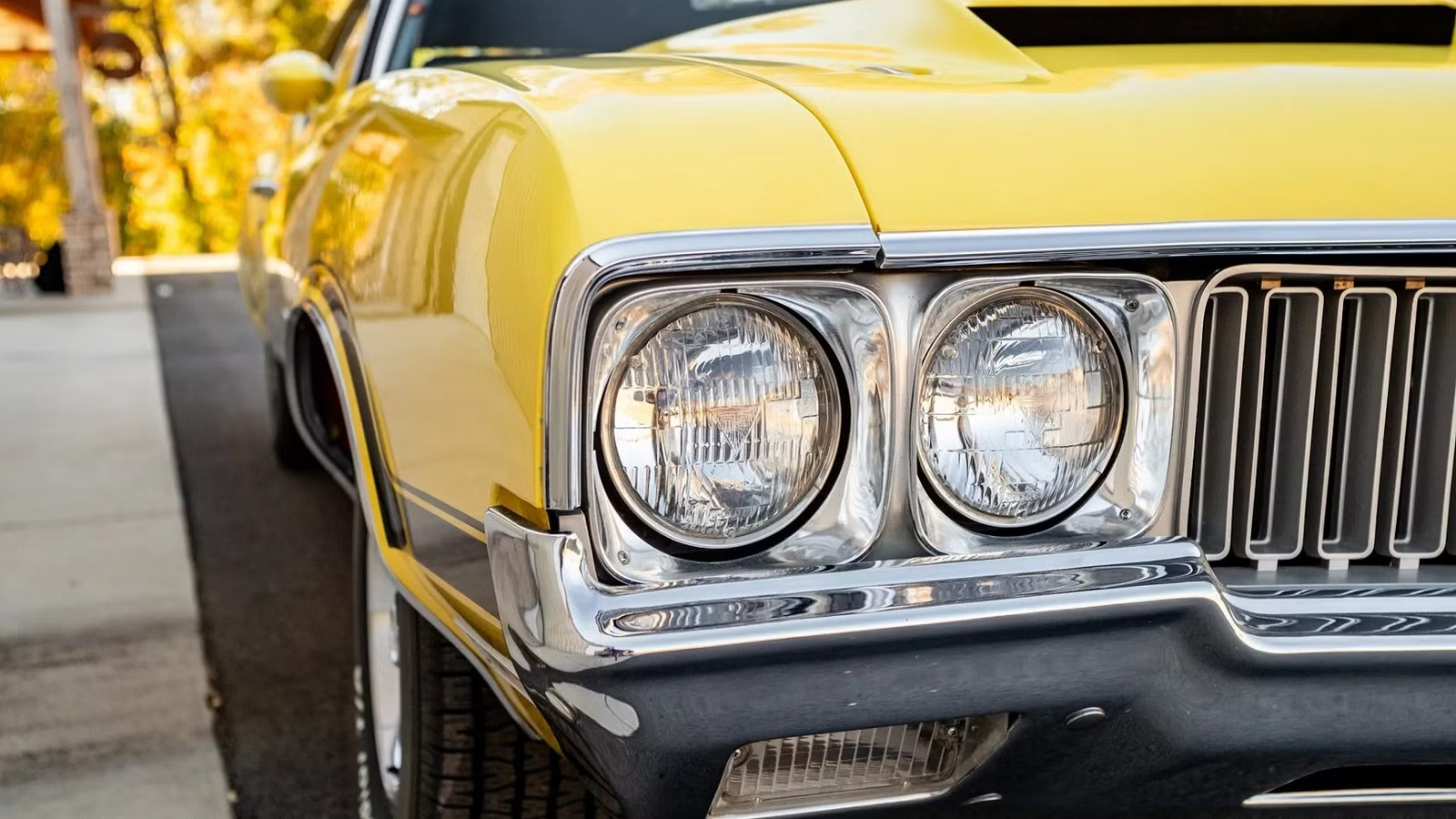
Muscle-car Every muscle car conversation eventually collapses into the same handful of names. The Hemi gets dropped like a trump card, the room splits over shaker hoods and orange engines, and somewhere in the noise, a few genuinely fearsome street machines get left out of the discussion entirely. The golden era had more depth than the greatest-hits version suggests, and some of its most capable factory cars wore badges that never quite made it into the mythology.

One of those cars came from Oldsmobile, a brand most people file under “your grandpa’s nice one.” In the right trim, it could launch hard enough to make a Street Hemi driver question his life choices, and it did it with big torque, smart gearing, and some sneaky factory tricks. This is the story of a forgotten muscle car — something like a rescue mission for a legend.
The Oldsmobile 442 W-30 Was A Monster That Outran Street Hemis
The secret car carries a name most enthusiasts recognize, but not enough people respect – the Oldsmobile 442 W-30. Oldsmobile built plenty of quick 4-4-2s, but the W-30 package turned the car into a full-on factory bully that could go toe to toe with the fastest muscle cars of the era, straight from the showroom. Oldsmobile didn’t build the W-30 just to chase big numbers, though; it was a calculated move. The package was designed to give dealers a factory-built car that could compete in NHRA Super Stock drag racing, meet enthusiast demand for serious performance, and position the brand as a legitimate contender in the muscle car wars alongside Mopar and Pontiac.

For 1970, GM finally relaxed its internal “no more than 400 cubes” rule for A-body intermediates, and Olds arrived with a 455 as standard equipment. The base 1970 4-4-2 used a 455 rated at 365 horsepower, while the W-30 version carried a 370-horse rating and a stack of supporting hardware. That hardware included outside-air induction, special heads, a hotter cam, an aluminum intake, and the kind of cooling and chassis pieces that let the car take repeated punishment without getting cranky.
How Does The 442 W-30 Compare Against Hemis?

Car and Driver tested a 426 Hemi Challenger R/T with an automatic and a 3.23 rear gear, and the magazine recorded a 14.1-second quarter-mile at 103.2 mph. That’s classic Street Hemi performance, and it explains the legend’s swagger.
Now, put an Oldsmobile next to it. Hot Rod’s look back at a 1970 4-4-2 W-30 reports a baseline 13.89-second pass at 101.12 mph, with the editors noting the car responded best to firm, manual-style shifting from its Turbo 400. Hot Rod also repeats a period claim that a W-30 with a four-speed and 3.91 gears ran 14.2 at 102 mph in a Motor Trend test, and that Oldsmobile engineers reportedly coaxed a 13.7 from the same car with a fresh tune. Simply put, the W-30 lived right in Street Hemi territory, and on a good day, it could run ahead of it.
The W-30 didn’t always post headline numbers, and that’s exactly why it gets overlooked. Car Life’s 1970 road test of a W-30 recorded a 14.3-second quarter-mile at 100.2 mph with 3.42 gears. That’s still fast for a full-interior, warranty-backed street car, but it doesn’t scream “giant killer” the way a 13.8 does. At the same time, plenty of Hemi road tests reveal how sensitive those cars were to setup and traction. Hot Rod’s road test of a 1969 Hemi Charger lists a 13.48-second quarter-mile at 105.5 mph, while Car and Driver’s Hemi Challenger shows a slower 14.1 despite similar power.
Those differences don’t mean one engine “wins” forever. They mean magazines tested on different days, with different tires, different drivers, and different gears. The W-30’s claim to fame isn’t one perfect number – it’s that Oldsmobile built a car that could run with the scariest name in the room without needing a Hemi badge to do it.
Big-Stroke Torque And Smart Gearing Made The Magic

|
Engine |
Power |
Torque |
0-60 MPH |
Top Speed |
|
7.5-liter V8 |
370 hp |
500 lb/ft |
5.7 seconds |
116 mph |
The explanation starts under the hood. The heart is a 455-cubic-inch V8 with a 4.125-inch bore and a 4.25-inch stroke, 10.5:1 compression, pushing out a conservatively rated 370 horsepower and 500 lb-ft of torque. Every W-30 engine was hand-assembled and blueprinted at Oldsmobile’s Lansing Performance Engine Center, with tighter tolerances and carefully matched components that most muscle cars never received.
The 500 lb-ft of torque matters more than the horsepower rating for how the car actually feels. A long stroke gives the crankshaft more leverage, and that leverage translates into grunt at lower rpm — exactly where street driving happens, mostly below 4,000 rpm. A comparison with the Street Hemi illustrates why the W-30 felt so nasty from a roll. The 426 Hemi is listed at 4.25 by 3.75 inches for bore and stroke, with 425 horsepower at 5,000 rpm and 490 lb-ft of torque at 4,000 rpm. That shorter stroke helps the Hemi spin and breathe, and the head design helps it move air at higher rpm. It’s a fantastic performance engine, but it asks for rpm and room to rev.
Oldsmobile didn’t rely on displacement alone. Some of the W-30-specific details include a special camshaft and “F” cylinder heads, plus an aluminum intake manifold and a unique distributor. The package also featured the fiberglass W-25 dual-intake hood with functional air induction — those ducts and scoops were genuine performance hardware, not cosmetic decoration — along with a low-restriction air cleaner that made the outside-air system actually work.
Gearing put the whole plan on the pavement. The standard W-30 ratio was 3.42, with optional 3.91 gears available. That multiplication is the simplest explanation for why the W-30 could embarrass stronger cars on paper — it didn’t always make more horsepower, but it consistently delivered more usable force at the wheels. Add the sturdy TH400, the Hurst Dual-Gate shifter option for automatic cars, and a limited-slip rear, and the W-30 handed the driver a straightforward instruction manual: mash, hook, go.
Low Weight Also Helped The V8

Then Olds took weight out of unexpected places. The W-30 used those famous red inner fenders — lightweight plastic replacements for the standard stamped-steel pieces. That detail sounds minor, but it reveals the engineering mindset behind the package. A 1970 W-30 had a curb weight of around 3,755 lbs, roughly 135 lbs lighter than a Challenger R/T from the same year and up to 220 lbs lighter than a Plymouth Hemi ‘Cuda from 1970.
How The Oldsmobile Compared To Other Muscle Cars In 1970

|
Model |
Power |
Torque |
1/4 Mile Time |
|---|---|---|---|
|
1970 Chevy Chevelle SS 454 LS6 |
450 hp |
490 lb-ft |
13.44 |
|
1970 Dodge Challenger R/T Hemi |
425 hp |
490 lb-ft |
14.1 |
|
1970 Oldsmobile 4-4-2 W-30 |
370 hp |
500 lb-ft |
13.89 |
|
1970 Pontiac GTO Judge 455 |
370 hp |
500 lb-ft |
14.76 |
|
1970 Pontiac GTO Judge Ram Air III |
365 hp |
445 lb-ft |
14.6 |
We already established that the W-30 could technically keep pace with Hemis on a good day, but how did it stack up against the other muscle cars that defined 1970 — arguably the wildest year of the entire golden era? To put its performance into context, consider the GTO. The Goat offered three engines for 1970 — two 400-cubic-inch Ram Air units (RA III and RA IV) and a big-block 455 — but none of them produced more power or torque than the W-30, at least not on paper.
Car Life magazine’s testing showed a Ram Air III GTO Judge with a manual transmission crossing the quarter-mile in 14.6 seconds. The same magazine also tested a 1970 Judge with a 455 and a 4-speed automatic, which proved slower over the quarter-mile at 14.76 seconds.
For the ultimate comparison, the Olds W-30 goes up against the era’s most celebrated factory muscle car: the 1970 Chevelle SS with the legendary 450-hp LS6 V8. When Motor Trend tested one at Irwindale Raceway with John Dianna at the wheel, the big-block Chevelle clocked its fastest quarter-mile at 13.44 seconds, with the other two runs coming in slightly slower. The LS6 Chevelle is quicker than the W-30, but not by the margin most people would expect.
Good Luck Finding One In Original Condition

|
Model Year |
1966 |
1967 |
1968 |
1969 |
1970 |
1971 |
1972 |
|
Production |
54 |
504 |
502 |
1,389 |
3,100 |
920 |
772 |
The W-30’s biggest modern problem isn’t speed. It’s survival. Hemmings breaks down 1970 W-30 production at 262 Sports Coupes, 2,574 Holiday Coupes, and 264 convertibles, for 3,100 total. That number sounds substantial until it meets fifty-plus years of racing, rust, and “upgrades.” A lot of cars lost their original engines, a lot lost their original induction parts, and some lost their original identity the moment someone swapped on a W-25 hood and called it a day. Today’s market treats correct, original pieces like gold, which means the cars that kept them have become unicorns.
Hagerty’s valuation tool pegs a 1970 4-4-2 W-30 in good condition around $89,750, and clean, correct cars can climb well into six figures. The auction world shows how far that climb can go. Classic.com records a top sale of $247,500 for a 1970 Oldsmobile 442 W-30 in January 2022.
More recently, Classic.com also shows a Mecum sale of a 1970 442 Holiday Coupe W-30 for $203,500 in November 2025. Plenty of W-30s sell for less, and those sales still teach the same lesson. Bring a Trailer sold a 1970 442 W-30 convertible for $78,942 in January 2026, and the listing noted it used a replacement 455 block even though it carried W-30-spec parts. That kind of detail can knock significant money off the final number, even if the car looks great and runs hard. Classic.com also shows fixed-price listings for 1970 W-30 cars in the $50,000 to $90,000 range, which typically reflects condition, correctness, and how many questions the car leaves unanswered.
Why The Hemis Are Legends, And The 442 W-30 Remains Forgotten

The Street Hemi became a legend because it lived everywhere. Chrysler tied the engine to racing, to marketing, and to a simple identity: “This car has the Hemi.” The word itself sounds special – and it travels easily. A casual fan can say it, remember it, and repeat it. That repeatability is what keeps a legend alive. It also helps that the Street Hemi looked exotic under the hood, with its massive valve covers and an aura that made even a parked car feel dangerous.
Oldsmobile asked more of the audience. The “ 4-4-2” name started as a clever description of hardware and evolved as the model evolved. The badge once referred to a four-barrel carburetor, four-speed transmission, and dual exhaust, and later marketing linked it to other meanings. That history fascinates enthusiasts but confuses everyone else. Then the top performance package wears the code “W-30,” which sounds like a warehouse label. Oldsmobile even marketed the cars as “W-Machines,” complete with a mad-scientist character in some ads, rather than hammering home one big, memorable engine nickname. The result: the W-30 earned deep respect from those who knew, but it never lodged itself in the public consciousness the way “Hemi” did.

Timing also worked against the Olds. The W-30 hit hardest in 1970, right before the muscle era began its retreat. Insurance premiums climbed, emissions regulations tightened, and compression ratios fell across the industry. Oldsmobile kept the W-30 alive into 1971 and 1972, but the market around it changed quickly. Meanwhile, Mopar fans formed a loud, proud tribe around the biggest Chrysler engines, and that tribe kept the stories alive through the lean years.
None of that changes what the 442 W-30 actually delivered. It offered a big-stroke 455 that made torque like it had a grudge, paired that torque with gearing that helped it leap off the line early, and posted quarter-mile numbers that landed squarely in Street Hemi range — and in some real-world testing, it even ran quicker. That makes the W-30 a perfect underdog story for today.
Source: Oldsmobile, MotorTrend, HotRod

Related posts



Latest Post


No Comments