
The Forgotten Kawasaki Scrambler That Started The Lime Green KX Dynasty
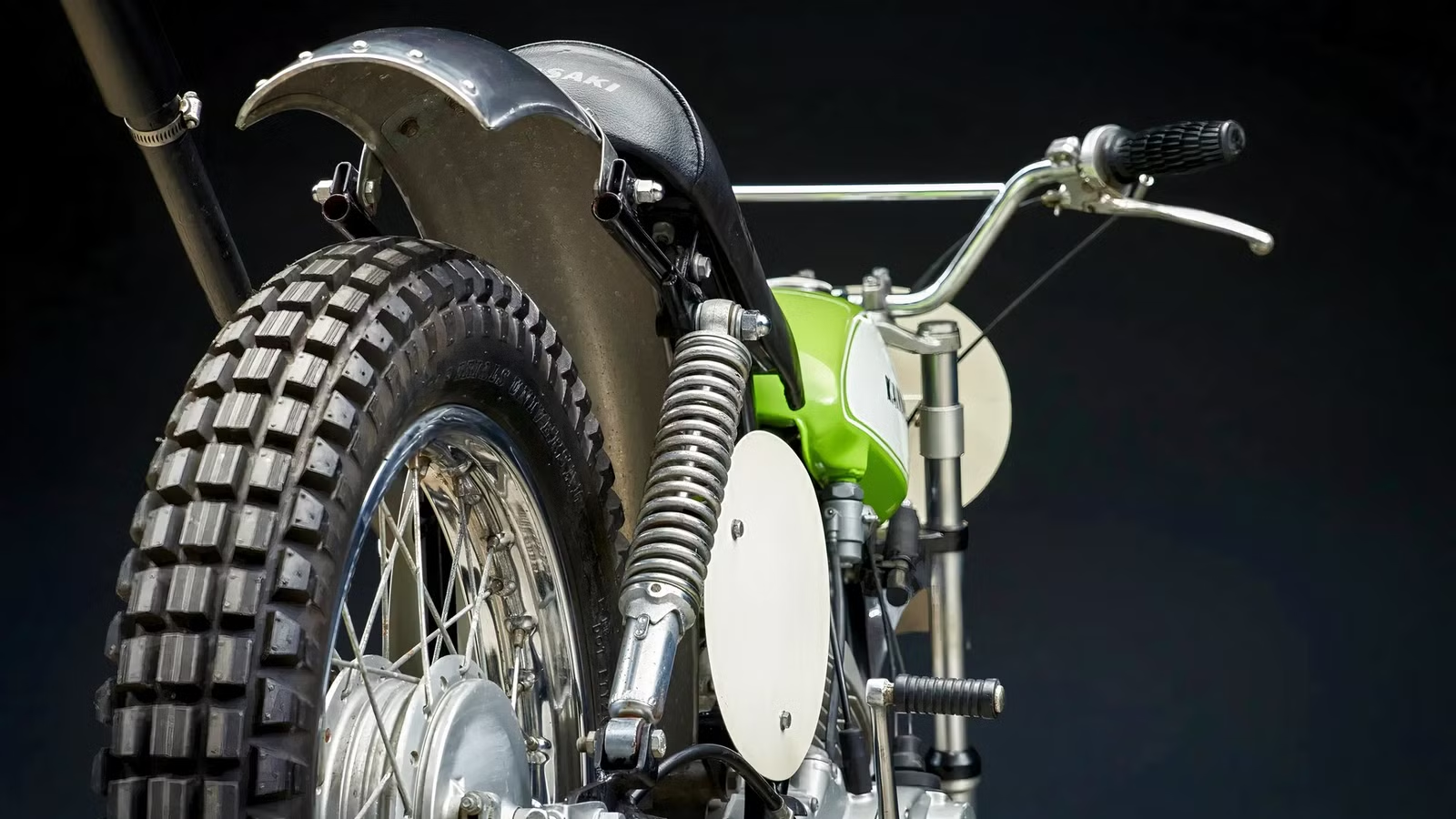
Today, a flash of lime green in a motocross paddock needs no badge to identify it. Kawasaki owns that color so completely that the association feels inevitable, as though someone in Akashi simply opened the correct paint tin and history took care of the rest.

Obviously, it didn’t happen that way. The shade first appeared on a compact competition scrambler built while Kawasaki was still fighting for off-road credibility. The bike disappeared into collector folklore, but its color and privateer-first thinking became the foundation of a motocross empire.
Kawasaki Had To Earn Its Place In The Dirt
By the late ’60s, serious off-road racing already had an established accent, and it’s safe to say that it was mostly European. Husqvarna, CZ, Greeves, Bultaco, and BSA had built their reputations in motocross and scrambles competition, so riders knew where to shop when they wanted a machine that could take a pounding and still make the next heat.

Kawasaki, on the other hand, was still earning that kind of trust. Its early dirt effort had to work across TT tracks and flat-track ovals, then cope with motocross courses and the open desert. American off-road racing didn’t fit into one tidy category, and a bike that looked convincing in a showroom but wilted once the course got rough wouldn’t move the needle.
That made the challenge bigger than producing another street motorcycle with knobby tires. Kawasaki needed a dedicated competition machine with enough engine to get racers interested, even if the chassis tech of the day couldn’t always keep up. What they came up with would be raw around the edges, but riders could forgive a lot when the throttle delivered the goods.
One 238cc Scrambler Put Kawasaki On The Starting Gate

The machine that changed Kawasaki’s off-road direction arrived in 1968 wearing a deep-red or burgundy fuel tank. It was the company’s first serious attempt at a dirt scrambler, powered by an air-cooled 238cc two-stroke single that used rotary-valve induction and sent power through a four-speed transmission.
Its claimed 30 horsepower sounds modest beside a modern Kawasaki KX250, but the bike weighed roughly 220 pounds depending on the spec. That gave it a punchy power-to-weight ratio for the era. Riders remembered a stiff suspension and an engine with a narrow, forceful powerband, which is vintage two-stroke language for “hold on and hope the next bump is friendly.”
Credible Start Point

The chassis used a tubular-steel double-loop frame, a conventional hydraulic fork, and twin rear shocks. Drum brakes handled stopping, while a 19-inch front wheel and an 18-inch rear wheel gave it the stance of a proper competition motorcycle. It also came without street-bike luxuries such as instrumentation, because lap times rarely improve when a speedometer tells you how scared you should be.
Kawasaki had created a racer rather than a trail bike with sporting aspirations. It could appear at a TT event one weekend and a motocross meeting the next, then head into California desert competition. The formula wasn’t polished enough to knock the established Europeans off their perch, but it gave Kawasaki a credible place on the starting line.
The Kawasaki F21M Green Streak Was A Lime Green Legend

That motorcycle was the Kawasaki F21M, better remembered as the ‘Green Streak’. The name only made complete sense after the 1969 version replaced the earlier red tank with a white-and-lime-green finish. This became the first Kawasaki motorcycle sold to the public in the color that now defines the company’s motocross identity.
The paint was more important than it might seem, because it solved a branding problem with one glance. A lime green Kawasaki stood apart in a crowded paddock, and the color carried an aggressive, unmistakable presence before the engine even fired. Decades of Kawasaki KX race bikes have made the shade familiar, but in 1969 it was a gamble rather than a corporate uniform.
Peaky Manners

Underneath that paint sat the same basic 238cc two-stroke single, with a 26mm Mikuni carb feeding the rotary-valve intake. The engine was factory-rated at 30 horsepower and used electronic ignition along with automatic oil injection. A high-mounted exhaust kept the pipe away from the dirt, while a compression-release lever helped manage the single-cylinder engine.
Calling the F21M a proto-KX makes sense, provided nobody expects modern motocross manners. Its short-travel suspension and drum brakes belonged to the late ’60s, and those in the know describe the engine as peaky enough to keep riders busy. The motor was the star, while the rest of the motorcycle tried its best to remain in the same zip code.
Its Spare-Parts Crate Was Kawasaki’s Secret Weapon
The strongest connection between the Kawasaki F21M and the later KX philosophy wasn’t painted on the tank. Kawasaki sold the bike for $875 and packed it with the kind of support a privateer racer could actually use. Each machine came with a spare piston, two sets of rings, a wrist-pin bearing, and a replacement clutch. Gaskets and additional sprockets were included as well.
That package said plenty about the intended customer. Kawasaki expected owners to race, wear parts out, change gearing, and keep competing without waiting for a factory truck to appear. The owner received a motorcycle and enough mechanical backup to treat the first race weekend as a real campaign rather than an expensive experiment.
Forward Thinking

It was an early version of the complete motocross ecosystem manufacturers now build around competition bikes. The F21M offered a focused racing motorcycle with practical support packed beside it in the crate. For a rider paying his own entry fees and turning his own wrenches, those spares were more useful than a glossy brochure promising glory.
The $875 price also explains why the F21M deserves to be more than just collector-worthy. Kawasaki was putting a purpose-built competition package into private hands at a time when the brand still lacked the dirt-racing authority of Husqvarna or CZ. The company couldn’t buy decades of credibility, so it supplied the hardware and let racers build the reputation. Smart.
Every Kawasaki KX Still Owes It A Debt

The F21M eventually gave way as Kawasaki refined its off-road motorcycles, and the KX250 arrived for 1974 as the company’s first production motocross bike. By then, however, the most enduring decision had already been made. Kawasaki’s motocross machines would wear lime green, linking the new KX line to the Green Streak that introduced the color to customers in 1969.
Modern Kawasaki KX motorcycles are sold around the idea that a privateer can buy a focused race bike and take it directly into competition. The equipment has evolved beyond recognition, but the basic promise was visible in the F21M and its crate of replacement parts more than half a century ago.
The Beginning Of The Dynasty

Survival hasn’t been kind to the original, sadly. One prominent collector has estimated that fewer than 25 F21Ms remain in the United States, and truly original examples are even harder to find. A 1969 Kawasaki F21M attracted a $5,800 high bid in 2024 without meeting its reserve, showing that rarity is finally beginning to somewhat catch up with its historical importance.
The Kawasaki F21M Green Streak, then, needs to be remembered. It gave Kawasaki a foothold in American dirt racing and established lime green as a competition color years before the KX dynasty began.
Sources: Bring a Trailer, National Motorcycle Museum, TheOwenCollection, Kawasaki

Related posts





Latest Post


No Comments