
The Family Sedan That Hid Ferrari’s V8 In Plain Sight
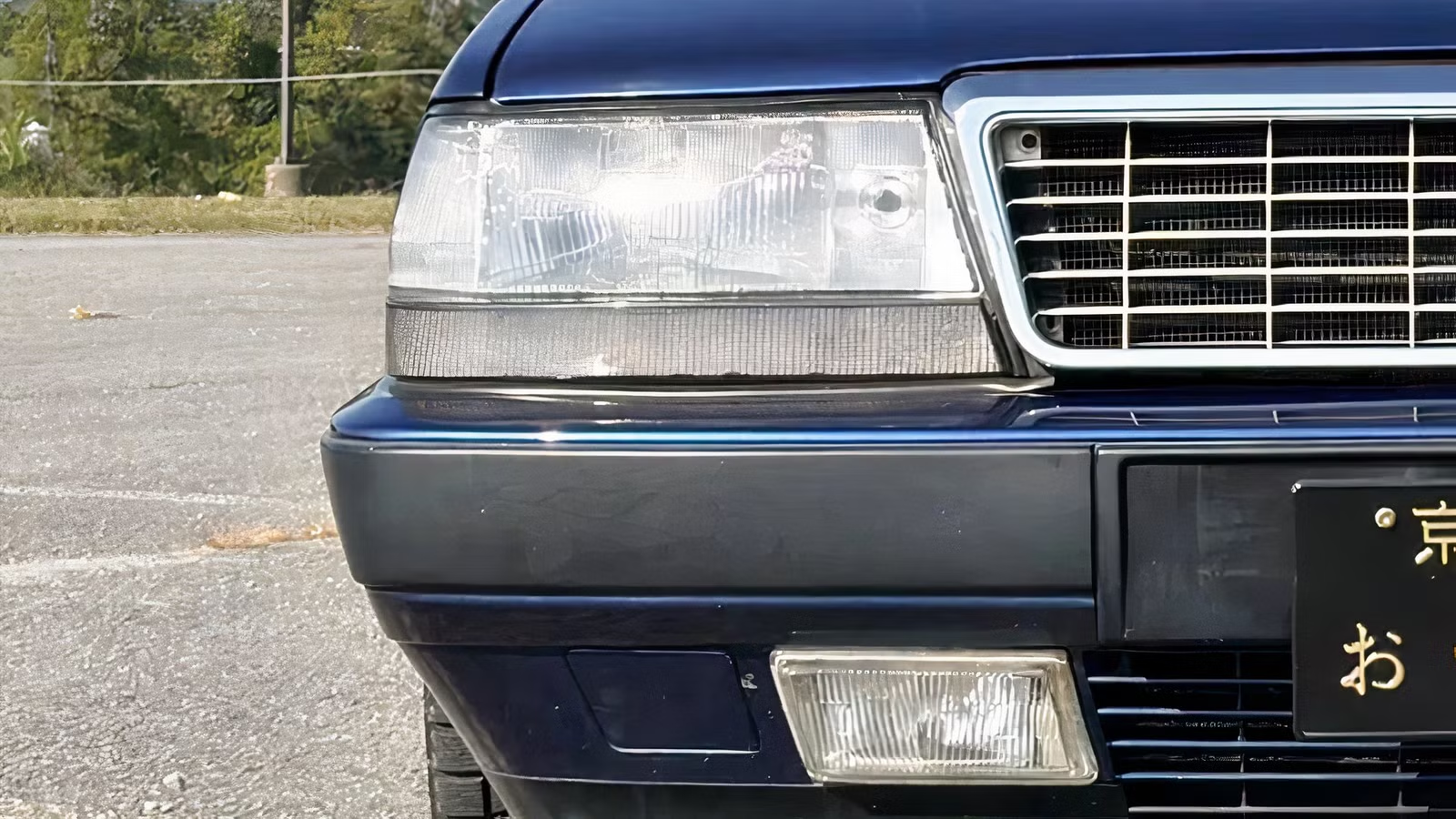
If you haven’t heard of Lancia before, don’t worry, you’re in good hands. To give you a quick synopsis of the brand: Lancia is an Italian luxury automotive brand that originated in 1906. They’re known for a lot of firsts, like the first-ever production V6, a car with an independent front suspension, and the first-ever monocoque body for a vehicle. By the late 1960s, the Fiat Group had bought Lancia out. Then in 2014, Fiat merged with Chrysler, and eventually Chrysler fell under the Stellantis umbrella by 2021.

To get back to the topic at hand, this four-door Lancia arrived on the scene in 1986 as their executive high performance sedan. While this is a Ferrari engine technically, it was modified in order to fit the much larger nature of a mid-size sedan compared to a literal sports car. Let’s go over all the intricacies of what made it so special.
A Ferrari Engine In A Family Sedan
Even though it was a Ferrari V8, the displacement was fairly small. It featured Ferrari’s naturally aspirated 2.9-liter 90 degree V8 that had four valves per cylinder. It makes 212 horsepower for the catalyzed version and 210 pound-feet of torque.
The Ferrari 308 And Mondial Quattrovalvole Parallels


One thing that is not a parallel to the 308 is the crankshaft. The Ferrari uses a flat-plane crank while the Lancia sedan uses a cross-plane crank. The engine in question was derived from the same family as the Ferrari 308 GTB/GTS Quattrovalvole and Mondial Quattrovalvole.
The differences in crankshafts made a significant difference in the behavior of the engine itself. The cross-plane crank shaft prioritized smoother power delivery over raw total power output. As you could probably imagine, the higher output was made for the Ferrari. The original 308 carbureted engine for the European market made 255 horsepower. The US specification made 15 horses less with 240 horsepower to speak of.
How Lancia Utilized This Engine In A Front Engine Platform With Front-Wheel Drive
It’s remarkable to think that there was a car that had a Ferrari V8 in it and sent that power to its front wheels instead of its rear. However, because the engine itself was transversely mounted, it was able to fit itself into the front-wheel layout and design. The only transmission offered with this engine layout was a five-speed manual. If you think there’s torque steering to go along with this Ferrari engine coupled to a FWD drivetrain, you would be correct (according to Hagerty UK).
The Lancia Thema 8.32: A Ferrari Adjacent Italian Luxury Sedan

If you look in the engine bay of the Thema 8.32, you’ll see scrawled atop the manifold cover “Lancia by Ferrari.” This was the clearest indicator that it shared internals with the well-known Italian sports car brand. The number featuring a decimal describes the number of cylinders (eight) coupled with the number of valves (32). The point of the arrangement was to further establish Italy as a force to be reckoned with, not only in the supercar/exotic car space but also in the luxury cruiser space.
While the Thema was already its own standalone model, the 8.32 was meant to be a segment-busting powerhouse with its own premium and alluring offerings, setting it apart from the Fiats, Alfa Romeos, and Saabs of the time. The 8.32 was a luxury sedan first and a sports car second. The Thema 8.32 can achieve 60 miles per hour in 6.8 seconds, which by today’s standards could easily be done by a turbocharged four-cylinder, but back then was incredibly impressive.
Lancia’s General History And Where The Lancia Thema 8.32 Fits In
The original Lancia Thema was introduced in 1984 with the 8.32 following two years later. Although the Thema is basic and boxy looking by today’s standards, this was the general theme of European luxury cars from that era. To separate the 8.32 from the standard Thema, the 8.32 had special exterior and interior appointments as well as a different chassis setup from the standard model.
The Competition Back Then

At the time of production, German competitors already had higher-powered variants of their luxury sedans on the market. For example, the 1986 BMW M5 made 286 horsepower in the EU, compared to the standard 5 Series that made 120-some-odd horsepower in the “e” models. The diesels barely made 100 for that matter. Luckily, the standard Thema made over 100 horsepower at the very least.
Luxury And Performance

Compared to luxury cars of today, the Lancia Thema 8.32 does not offer the same features and conveniences one would expect from a modern luxury vehicle. In the 1980s, it was more about the overall design, feel, and quality of materials that made a luxury car a luxury car. Certainly, there were cars like Mercedes-Benz that offered seriously advanced technical features, but the focus was on the former rather than the latter.
Interior And The Luxury Of It All

The Lancia Thema certainly delivered on the former with its premium, well-crafted front seats, gorgeous wood grain on the dashboard and other surfaces, and leather and Alcántara upholstery (depending on the trim). Poltrona Frau (a luxury Italian furniture maker) was even involved on the leather interior appointments, giving them that extra dash of Italian luxury panache they were aiming for. There were, of course, luxury conveniences like power-adjustable seats and an optional sunroof, giving it a cut-above feel to match the engine.
How’d It Perform Daily?
The Ferrari 308 had a zero to 60 MPH time of between 5.6 and 7.1 seconds. The Lancia Thema 8.32 landed closer to 7.1 seconds. Therefore, even though it was powered by a Ferrari engine, it wasn’t necessarily fast. It was meant to make more relaxed use of the naturally aspirated V8. Front-wheel drive vehicles aren’t known to be the best at handling, and the same could be said for the Lancia. For those who did want to drive it more dynamically, it at least had a deployable rear wing that would help with downforce.
It’s A Rare Bird

The Lancia Thema 8.32 (or Lancias in general) never made it to the United States. They are, of course, able to be imported now that they are well past the federally mandated age of 25 or older. It was also not made by the tens of thousands, as there were only 3,520 units produced. The Thema 8.32 specifically has an asking price anywhere between 15,000 and 35,000 Euros, depending on mileage, condition, and whether the vehicle is fully intact and ready to drive.
Because the market for it isn’t really there, there’s not much of an established pricing matrix for this vehicle. It’s rare because it didn’t just take an engine from Ferrari. It took it and adapted it to its own platform by way of molding it to a front-wheel-drive position at a transversely mounted angle. Maserati is a good example of a manufacturer that does not adapt the engine to its platform but instead transplants it into a similarly styled race car.
Sources: Stellantis, Classic.com, Hagerty, Lancia MC

Related posts



Latest Post


No Comments