
The Discontinued Touring Motorcycle We Miss The Most
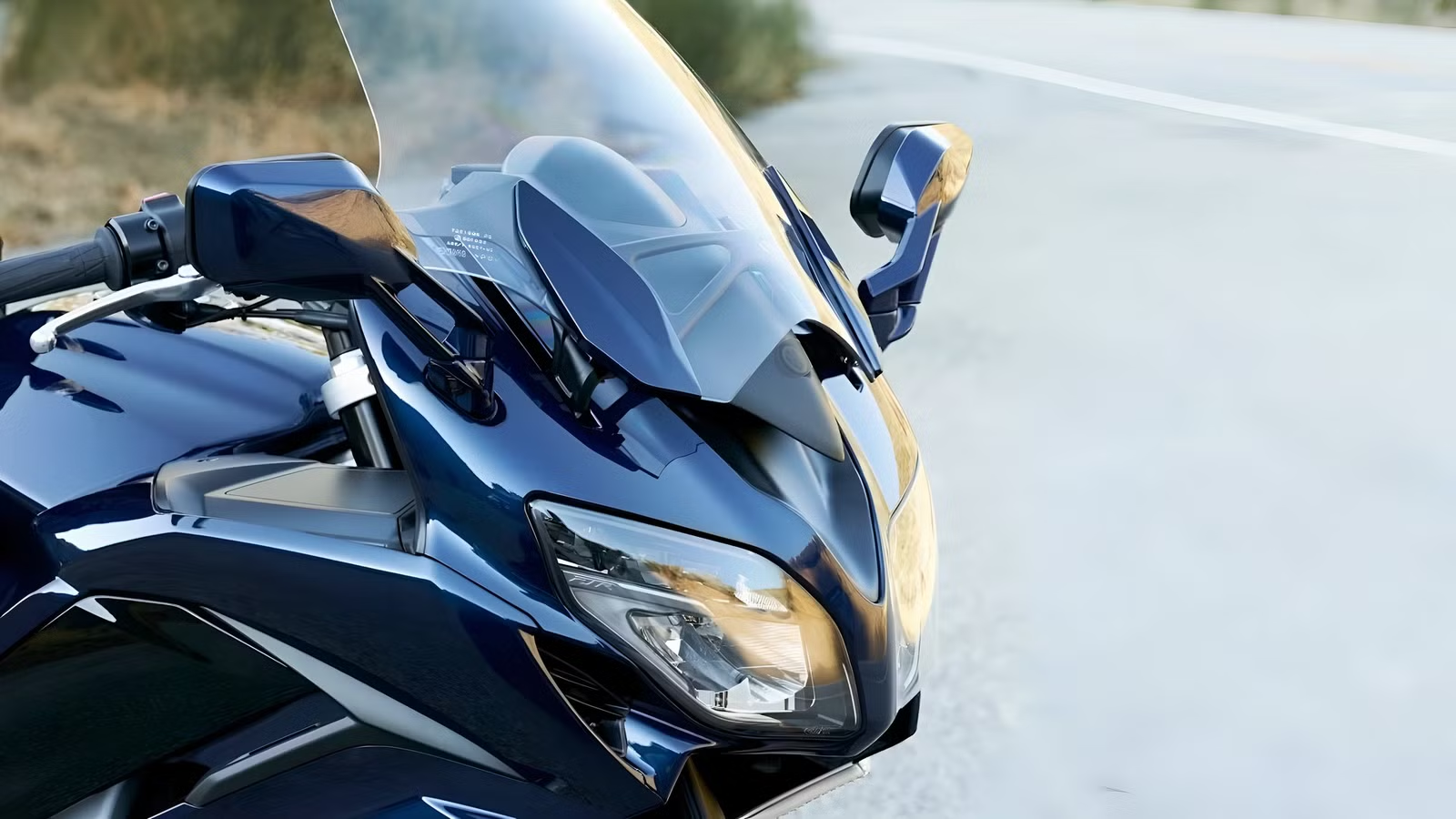
Touring motorcycles are built to devour miles in comfort and style, but the best of them also know how to have fun when the road gets twisty. That sweet spot — equal parts grand tourer and canyon carver — is exactly where the Yamaha FJR1300ES lived, and it’s a spot that feels emptier now that the bike is gone. After more than two decades on the market, this sport-touring legend was quietly discontinued, leaving a gap that no current model has convincingly filled.

It comes with standard saddlebags, features an adjustable rider triangle, boasts an aerodynamically efficient design, offers a wealth of comfort and assistive technology features, and is powered by a potent four-cylinder engine capable of propelling this over-600-pound land yacht to more than 150 mph. Yamaha shouldn’t have pulled the plug here.
Yamaha FJR1300ES: A Sports Tourer That Hits The Perfect Chords Of Comfort And Convenience
The FJR1300ES is designed to be a cozy two-up touring bike. The plush saddle is adjustable by over 0.8 inches without the need for any additional tools, and so is the handlebar, which offers three pre-set positions. The footpegs are adjustable as well. A wide, electronically adjustable windscreen with a range of over 5.1 inches comes standard, and adjustable side fairings that can direct airflow toward or away from the engine round out the ergonomic package nicely.

All these features help the rider dial in the perfect riding position for long, mile-munching sessions. Further elevating comfort on the road is the electronically adjustable suspension system. With the touch of a button, the FJR allows the rider to choose from four preload and three damping presets, and it goes even further by offering seven damping tuning adjustments.
Despite being a hefty touring bike with a curb weight of 642 pounds, the FJR1300ES exhibits a genuinely sporty character. This is primarily due to its aluminum frame, which is significantly superior to the steel chassis used by many of its rivals. According to Yamaha, this chassis is engineered to deliver a balance of stiffness and rider feedback. The swingarm is also long to improve traction and rear suspension action.
|
Frame |
Twin-Spar Aluminum Frame |
|
Front Brake |
320 mm Discs Coupled to Nissin Calipers |
|
Rear Brake |
282 mm Disc Coupled To A Nissin Caliper |
|
Front Wheel And Tire Size |
120/70ZR17 Tire Wrapped Around A 17-inch Alloy Wheel |
|
Rear Wheel And Tire Size |
180/55ZR17 Tire Wrapped Around A 17-inch Alloy Wheel |
|
Wheelbase |
60.8 inches |
|
Ground Clearance |
4.9 inches |
|
Rake / Trail |
26 degrees / 4.3 inches |
Pair that foundation with the adjustable suspension, and this sizable touring bike can transform from a corner carver to a stable straight-line sprinter in just a few clicks. The braking setup is equally robust, with large 320 mm discs up front and a 282 mm disc at the rear. Its sporty, nimble dynamics — impressive for a loaded tourer — can also be credited to a relatively short wheelbase of 60.8 inches and a low ground clearance of 4.9 inches.
Oodles Of Technology Is Standard

The last model year of the Yamaha FJR1300ES (2024) was largely unchanged since 2016, yet you may be surprised by the sheer number of luxury and convenience features it packs — some of which even modern 2025 touring bikes lack. The most notable convenience feature is its advanced LED lighting system, which includes a lean-angle function. Six LED units in the headlight array illuminate sequentially through turns, meaning the beam sweeps into corners rather than pointing straight ahead — a genuine safety advantage on mountain roads at night. The headlight assembly also features tool-less angle adjustment. Standard heated grips, cruise control, and a 12V charging outlet are all present as well.

Moving on, the FJR features Yamaha’s Chip Controlled Throttle system, which offers two distinct throttle response modes: T-Mode and S-Mode. T-Mode provides a smooth, relaxed throttle response for long-haul comfort, whereas S-Mode brings out the bike’s sporty side. This system also works in tandem with the traction control and cruise control to elevate the overall riding experience.
Its six-speed gearbox is supported by a slip-and-assist clutch, which reduces clutch lever effort and enables smoother, quicker downshifts. The instrument cluster is straightforward yet information-dense. The three-part display includes a dot-matrix multi-function screen that can toggle between readouts with the flick of a bar-mounted switch. All notable technology features are summarized below.
- Yamaha D Mode Adjustable Engine Mapping
- Traction Control System
- Cruise Control
- Anti-lock braking system (ABS)
- Combined braking system (CBS)
- Advanced LED Lean-angle Lighting System.
- Assist And Slipper Clutch.
- 12V Charging Outlet.
Storage And Practicality Features

The FJR1300ES comes with standard lockable side cases, each of which can hold a full-sized helmet. It also features a clever storage compartment in the upper fairing — a glovebox with a built-in 12V outlet for charging smartphones, GPS units, or other electronics. Additionally, since the FJR1300ES has been on the market for over 20 years, Yamaha has had ample time to refine the motorcycle, and its reliability now stands as virtually flawless.
Packed A Powerful Four-Cylinder Engine
Power: 142 HP

There are only a handful of sport tourers, even today, that crack the 140-horsepower mark. Here we have a Yamaha with 142 horsepower that spent more than two decades in production. The four-cylinder engine utilizes sports bike-grade internals to achieve its muscular character, and even its relatively modest compression ratio of 10.8:1 doesn’t blunt the explosive power output. The short-stroke design builds revs quickly and produces a meaty 102 lb-ft of torque. The engine also features lightweight forged pistons and carburized connecting rods for elevated strength and long-term durability. A slant-block layout with stacked, tri-axis gearbox shafts keeps the overall engine package compact and well-balanced.
Engine Specs
|
Engine Configuration |
Inline-4; Liquid-Cooled |
|
Displacement |
1,298 cc |
|
Compression Ratio |
10.8:1 |
|
Bore X Stroke |
3.1102 X 2.6062 in. (79.0 mm X 66.2 mm) |
|
Torque |
102 LB-FT |
|
Transmission |
6-speed; Final Shaft Driven |
You Can Get A Used Yamaha FJR1300ES For Under $10,000
Used Price Range: $8,000 – $18,000

After reading through all the FJR’s standout features, it’s hard not to share the frustration over Yamaha’s decision to discontinue it. The good news is that used examples are plentiful in the secondary market. Because the bike saw minimal changes after 2016, there are options to suit a wide range of budgets. CycleTrader offers a wide selection of used Yamaha FJR1300ESs for sale, including remaining new-old-stock 2024 models listed at their original retail price of $18,299. Used specimens from the 2016–2020 model years, however, can regularly be found for under $10,000 — and at that price, it’s an outstanding deal.
Sources: Yamaha

Related posts


Latest Post


No Comments