
The Case For Buying A Supermoto When You Don’t Actually Want To Ride Off-Road
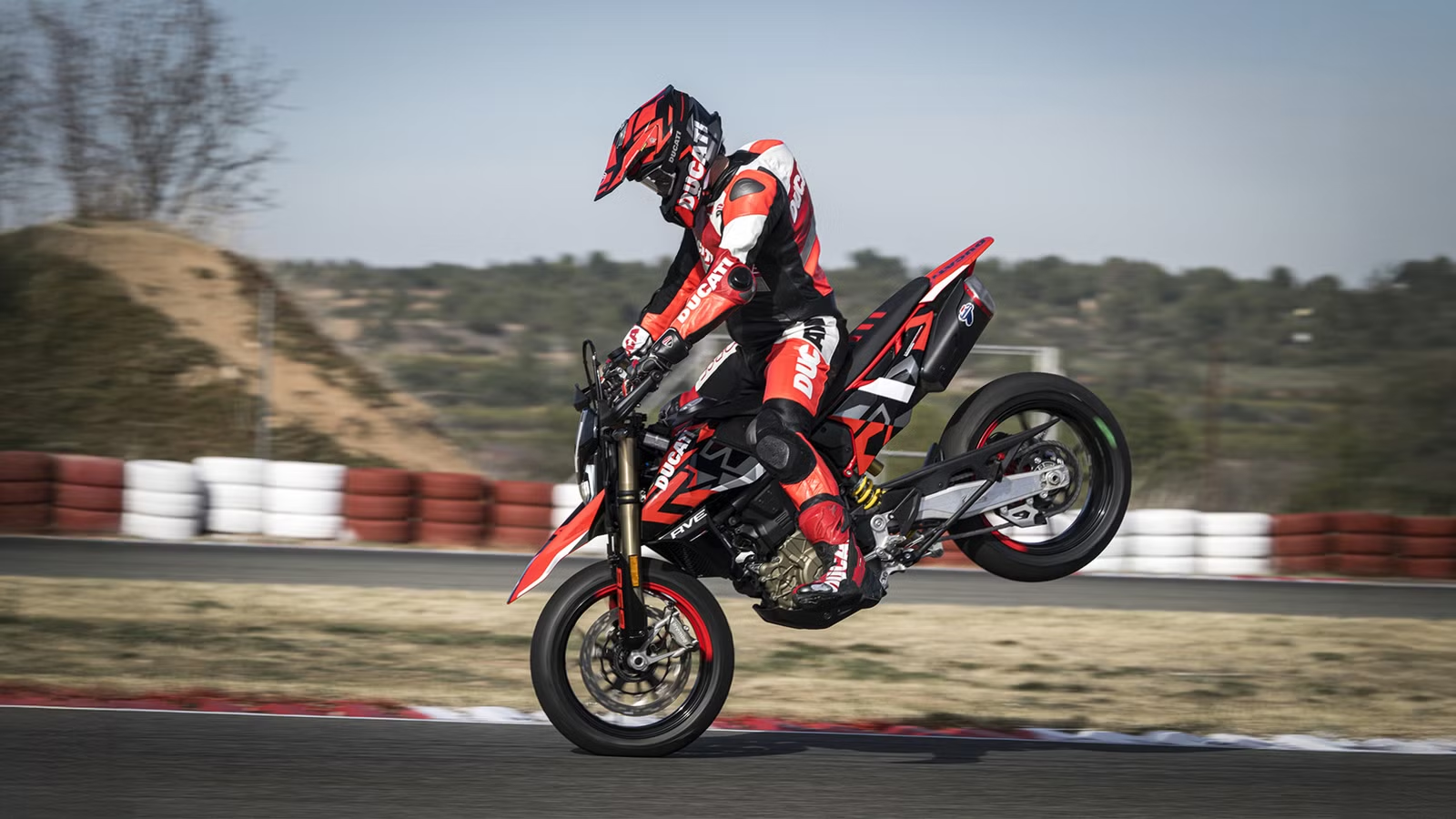
Supermotos are an interesting breed of motorcycles that look like dirt bikes that have wandered into the wrong pit garage and came out onto a racetrack with asphalt. And there’s some truth behind it, especially if riding off-road holds no appeal in your books, but you only have access to a dirt bike. Its tall stance, motocross-style bodywork, and lack of fairings hardly resemble a conventional streetfighter. Yet the dirt-bike silhouette hides a machine that can make ordinary road speeds surprisingly entertaining. No dirt-track ambitions are required here, but the skills on one come in really handy.
Supermotos Have Come A Long Way From Their Dirt-Bike Origins

Supermotos grew out of an unlikely contest. ABC’s Superbikers series, a televised motorcycle racing event, brought road racers, motocross riders, and flat-track specialists together to compete on courses mixing asphalt and dirt. The series ran from 1979 to 1985, with road racer Eddie Lawson claiming two titles. French organizers revived the mixed-surface concept in 1989, helping establish supermoto as a discipline in its own right. Competition demanded machines capable of changing direction quickly, braking hard on pavement, and surviving jumps. Modified dirt bikes offered a workable starting point, although their original equipment wasn’t ideally suited to everything the tracks demanded.
What Separates A Supermoto From A Dual-Sport

A typical dual-sport uses a larger front wheel and tires intended to cope with loose terrain. Supermotos usually swap to 17-inch wheels at both ends, shod with street-oriented rubber, and stronger, bigger front braking hardware. These were usually borrowed from sport bikes. Suspension settings were also changed to accommodate higher pavement grip and harder braking. Their off-road ancestry remains prominently visible, but a factory supermoto is engineered for different priorities rather than merely wearing different tires.
Elsewhere, narrow bodywork lets riders shift position easily, while wide handlebars provide generous leverage during steering corrections. The tall, relatively upright posture also changes how a rider interacts with the front end. Supermotos reward precise braking, quick turn-in, and carrying momentum between corners.

Not Every Supermoto Is Designed For The Same Kind Of Rider

The term “Supermoto” covers motorcycles built for radically different jobs. A race-prepared 450cc and a street-legal commuter might look closely related, but their equipment, ownership demands, and intended use scarcely overlap. Understanding those differences separates the more popular extreme racing examples from the whole category.
Speaking of which, the KTM 450 SMR and Husqvarna FS 450 are specialist track motorcycles. Their setups prioritize aggressive braking, corner exits, and mixed-surface racing. Which is why they’ll forgo lights and indicators, license plates, and conveniences for your trip to work. Service schedules also reflect sustained track use (often measured in operating hours rather than miles).
Street Bikes Range From Relaxed To Rowdy

Everyday supermotos trade some racing focus for road registration, manageable engines, longer service schedules, and practical equipment. Smaller singles can work as commuters without demanding a competition rider’s commitment. While at the other extreme are big-bore, high-performance street supermotos with sophisticated electronics and serious acceleration. They’re still road bikes, but their performance makes much more sense in experienced hands.
A Supermoto Can Make Everyday Roads More Interesting

The biggest reason for owning a supermoto has little to do with dirt riding. Most trips don’t offer long, empty straights where high horsepower matters. They involve intersections, changing traffic, imperfect surfaces, and perhaps a winding detour on the way home. Supermotos are built around infusing fun into everyday rides between those points.
Their slim profiles help with parking and low-speed maneuvering, while an elevated riding position offers a useful view through traffic. The absence of bulky bodywork also makes them less intimidating to handle in confined spaces. Weekend rides reveal another advantage. On a sequence of short bends, working the brakes and gearbox can deliver plenty of involvement without needing a high-horsepower machine built for triple-digit speeds.
The Suzuki DR-Z4SM Makes A Convincing Everyday All-Rounder

In the recent world of option-rich supermotos, there are ones that stand out as sensible choices for most desiring the look but not the hardcore intent. Suzuki’s latest 2027 DR-Z4SM revises the original DR-Z400SM formula while preserving the original concept for $7,999. Its 340-pound curb weight, 17-inch Dunlop Sportmax Q5A tires, and adjustable KYB suspension put the emphasis on street handling without drifting into race-bike specialization.
The reworked 398cc engine gains fuel injection and electronic throttle control, bringing better adaptability to changing conditions than the old carbureted design. Suzuki also fits an assist-and-slipper clutch to ease lever effort and smooth aggressive downshifts while still being able to back it in to make your boring commutes exciting. A handful of electronic aids make matters sweeter. As good as all that is, the 35-inch standard seat is still imposing, while a 2.3-gallon tank and five-speed gearbox make long highway trips less appealing. It isn’t ideal for every rider, but it avoids the narrowly focused nature of more powerful supermotos.
Four Other Supermotos Worth Putting On Your List

Among the friendlier options is the 2027 Kawasaki KLX300SM ABS that starts at $6,399, with its 292cc single producing 26.8 horsepower and 18.4 pound-feet of torque. A six-speed gearbox and standard anti-lock brakes complement its approachable performance, making it a sensible choice for everyday riding. There’s also the 2026 KTM 390 SMC R at $6,049 that delivers 44 horsepower and 28.8 pound-feet. Adjustable WP suspension, selectable riding modes, and switchable ABS give it a considerably sportier edge.

Then come the big-bore options. The 2027 KTM 690 SMC R costs $12,999, with its updated 693cc LC4 single producing approximately 78 horsepower and 53.8 pound-feet of torque. Fully adjustable WP Apex suspension, Brembo brakes, and sophisticated rider electronics complement its substantial performance. It’s a serious street supermoto for experienced riders. At $13,995, Ducati’s Hypermotard 698 Mono produces 77.5 horsepower and 46.5 pound-feet of torque from its 659cc Superquadro Mono engine. Its high-revving character, premium suspension, and sophisticated electronics offer a distinctly different interpretation of the performance supermoto, without requiring any off-road ambitions.
Source: Various Manufacturers

Related posts



Latest Post



No Comments