
The Bad-Spec Olympics: How Wrong Can You Order A New Car?
If money is no object, and you want to build the ultimate comfortable family road-trip SUV, there is one option that clearly stands out above the rest: the 2027 Porsche Cayenne. And if money truly isn’t an issue, there is no reason not to option a Cayenne to your heart’s content. Porsche is notorious for offering one of the most extensive selections of pricey factory options, so much so that you can eventually create a final product that makes little real-world sense. Just because you spend more on options doesn’t automatically make a car better, and we thought it would be a good idea to put that exact logic to the test.
Finding The Perfect Luxury Road-Trip SUV
Why The Cayenne Perfectly Fits The Bill
If we were looking for a logical canvas for this exact mission, the 2027 Porsche Cayenne would be hard to beat. It is perfectly suited for daily commuting, great for road trips, and eats up highway miles effortlessly. In its base configuration, it is already a capable SUV, with a 3.0-liter turbocharged V-6 that produces 348 horsepower and 368 pound-feet of torque, paired with an eight-speed Tiptronic S automatic transmission. Twenty-inch wheels with all-season tires, eight-way power seats, a heated steering wheel, Matrix Design LED headlights, and Sound Package Plus also come standard, providing the perfect baseline for a luxury SUV built for supreme comfort.
Using The Cayenne’s Versatility Against It

However, what if you went a little wild and started adding options to spice things up? The Cayenne offers dozens, if not hundreds, of possible configurations and options that can turn a tame, sensible build into something outlandish and unique. That said, free will can be both a blessing and a curse, because there is such a thing as selecting the “wrong” options when your goal is to maximize overall comfort and convenience. It is surprisingly easy to cross that threshold, and we have put together an entire build just to prove it.
The Bad-Spec Cayenne Coupe Is Simply Overkill


As the basis for our experiment, we took a base Cayenne Coupe and went absolutely wild with performance options, to the point of undermining its intended purpose.
$66,710 In Options Just To Ruin The Experience
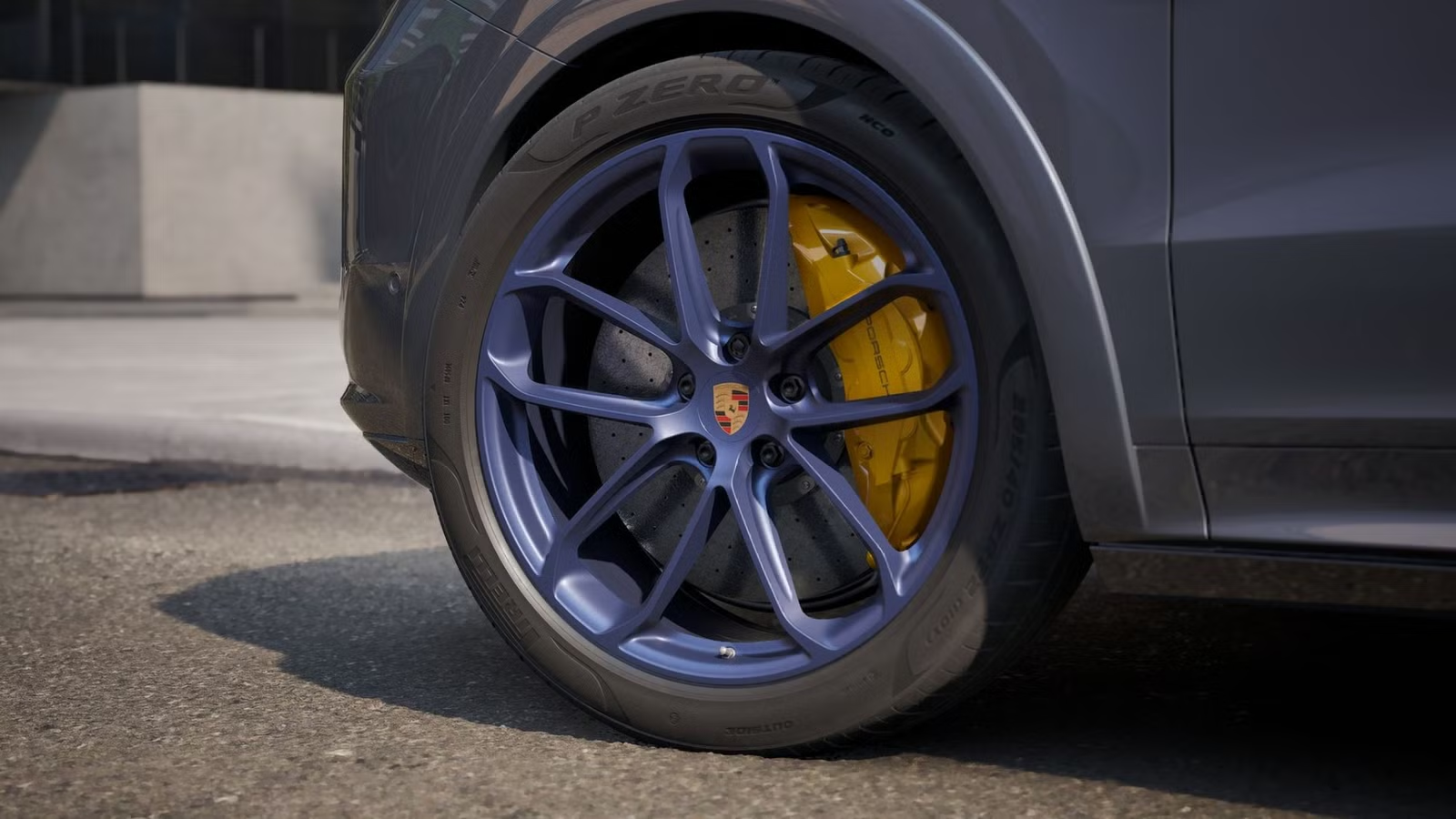
A base 2027 Porsche Cayenne Coupe starts at $95,100, which is more than $5,000 above the standard Cayenne’s starting price, even though the Coupe sacrifices some rear-seat headroom and cargo practicality. However, that is only the beginning, because we added $66,710 in optional equipment to this Cayenne Coupe, bringing its total MSRP to $164,367, including delivery. Where exactly did almost $67,000 in options go? First, we added the 22-inch GT Design wheels in Satin Indigo Blue, wrapped in $650 Ultra High Performance Summer Tires. They look amazing, but their low-profile design can compromise ride comfort, and their summer-only compound limits versatility in colder weather.
Then we added the $2,470 Adaptive Air Suspension with PASM, the $3,710 Porsche Dynamic Chassis Control, the $1,170 Sport Chrono Package, and the $3,330 Sport Exhaust. Don’t forget the $9,770 Porsche Ceramic Composite Brakes with yellow calipers, which can squeal around town and cost a small fortune to replace when the time eventually comes. Our Cayenne might be equipped to the teeth, but for a family-focused road-trip vehicle, many of these options are difficult to justify.
$25,410 On The Lightweight Sport Package Alone

But wait, there is more, because we still haven’t mentioned the Premium Package Plus and Lightweight Sport Package in Carbon Fiber, a whopping $25,410 option bundle. The Premium Package Plus is a well-equipped package that adds useful features, but the Lightweight Sport Package is harder to justify for a vehicle intended primarily for comfortable family travel.
Some of the key features include a carbon-fiber roof, which replaces the panoramic glass roof that younger passengers might appreciate, along with the Black/Silver Houndstooth leather interior. The Houndstooth upholstery looks absolutely stunning, but it might not look quite as pristine after your kids spill chocolate milk on it. Every one of these options is available through Porsche’s configurator and compatible with this build, but that doesn’t necessarily mean they work well together when the stated goal is to create a sumptuous road-trip vehicle.
A $164,367 Build With A Confusing Personality
Interior Options That Should Make Sense, But Don’t

If you thought we would stop at the $25,410 package, you are dead wrong. We still want as much technology and as many features as possible, so we also added the $1,210 Thermally & Noise Insulated Glass, the $6,010 Burmester 3D High-End Surround Sound System, the $1,660 Porsche Rear Seat Entertainment system, the $1,540 Head-Up Display, the $1,370 InnoDrive system with Adaptive Cruise Control, and the $650 heated windshield. On paper, not a single one of these options is bad. However, in the context of this build, they only add to the confusion surrounding the vehicle’s intended purpose.
A Sensible Cayenne Alternative For $45,587 Less

So, what if we actually used our powers for good? Well, we could build an alternative Cayenne E-Hybrid that costs tens of thousands of dollars less while doing a much better job of accomplishing our original goal.
The E-Hybrid With $13,330 In Options Makes Much More Sense
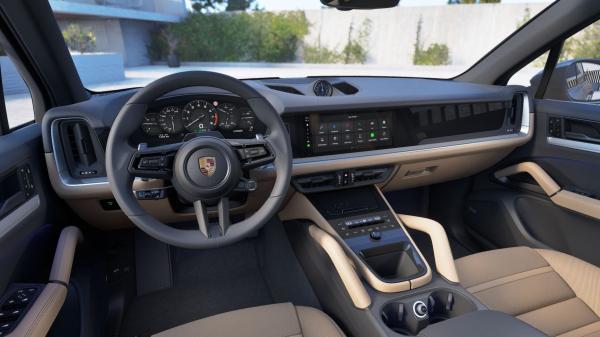
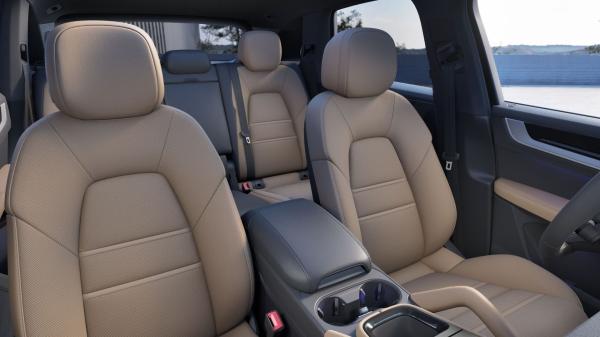
If we were going to be a bit more reasonable with our family SUV, this is how we would do it. First, we’d start with the $103,100 Cayenne E-Hybrid and add just $13,330 in optional equipment. The $630 20-inch Cayenne Design Wheels are a no-brainer, offering a different look while retaining a sensible wheel-and-tire setup with all-season tires.
Next, we’d add the $1,340 14-way power seats with Comfort Memory, along with the $2,760 massage seat function and ventilation for both the front and rear seats. You might think ventilated seats don’t make much of a difference until you try them for yourself.
Next, the $1,210 Thermally & Noise Insulated Glass is a must, along with the $1,030 four-zone climate control. Finally, the $1,370 InnoDrive system with Adaptive Cruise Control and Active Lane Keep Assist would be a welcome addition for those long trips. With these relatively straightforward upgrades, we take what is already a capable luxury SUV and make it even more comfortable without introducing the unnecessary compromises of our previous build.
Both Faster And More Practical Than The Base Cayenne Coupe

Did we mention that the E-Hybrid is also faster? It produces 463 horsepower and 479 pound-feet of torque, a substantial improvement over the base Coupe’s 348 horsepower and 368 pound-feet. The E-Hybrid also offers slightly more cargo capacity, with 22.1 cubic feet behind the rear seats and 55.2 cubic feet with the seats folded. Once you factor in the total MSRP, which is $45,587 lower than that of our questionable-spec Coupe, the sensible E-Hybrid isn’t just cheaper; it fulfills the intended mission better, too.
Premium options can be worthwhile individually, but they can become counterproductive when they distract from a vehicle’s original purpose. Porsche’s extensive configurability proves that building a more expensive car doesn’t necessarily mean building a better one.
Sources: Porsche

Related posts



Latest Post


No Comments