
The 376-HP Pontiac Nobody Raced Because It Looked Like A Luxury Car
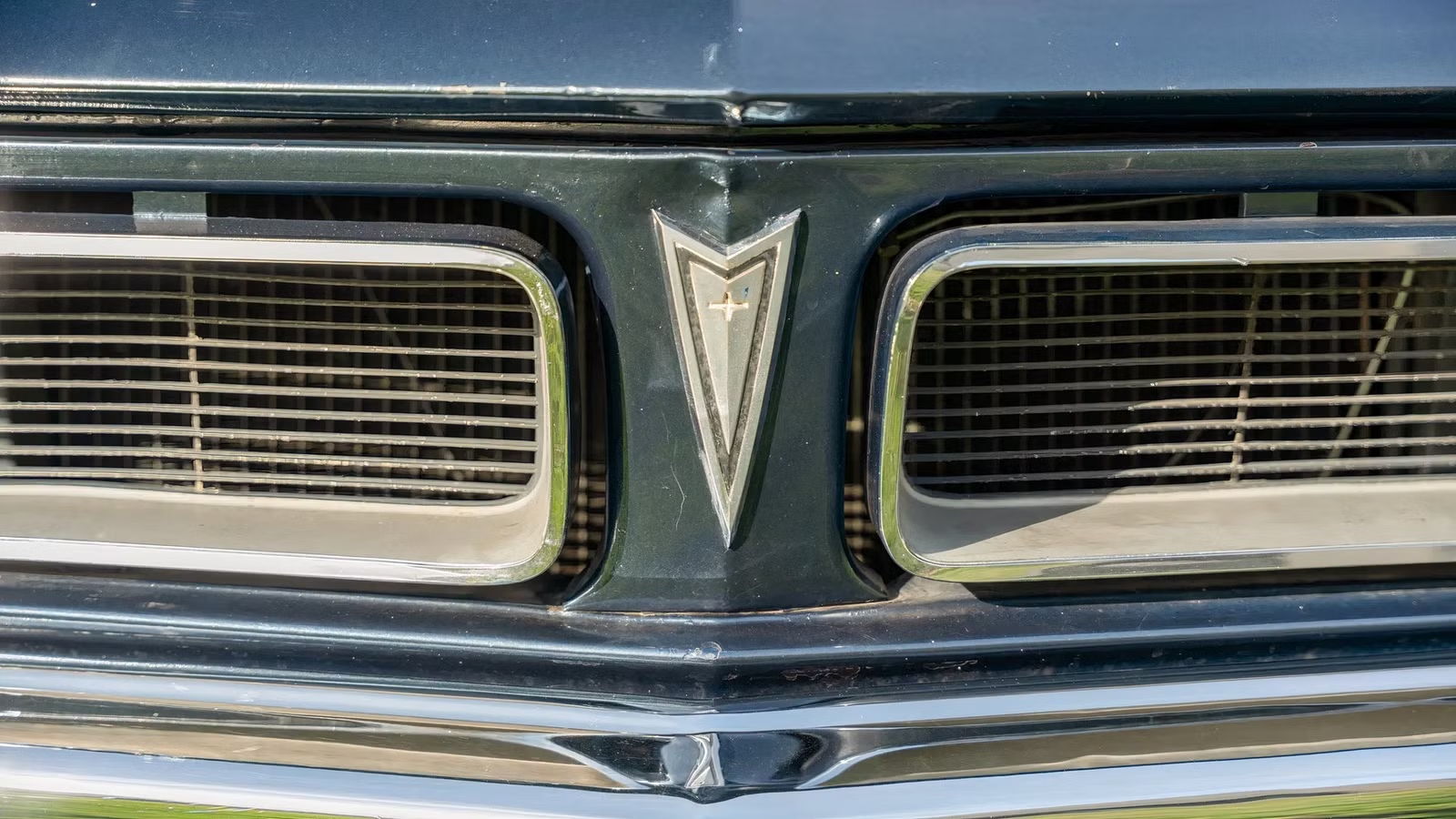
We aren’t supposed to judge books by their covers, and the same rule should be applied to muscle cars. Sleeper cars are easily underrated and dismissed as serious competitors without a flashy attitude. While this can give some builds an edge as they are underestimated, it can also cause some options to miss out on the glory they deserve.

There is onePontiacCoupe in particular that brought the heat. It was ready to rule the track with 376 horsepower, but got sidelined. Due to its plain styling, it did not receive the same attention as the Pontiac GTO, despite having more power and enhanced performance.
It was being positioned as a luxury option, causing it to accidentally fly under the radar. The GTO got the spotlight, while a rare muscle car deserved to be the best-selling option. At least critics gave it the credit it deserved, as potential buyers most likely missed out on it by accident.
Pontiac’s Best Production Engine Hid Inside A Luxury Coupe

The Pontiac GTO is a racing icon from the 1960s, serving as the brand’s most famous car. However, there was a Pontiac Coupe that actually had more power in 1965 that got completely ignored in the GTO’s shadow. It just did not have the right style to attract enough buyers during the muscle car boom.
The GTO arrived in 1964 with a confident, flashy style that people loved. The aggressive stance fed into the excitement and rebellion that young drivers craved at the time. Plus, it was an affordable option packing big block V8 power. It rapidly increased in popularity and sold over 100,000 models in 1966.
But another Coupe referred to as having a “Grandpa” aesthetic actually had more power at the time. The 1965 GTO packs a punch with 335 horsepower, but this forgotten Pontiac coupe delivers up to 376 horsepower. Only 44,000 units were made, making finding a surviving model rare today. But maybe a different look would have made it more popular.
This Rare ’60s Pontiac Muscle Car Was Harder To Find Than A COPO Camaro
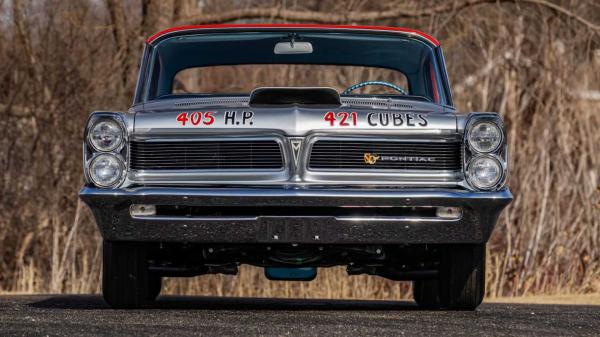
This pre-GTO Pontiac packed a 421-cubic-inch Super Duty V8 and ran 11.7-second quarters, influencing the muscle car revolution that followed.
The 1965 Pontiac Bonneville Sports Coupe Is Faster Than It Looks

The 1965 Pontiac Bonneville Sports Coupe was designed as a flagship luxury model. It is a full-size car, meaning it is a bit larger than the Pontiac GTO. Also, its style was considered to be pretty bland in comparison, as it had a mature, elegant style. This caused its tri-power setup to go unnoticed.
The standard 389 cubic inch 6.4-liter V8 engine produces between 325 and 333 horsepower and up to 425 pound-feet of torque. Then the available tri-power 421 cubic inch 6.9-liter V8 engine or the High Output variant delivers 376 horsepower and 461 pound-feet of torque. Meanwhile, the 1965 GTO has an available 389 cubic-inch 6.4-liter V8 engine with 335 horsepower and 424 pound-feet of torque.
|
Engine |
HP |
Torque |
|
6.4-liter V8 |
333 |
425 LB-FT |
|
6.9-liter V8 |
376 |
461 LB-FT |
|
6.4-liter V8 |
335 |
424 LB-FT |
Both cars have the tri-power setup with three two-barrel carburetors that are paired with solid lifters and high-pressure valve springs. But the Bonneville Sports Coupe also benefits from high-rise aluminum manifolds and forged pistons for high-compression racing.
The Bonneville has a wide-track stance with a 124-inch wheelbase. It tips the scale at between 3,890 to 4,200 lbs and was favored for its performance-to-weight ratio that is optimal for racing and comfortable cruising.
The Pontiac Bonneville Sports Coupe Delivers On Luxury Too

Critics did not let the 1965 Bonneville Sports Coupe go unnoticed. This full-size sleeper was actually recognized as MotorTrend’s car of the year for its ability to blend plush comfort and luxury trimmings with formidable power to dominate the track. The judges noted that the designers provided exceptional attention to detail.
The exterior stands out with the iconic “Coke bottle” style with pronounced rat-quarter flares, stacked headlamps, and a narrowed center section. It is complemented by a fastback roof line and wide wheel arches. Plus, the nose has a bit of an aerodynamic point. It literally made a big statement by being eight inches longer than other full-size Pontiac models.
Also, the interior did not skimp on luxury features with walnut wood trim, premium upholstery, enhanced plush carpeting, chrome accents, courtesy lighting, assist grips, climate control, and available leather bucket seats. It was a trend setter with rare features like power six-way seats, power windows, and automatic climate control.
The Bonneville Sport Coupe had an innovative tilt-wheel steering wheel that allows people to enjoy multiple driving positions. Plus, the reverberating radio features a rear-seat speaker with fader control.
The Tri-Power’s Days Were Already Numbered
One detail that makes the 1965 Bonneville Sports Coupe even more significant today is that its tri-power setup was living on borrowed time. A General Motors corporate edict that took effect with the 1967 model year led Pontiac to discontinue the tri-power engine options on all of its cars. That same year, the 389 cubic inch plant was replaced with a 400 cubic inch one, and the 421 cubic inch plant was replaced with a 428 cubic inch one. In other words, the 1965 and 1966 model years were the last time any buyer could walk into a Pontiac dealership and order the tri-power 421 in any car — let alone the Bonneville Sports Coupe. That two-year window makes surviving 421 tri-power examples genuinely rare artifacts of a very specific moment in Pontiac history, before GM’s own boardroom shut the door on the configuration entirely.
The Bonneville also shared its platform with some of the most popular full-size cars GM ever built. The 1965–70 GM B platform is the fourth best-selling automobile platform in history, after the Volkswagen Beetle, Ford Model T, and the Lada Riva. That platform pedigree means parts availability for mechanical components remains strong today — one of the few practical advantages the Bonneville Sports Coupe holds over rarer, more exotic muscle cars of the same era whose components are nearly impossible to source.
Pontiac’s Wildest 1969 Concept That Rewrote Muscle Car Design
Detroit chased stripes and big V8s, but one secret Pontiac concept aimed higher. This lost halo car may be 1969’s boldest idea.
Bland Bonneville Styling Helps the GTO Race Ahead

Despite being one of the better muscle cars in the Pontiac lineup, the Bonneville could not escape the GTO’s shadow. The Bonville Sports Coupe was marketed as a luxury car despite having everything it needed to dominate speedways under its hood. It seemed to be geared towards comfort as the muscle car era was taking off.
The Pontiac GTO was more accessible and attractive to younger, racing enthusiasts looking for rare power. As a mid-size car, it was seen as a more desirable option for racing. It has an aggressive style with a split grille and simulated air scoop that was simply irresistible.
Plus, the GTO was more affordable with the raw power people were looking for. It was called the “performance car for the masses,” as it gained fame as a cultural icon. The Pontiac GTO was landing on magazine covers as it spread across drag-strip culture like wildfire.
Meanwhile, the Bonneville Sports Coupe was getting passed over and ignored, but it could have achieved glory on the race track. In fact, it even influences the Pontiac GTO a little, as it gained a Coke bottle body style in 1966. But the Bonneville Sports Coupe was still successful as a luxury option despite never getting nearly as much fame as the GTO.
General Motors kept the Bonneville name alive until it was officially discontinued in 2005. The GTO only lived a bit longer until it was discontinued in 2006. Both of these cars are still highly sought after collectibles. But the Bonneville is much rarer, as it spent decades under the radar as a sleeper car.
What A Surviving Bonneville Sports Coupe Is Worth Today

Decades of flying under the radar have kept Bonneville Sports Coupe prices far more accessible than comparable GTO muscle from the same era, but that window may not stay open much longer. As collectors increasingly look beyond the obvious icons for undervalued performance hardware with genuine provenance, the 421-powered Bonneville is exactly the kind of car that fits the brief. A well-documented example with the tri-power 421 and matching numbers is a rare find — and with only 44,000 ever built and decades of attrition since, surviving cars in strong condition are becoming genuinely hard to locate. on Classic.com, prices average around $30,000.
For buyers who missed the GTO appreciation wave and don’t want to repeat that mistake, the Bonneville Sports Coupe is one of the few remaining golden-era Pontiacs where the performance credentials and the price tag haven’t caught up with each other yet.
Source: Driving Line,Hemmings, Hagarty, Pontiac Sever

Related posts





Latest Post


No Comments