
The Adventure Bike That Refuses To Become Expensive To Own
Modern adventure motorcycles are engineering marvels, surely. They read the road, read the traffic, and read your bank balance with even more precision. At 150 horsepower and a price tag that goes well north of $20,000, these motorcycles will cross any continent you like. But, then a radar module dies, or a semi-active shock gives up, and the most exotic place you’re visiting is the service center. No one wants it that way. Somewhere out there, a liter-class Japanese heavyweight is doing the same job without the drama, and without letting you think twice before owning it.
Adventure Bikes Have Got Smart And Complicated

Modern adventure bikes barely resemble the class that existed a couple of decades earlier. Back then, the recipe for an adventure bike was simple – a big engine, long-travel suspension and a big tank. Today, the same category has grown more sophisticated with advanced electronics. These do-it-all motorcycles now offer several riding modes, cornering ABS, lean-sensitive traction control, quick shifters, cruise control, large TFT screens, and settings dedicated to loose surfaces. At the top of the class, radar and semi-active suspension have joined the list.
The flagship players, BMW, Ducati and KTM, all follow the same script with their adventure motorcycles. On paper, these bikes look like a perfect deal, and even the first few months in the saddle are every bit as exciting. However, that premium experience can come with a massive, long-term financial burden.
This Racks Up Failure And Maintenance Points

There is a big chance of failure of these advanced electronics in all motorcycles, but the chances are highest in an adventure motorcycle. These bikes collect punishing miles: they crawl through traffic, sit at highway speeds for hours, carry passengers and luggage, get soaked in rain, and even get bounced down gravel roads because the GPS pointed that way. While tolerating all this abuse, there is a high chance of any sensor failing, or an electronic suspension motor giving up the ghost. Once that happens, no local mechanic will agree to fix it, and a visit to the service center can feel like taking out a second mortgage.

Furthermore, the quest for peak performance takes a heavy toll. Pushing 150 horsepower out of a highly strung engine puts immense stress on internal components. Clutches burn out faster, final drives take a serious beating, and valve trains demand frequent, highly specialized servicing that the average rider simply cannot perform at home. However, all of this does not make the modern ADVs unreliable by default – and the proof of that is an adventure motorcycle that built its name on dependability.
The Honda Africa Twin Brings Unmatched Dependability

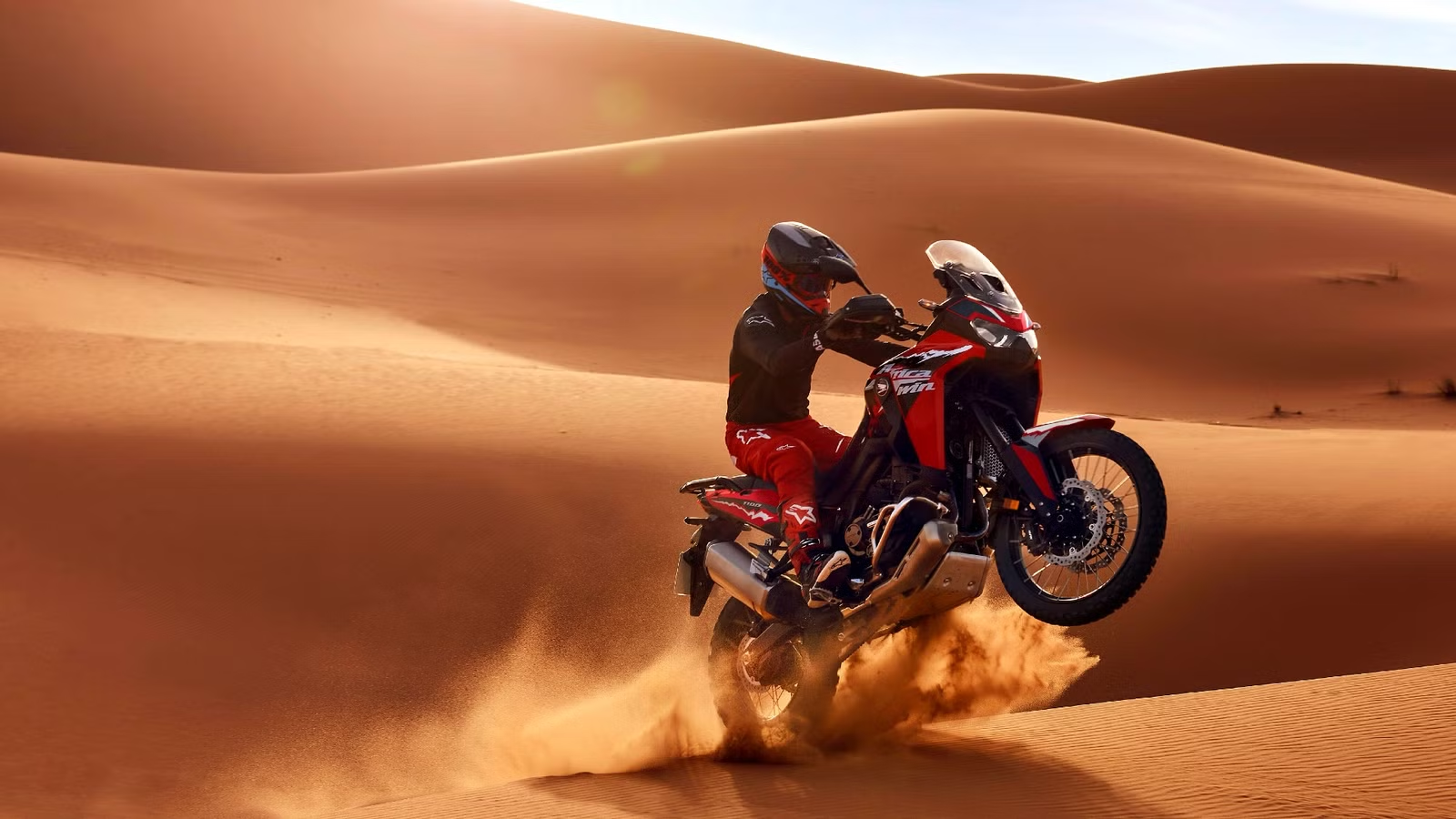
The bike in question is the Honda Africa Twin. It has already lived up to its adventure tourer reputation as a true go-anywhere machine. But above all that, it has always been a benchmark in the dependable adventure motorcycle space. The formula has been simple for Honda: a Dakar rally-bred geometry and a reliable parallel-twin designed to outlast the rider.
It has received praise for its reliability and dependability across ownership portals, social media platforms, and Reddit. There are several documented real-world examples of an owner pushing over 580,000 miles on the 2016 Africa Twin. While that’s interesting, what’s more exciting is that the owner reported zero reliability issues beyond standard, basic maintenance, and even the DCT gearbox lasted over 500,000 miles before requiring a replacement. This heavyweight Honda brings the reassurance of not being expensive to maintain, even after years of ownership.
At $15,199, It Undercuts European Rivals By $5,000 Or More

The base Africa Twin carries an MSRP of $15,199. Even as a full-size ADV, it costs much less than its European rivals that breeze past the $20,000 mark. A ‘base model’ designation does not mean being stripped of everything; even in this form, it is a complete motorcycle. But, for those looking for more, Honda also offers an Adventure Sports ES variant for $17,799, which brings a bigger fuel tank and electronic suspension. Both the base and Adventure Sports models are complemented by a DCT option, which costs $800 more than the base price of the version chosen.
Power Comes From An Unbreakable Parallel-Twin

At the heart of the Africa Twin sits a 1,084cc parallel-twin, which is known for its durability, packaging, and balance. Rather than chasing high horsepower figures, Honda has engineered this engine to be fundamentally understressed. That allows the internal components to breathe efficiently, resulting in less heat buildup in demanding situations and less strain at cruising speeds. Pumping out 100.5 horsepower and 82.6 pound-feet of torque, it is admittedly less impressive than the other flagship adventure motorcycles.
What makes it special is Honda’s clever engineering. The Unicam SOHC head with four valves per cylinder keeps the overall height of the engine compact. The 270-degree firing order gives the engine a characterful V-twin-like pulse, making the saddle more exciting. Fuel economy is also respectable at 48 mpg. On the five-gallon tank, that’s about 215 miles between fill-ups. Honda calls for an oil and filter change every 8,000 miles or once a year, whichever comes first, in case you’re curious.
Even The Optional DCT Is Unbreakable

The base Africa Twin uses a six-speed transmission. But if you want a bit more comfort, then spending a little more would let you get the dual-clutch transmission. It does not add a layer of fragility; as that 500,000-mile record shows, Honda’s Dual-Clutch Transmission (DCT) actually acts as a mechanical safeguard. This setup does the shifting for you automatically and offers different modes for different situations (D, S, or Manual). Notably, the dedicated ‘G’ mode reduces clutch slip to deliver an immediate transfer of engine torque to the rear wheel.
Its Chassis Can Handle Years Of Abuse

The Africa Twin is built around a semi-double-cradle steel frame, a layout more common on dirt bikes than on road-biased adventure machines. Suspension is handled by a 45mm inverted Showa fork at the front with 9.1 inches of travel, paired with a rear Showa shock offering 8.7 inches. Braking comes from twin 310mm discs with radial four-piston calipers at the front and a single 256mm disc at the rear. Nothing here is exotic, and that’s the point. The base bike uses conventional adjustable suspension, so there is no electronic damping system to fail once the warranty has expired.
The Electronics Do Not Compromise On Reliability
The Honda Africa Twin doesn’t offer everything that’s available on the market. Instead, it packs the right amount of essentials to keep the rider entertained, without killing the reliability factor. The cockpit welcomes you with a 6.5-inch TFT display. The bike also features Honda Selectable Torque Control, cornering ABS, six ride modes, cruise control, and wheelie control.
The Adventure Sports Variant Brings More Versatility And Comfort

For riders who plan to spend more time crushing endless highway miles than navigating single-track trails, Honda offers the Africa Twin Adventure Sports ES. It introduces a higher initial price tag, but importantly, it retains the exact same unbreakable engine architecture. The Adventure Sports justifies the extra cost by adding a larger 6.6-gallon fuel tank for extended range and Showa’s Electronically Equipped Ride Adjustment (EERA) suspension. On the latest models, Honda even swapped the front wheel from a dirt-focused 21-inch rim to a road-biased 19-inch tubeless setup.
Source: Honda

Related posts
Latest Post


No Comments