
The 1,461-Unit Subaru Sleeper Wagon With WRX Guts And STI Heads
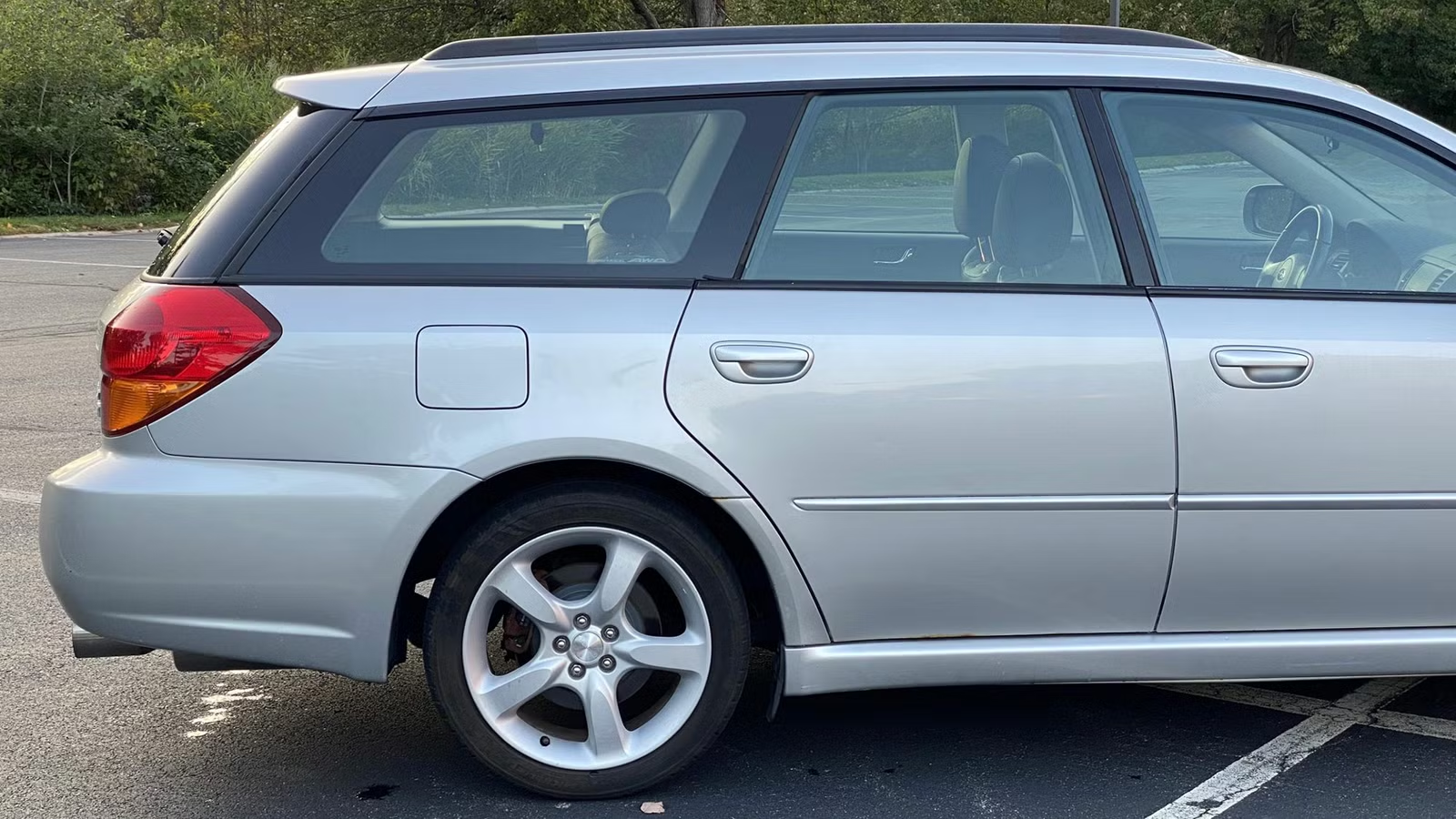
Some performance cars announce their intentions with aggressive styling, oversized wings and the kind of soundtrack that turns heads. This Subaru did almost the opposite. Its restrained body, practical wagon layout and all-wheel-drive system made it look like an ordinary family hauler, but underneath was hardware far more serious than its appearance suggested. Rather than simply dropping a powerful engine into a sensible family car, Subaru drew from its performance parts bin and blended components associated with its quicker models into a far more discreet package. The result was a remarkably complete factory sleeper that enthusiasts would eventually recognize as something much more special than it first appeared.
Subaru Built A Family Wagon That Could Outsprint Its Image

For 2005, Subaru introduced a redesigned Legacy that was larger, more refined and available in both sedan and wagon forms. The big news was the new 2.5 GT, which brought a turbocharged 2.5-liter flat-four engine to the range, while all Legacy models retained Subaru’s standard all-wheel drive.
The wagon was particularly easy to underestimate. Its five-door layout and useful cargo area gave it the practicality expected of a family car, while its relatively conservative styling did little to advertise its sporting credentials. Contemporary owners called the GT wagon a genuine sleeper, praising its combination of utility, comfort and performance. Even Car and Driver described the related GT as a “sleeper” with a more grown-up character than a WRX.
The EJ255 Shared More With The STI’s EJ257 Than Its Name Suggested

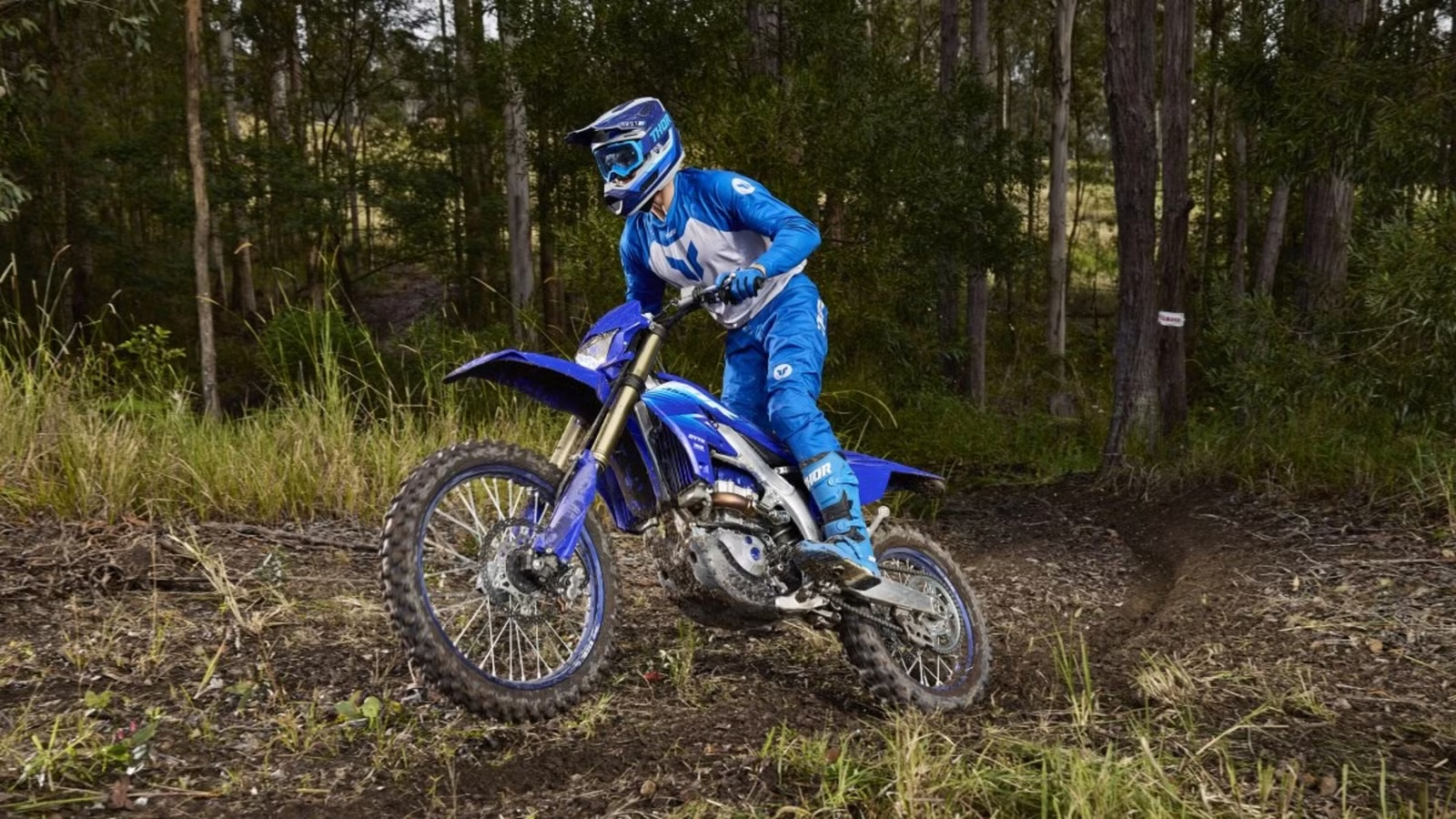
The EJ255 designation can make the Legacy GT’s engine sound like a conventional WRX-derived unit, but the 2005 and 2006 versions had a much closer relationship with the STI’s EJ257. According to Subaru specialist Flatirons Tuning, the Legacy GT engine shared its case, rods, pistons and cams with the contemporary STI powerplant. Technical references likewise identify the 2005 and 2006 EJ255 as sharing its short block and cylinder heads with the US-market 2004–2006 STI’s EJ257.
That makes this early EJ255 an unusual member of Subaru’s EJ25 family. Later versions received different components, including revised cylinder heads, so the 2005 and 2006 engine occupy a particularly interesting place in the lineage. It was not simply an ordinary turbocharged Subaru four-cylinder, but an engine built around substantial hardware common to the company’s flagship performance motor.
Its B25 Heads Added Another Layer Of STI DNA

The cylinder heads provide an even more specific example of Subaru’s parts sharing. The early Legacy GT used B25 heads, and Flatirons Tuning identifies the same castings in the 2004 STI and the 2005 and 2006 Legacy GT. Its parts catalog also lists the same Subaru head part numbers across those applications, providing strong evidence that the components were directly related.
However, sharing these heads did not make the Legacy GT an STI in disguise. Subaru used the STI-related B25 hardware as part of a different overall specification. The Legacy received its own turbocharger, intercooler arrangement and ECU calibration, creating a different balance of performance and drivability. That distinction is important because it shows how Subaru mixed existing performance components rather than simply transplanting an entire STI powertrain into a family wagon.
250 Horsepower Made This Wagon A Genuine Performance Car

The hardware hidden inside the EJ255 translated into serious performance for a family wagon. Subaru rated the 2005 Legacy GT at 250 horsepower and 250 lb-ft of torque, figures independently confirmed by MotoIQ in its technical examination of the model. That output gave the turbocharged wagon considerably more pace than its conservative appearance suggested.
Contemporary testing backed up the numbers with measurable performance. It’s 0-60 mph was a 5.9-second sprint, which was impressive for a practical five-door car of the period. This confirmed the wagon’s performance was more than theoretical.
The Five-Speed Manual Turned It Into The Ultimate Dad-Mobile

The five-speed manual was more than a transmission choice because it helped unlock the Legacy GT wagon’s character. Contemporary owners praised the way the gearbox worked with the turbocharged engine, with one describing the pairing as so well-matched that turbo lag was rarely an issue. Another called it a sport wagon with a manual transmission that delivered strong engine performance and handling.
That combination also made the wagon unusually versatile. Owners highlighted its ability to carry substantial amounts of luggage with the rear seats folded while remaining enjoyable on back roads and long trips. Its all-wheel drive added confidence in poor weather, with owners reporting impressive grip in snow and wet conditions. One owner’s review on Edmunds went further, explicitly calling the GT wagon a “real sleeper”, praising its practicality, comfort and sporting performance in the same breath.
Only About 1,461 Manual Wagons Escaped Subaru’s Factory

The manual version was rare from the moment it left Subaru’s Indiana factory. Enthusiast sources consistently cite 1,461 examples produced for the 2005 model year, making the three-pedal wagon a particularly small slice of the Legacy GT range. One long-running Subaru discussion specifically identifies 1,461 manual wagons in 2005, while another enthusiast source repeats the figure and adds an even more remarkable detail about what followed.
The wagon itself remained available in the United States through the 2007 model year, meaning buyers could still get a Legacy wagon, but the manual GT combination had effectively disappeared. That makes the 2005 cars particularly significant: finding one today is not simply about locating an old performance wagon, but tracking down a very specific combination Subaru offered in meaningful numbers for only one model year.
The Legacy GT Wagon Became A Cult Sleeper After Subaru Moved On
What makes the Legacy GT wagon increasingly appealing to enthusiasts is how difficult its particular formula has become to reproduce. It combined performance derived from Subaru’s STI engineering, 250 hp, all-wheel drive, and genuine wagon practicality, while the tiny number of manual examples made the combination exceptionally uncommon. Once Subaru stopped offering the manual GT wagon, there was no direct replacement with quite the same blend of characteristics.
Its sleeper reputation also developed organically rather than through any documented attempt to position it as an STI substitute. Contemporary owners understood the appeal, with one describing the car as a “grown-up’s civilized WRX” while highlighting its ability to carry children and cargo. That neatly captures why the wagon remains memorable: Subaru created a practical performance car that enthusiasts discovered for themselves, without needing an STI badge to explain its appeal.
Sources: Subaru

Related posts


Latest Post


No Comments