
Tesla’s New Model 3 Standard Trim Is The Cheapest Way Into The Lineup, And That Changes The EV Price War
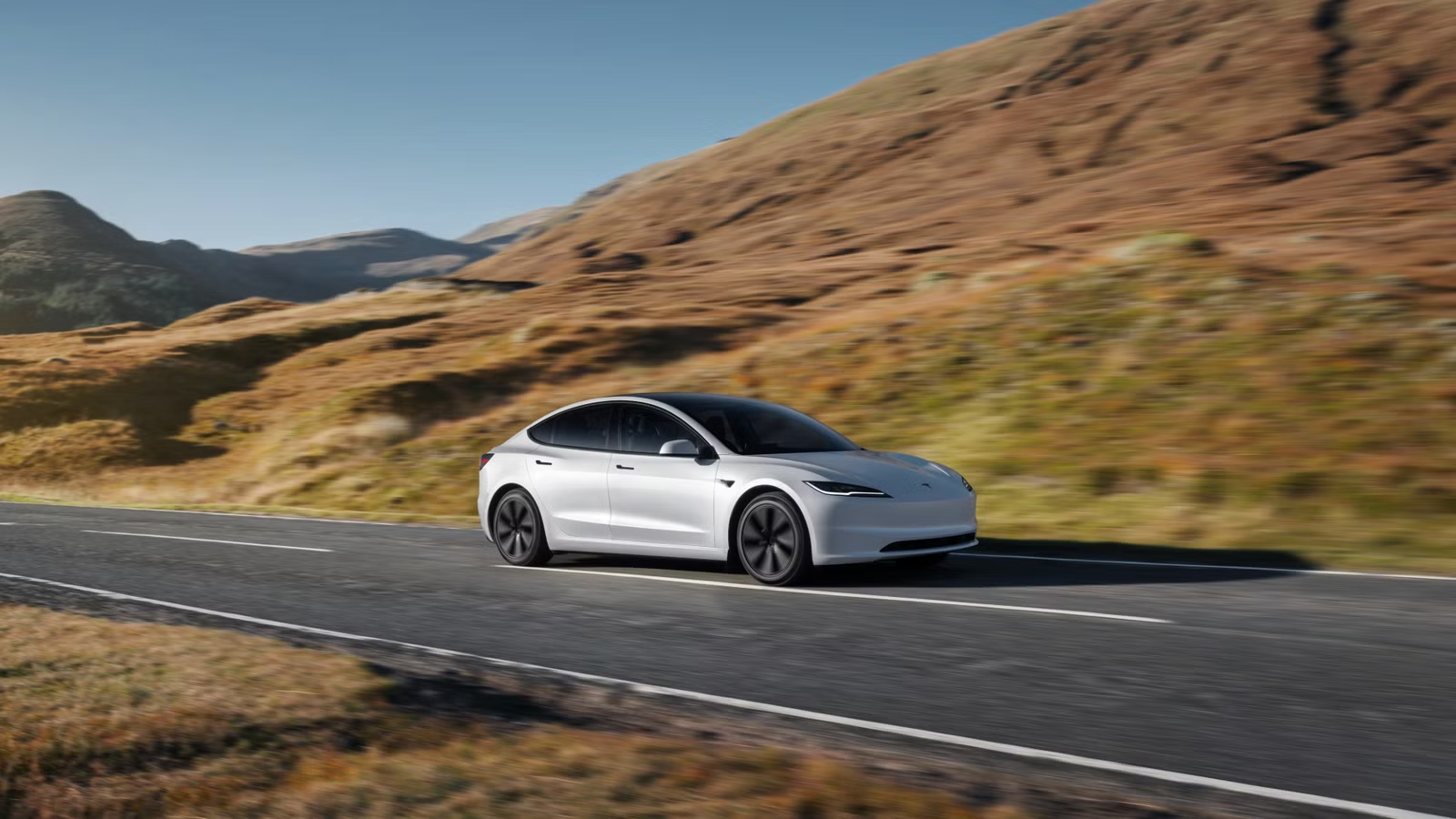
Tesla just put a firm price on both ends of its best-selling sedan. MotorTrend’s 2027 Car of the Year testing, published this week, gives the first real look at the new Model 3 Standard, which starts at $38,630 and strips out enough gear to undercut a growing field of budget EVs from Chevy and Hyundai. At the other end of the lineup sits the Model 3 Performance at $56,630, a car MotorTrend says can out-accelerate supercars.

Rather than compete in the crowded middle of the EV market, the company is now squeezing from both directions: a genuinely cheap entry point on one side, and a performance halo that justifies a much higher price on the other.
What Tesla Cut To Hit $38,630
The Standard trim loses its front motor, dropping the car to single-motor, rear-wheel drive. MotorTrend’s testers noted the car feels noticeably lighter without it, and the steering returned what they called the most feedback they’ve ever felt in a Tesla. Cooled front seats are gone too, along with the physical seat-adjustment switches, which have been moved into the touchscreen or handled through the steering wheel’s control rollers. MotorTrend called that particular cut “roundly hated,” though the car does remember seat presets so drivers only have to set them once.

Despite the list of missing convenience features, MotorTrend’s verdict landed in Tesla’s favor: the Standard model is “a fantastic value.” Testing took place in 103-degree heat, and the only feature the team said they genuinely missed was those cooled seats.
The Performance Model Covers The Other End
At $56,630, the Model 3 Performance plays a completely different game. MotorTrend found it capable of beating supercars off the line, with a Track mode that meaningfully sharpens limit handling and two-mode active dampers the outlet suggested deserve a spot on the mid-tier Premium trim too. It’s the same basic car as the Standard, but built to a different mission entirely: proving Tesla can still win on outright speed while the Standard proves it can win on price.
Why This Matters For The EV Price War
The timing isn’t an accident. Chevy’s 2027 Bolt starts at $28,995 with 262 miles of EPA range and native access to Tesla’s Supercharger network, undercutting the Model 3 Standard by close to $10,000, but Chevy reportedly plans to build only around 35,000 units, a fraction of what the segment could absorb. By pricing the Standard where it has, Tesla isn’t trying to be the cheapest EV on sale. It’s trying to be the cheapest EV that doesn’t feel like a stripped-down compromise, while still offering a Performance variant at the top that no mainstream rival can match for the money.
For buyers cross-shopping entry-level EVs, the takeaway from MotorTrend’s testing is straightforward: the Standard trim’s cuts are real, but none of them touch what makes the Model 3 worth driving.

Related posts






Latest Post




No Comments