
Small cars, massive sales: Meet the team behind Hot Wheels
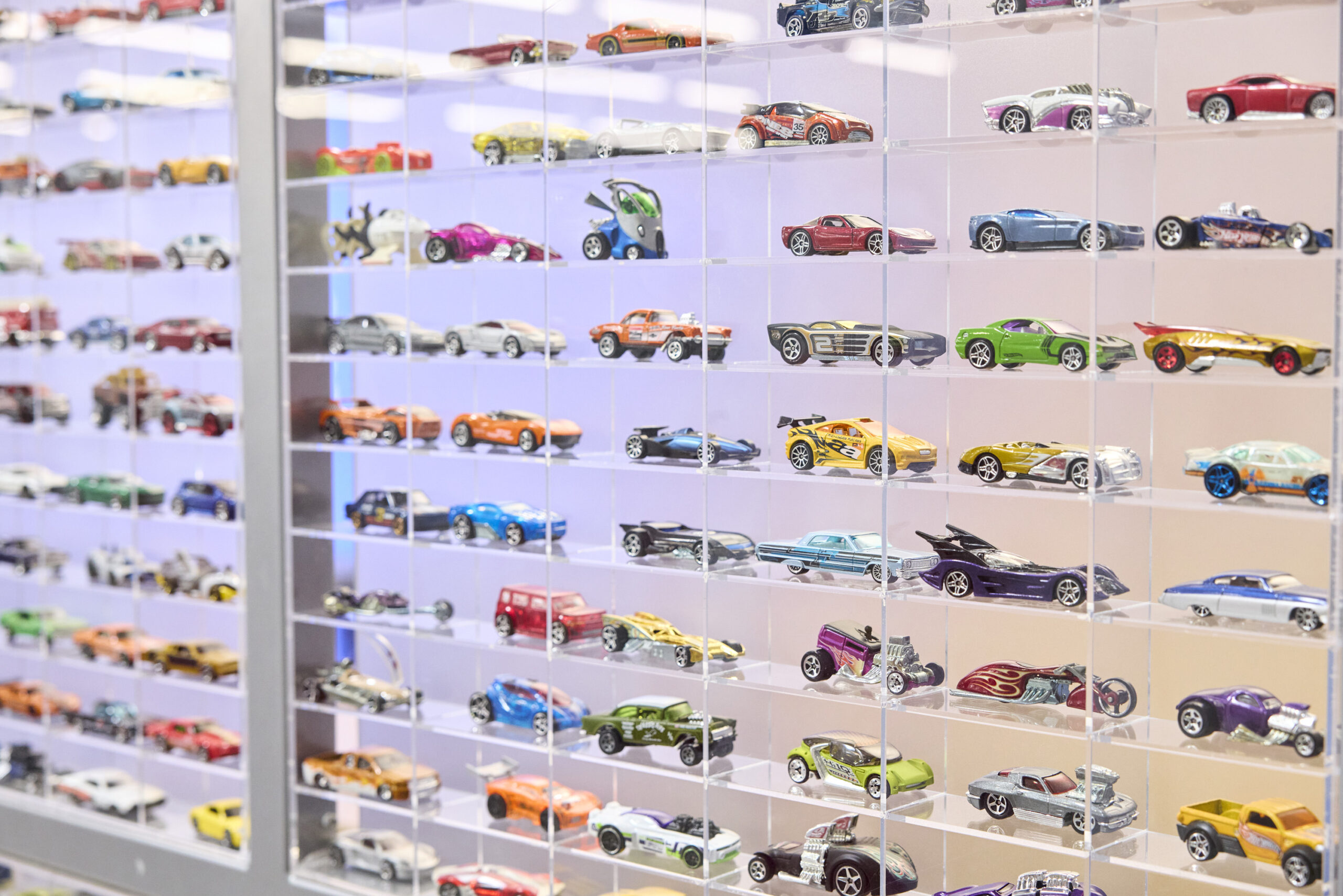
America’s coolest automotive design studio, where your favourite cars are brought to life… in 1:64 scale

Charlie Angulo is an experienced automotive designer who has worked on everything from motor show concepts to cutting-edge hypercars. He loves Japanese and British cars, including his daily driver Jaguar F-Type.
In his current job, he has designed hundreds of cars that have brought joy to millions of people. Many are amazingly detailed, intricate creations designed to appeal to the most passionate car fans. And then there’s the Donut Drifter.
“People say to me ‘what’s your most popular design? and I’m like ‘it’s a doughnut on wheels,” laughs Angulo. “It doesn’t really make any sense, but kids absolutely love it.”

The Donut Drifter, you will have guessed, isn’t a real car but one of the more outlandish in the vast Hot Wheels range. And while that particular model is laser-targeted at youngsters, in recent years the brand has greatly expanded its offering of realistic collectable models that appeal to grown-ups.
It has worked: by volume, Hot Wheels is the best-selling toy line in the world. Having taken around £1.3 billion in sales last year, it is toy giant Mattel’s biggest brand, even ahead of Barbie. The numbers are staggering: around 200 new Hot Wheels designs are launched each year, and the firm manufactures around 750 million cars annually-24 cars per second, or eight times the combined annual vehicle production of the entire automotive industry.
Small cars are big business, and at a time when the car industry is struggling, the toy car industry is booming. Gratifyingly, underpinning that success is a huge passion for cars.
Enter the studio
The Mattel Design Centre doesn’t look like much: it’s a drab, low-rise building in an anonymous business park just south of the airport in the sprawling suburbs of Los Angeles. The only real hint of what goes on inside is a small orange track, complete with loop-the-loop, that runs along the staircase leading up to the front door.
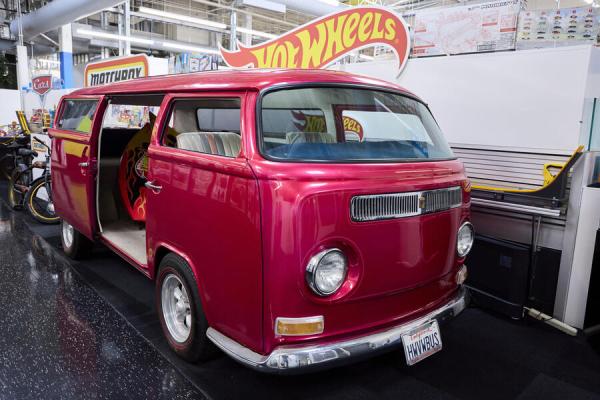
Inside, it’s a different story. Bright posters of Barbie and Masters of the Universe line the walls and there’s a row of life-size versions of popular Hot Wheels models. There’s another track, this one featuring a two-storey loop. Head past the foyer and into the design studio and it’s exactly as you would expect a toy design studio to be: bright colours abound and toys are strewn everywhere. And it’s here where the small but prolific Hot Wheels team craft their 1:64-scale vision of motoring.
The first task is deciding the line-up of models for each year. The goal is to mix real and fantasy cars (called Originals) and body types. Market forces play a part: unlike in the real world, SUVs are a tough sell, while small cars – in particular JDM machinery – are on the rise.
“We look at silhouettes rather than ‘oh, we have to have a Ferrari,” says Hot Wheels senior design manager Craig Callum, “and we want a mix of Originals versus licensed vehicles.”
He notes a surge of interest in the Originals among collectors: “People really appreciate the effort we put into them. We’ve got the Cone Shaker, which is a traffic cone on wheels, and I know a collector who has 400 of them.”
Much like a car-making group has brands spanning every segment, so there are different Hot Wheels types. The Mainline cars – the £2-or-so toys found in many shops are the mass-market models. Then there are varying levels of premium lines rising to the collectable Elite 64 (sold for around £20 each). Beyond that there’s the Red Line Club, to which a paid subscription grants access to high-end, limited-run models, such as a recent Ferrari F40, for around £50.
Design process
Each vehicle is a bespoke creation with its own production moulds-no shared platforms here. Mainline vehicles feature four parts (a chassis, a body and two axles) made from plastic. Going up through the range, some vehicles will feature a plastic chassis and a metal body, high-end cars are all-metal and ultimately there can be up to 40 parts, including opening doors and bonnets.
It takes around 12-18 months to create a new model. For a toy based on a real car, the designers will start with a 3D digital model. Manufacturers often supply them with their data; if they can’t or won’t, Hot Wheels’ Design Centre has the capacity to scan a real car. Video game developers will also offer similar data from cars featured in their titles.
Scaling a car down to 1:64 “is not just a case of shrinking it down to an inch and a half”, says Callum. “We have to think about the wheel size and proportions. If you just scale a car down, it will look strange. We look at the most important features of that vehicle, like the intakes and headlights, and make sure we get those in.”
Graphic elements
Complementing the basic sculpture of the car will be the paint and graphics, which are often used to recreate details that simply couldn’t be moulded at 1:64. Not every car will be offered in a full range of colours, so again the key is balance and thinking what buyers will want. The first production version of any Ferrari, for instance, is naturally going to be red.
“I’ve just done a Mk1 Ford Focus RS, so it has to be Imperial Blue,” says graphic designer Kristina Albrecht. “We’ve done lots of blues before-Subaru World Rally Blue, Nogaro Blue-but not Imperial Blue.”
In that case, Ford sent an e-sheet featuring the colour, other manufacturers will send samples. As Albrecht notes, some manufacturers are very picky about their colours (Ferrari has three different shades of red), but no more than the design team themselves: “We want it to be as close as possible, because we’re nerdy car guys.”
Even that isn’t straightforward: metallic paints often have flakes in, which would look wrong on a 1:64 car, requiring a custom mix.
On Mainline models, the graphics team might be able to apply three decals: on each side and the bonnet. On higher-end ones, the number of decals and their detail increases.
“On a Mainline car, we don’t get to do headlights and the like,” says Albrecht. “On higher levels of cars, it’s about detail. Does it have European or American indicators? What about the headlights and tail-lights?”
Prototyping
The Hot Wheels factory is in Malaysia, but Mattel has an extensive facility here in Los Angeles to help produce prototypes. As with real cars, there’s no substitute for seeing something in the metal.
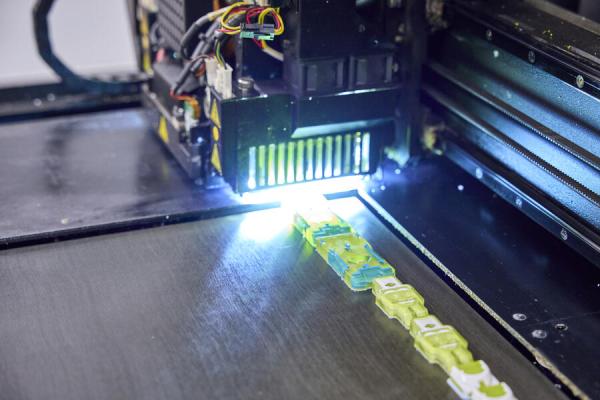
3D printing has helped to revolutionise toy prototype production, and a range of machines can produce parts using different materials and to differing degrees of quality. This means a Hot Wheels prototype can be produced in around 90 minutes, so three versions of the same model can be iterated in a day.
That has shaved weeks off development times and also sped up another key part of the process: track testing. Yes, just like a real car, a Hot Wheels model has to deliver a certain performance. That’s core to the brand: it was created with the aim of offering toys that outperformed their rivals dynamically.
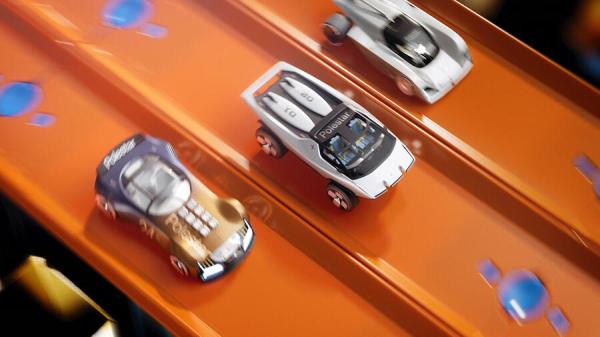
Every car has to be able to run for 30 feet down Hot Wheels’ signature orange track and perform a loop-the-loop. Performance does vary – although, perhaps wary of car firms extending their competitive nature to the toy world, the team won’t divulge the speed charts.
Still, Callum notes that “it’s perhaps inverse” to real-world dynamic performance, because “low-slung cars aren’t quite as good at going around the loop”.
He admits a particular desire for the Formula 1 range to perform, because a “kid would expect an F1 car to be the fastest in the world”.
Final approval
Before a Hot Wheels model goes into production in Malaysia, the manufacturer of the real car is given final approval. That’s partly to ensure the toys are accurate replicas and partly to maintain good relationships.
“Decades ago we’d put flame graphics all over Ferrari models,” says graphic designer Mario Godoy. “We wouldn’t do that now.”
Callum says the manufacturers “are with us every step of the way, with various approval rounds. Sometimes we have to explain that we can’t quite do something or if a three-year-old gets their hands on it and starts pulling it will break. They’re usually understanding.”
Appreciative, too. Godoy spent 10 years working on Hot Wheels’ Monster Truck line before being moved to Premium models. His first project was a 1967 Ferrari 330 P4, which netted a kind email from Maranello. “That was so gratifying,” he says.
Driving passion
The continuing growth of Hot Wheels’ appeal, particularly among adult collectors, keeps creating new possibilities for what this unorthodox, unlikely automotive design studio can produce.
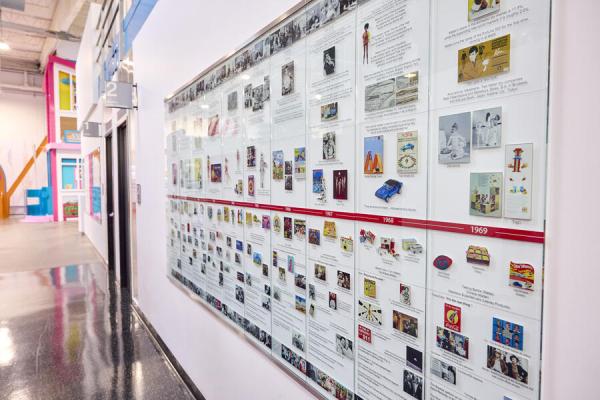
“It changes the way you think,” says Angulo. “We listen to the collectors and we try to do what we think are cool-because a lot of us are collectors as well. We look at the latest car trends, and what we see at car meets and shows, and what the manufacturers are doing.”
But what really keeps Angulo interested in Hot Wheels is the role it plays in children’s lives: “With the way technology is moving, with social media and Al, it’s a bit overwhelming for young kids. Hot Wheels are physical things for kids to play with. It’s nostalgic, a bit of a throwback. When you see the passion for this brand around the world, it’s special.”
Small cars for big kids
Hot Wheels was launched back in 1968, but the brand has never been stronger: already the best-selling toy in the world by volume, it’s on track to record its ninth consecutive year of growth.
“The entire business is growing, but the fastest-growing part is the adult demographic,” says Alex Ries, global head of Hot Wheels. “It’s a trend for nostalgia we’re seeing across the entire toy industry.”
She notes that this began in the Covid pandemic but has grown since then.
“People love cars, and we’re partnering with the best manufacturers to keep people engaged in the brand for much longer,” adds Ries. It also makes some cars accessible to the masses, she says: “If you’re a car fan and want a Lamborghini, most of us can’t afford one, so this is your way in.”
Hot Wheels has just launched its ‘Challenge Accepted’ campaign, featuring a range of models inspired by celebrities (sorry, ‘global legends’), as part of a new initiative to grow further in the adult market.
“We have two separate (business) teams working on the collectables and kids’ toys, so expanding the collectables isn’t pulling focus from our core business, which is bringing kids into the brand,” explains Ries.
Of course, in the modern toy world it’s all about utilising intellectual property. The huge success of the 2023 Barbie film has led to other movies focused on Masters of the Universe and Matchbox, and a ‘live action’ Hot Wheels film will follow.

Related posts


Latest Post


No Comments