
Ohio Dealer Pleads Guilty to Smuggling Counterfeit Airbags
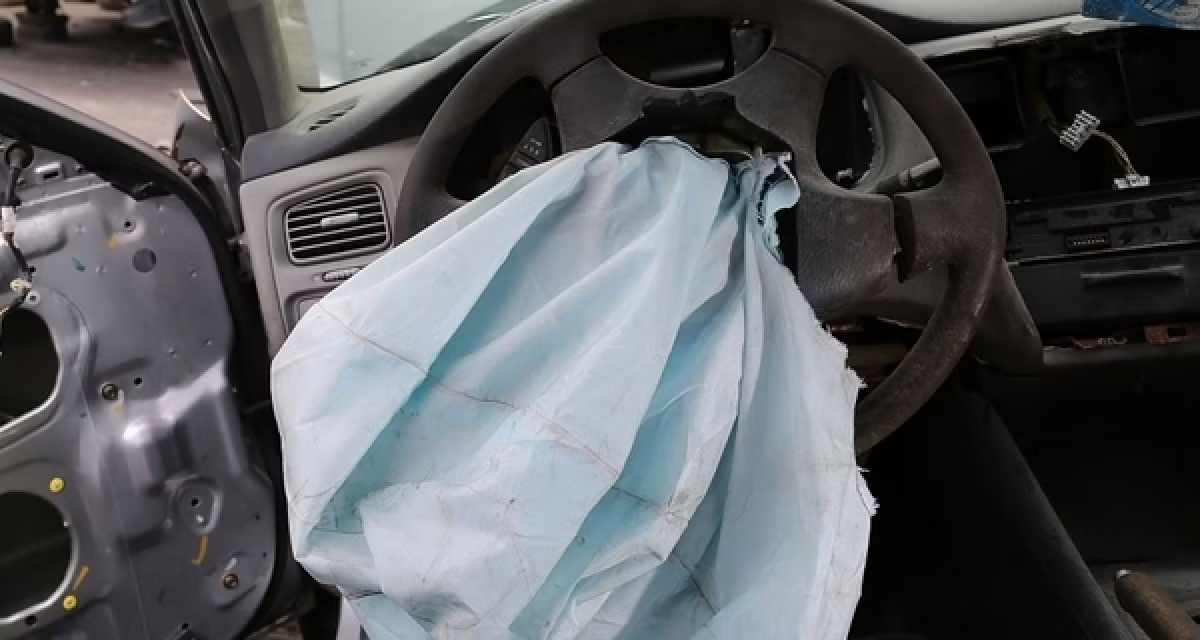
A Columbus-area used-car dealer has pleaded guilty to trafficking counterfeit airbags sourced from China and passed off as genuine Honda parts — and the case has cracked open a safety crisis that standard recall tools can’t touch. John Bojorquez, 35, owner of JB Ohio Auto Sale in Galloway, admitted to importing and installing at least 44 fake airbag inflators between August 2024 and May 2025, according to the U.S. Department of Justice. He faces up to ten years in federal prison, with sentencing to be set by U.S. District Judge Edmund A. Sargus Jr.

The counterfeits are not just inferior parts — they are lethal ones. The National Highway Traffic Safety Administration has linked inflators bearing the DTN60DB designation to 11 deaths and three severe injuries across 14 crashes nationwide since May 2023. When these units deploy, they can rupture and hurl metal fragments into drivers’ chests, necks, and faces. The most recent fatality, recorded August 27, 2026, in Dallas, involved a 2018 Chevrolet Equinox — and it came after NHTSA had already banned the import and sale of DTN-marked inflators in April.
How the Scheme Worked, From O’Hare to a Clothes Hamper
U.S. Customs and Border Protection officers first intercepted the scheme in August 2024 when a shipment of 20 counterfeit airbags arrived at Chicago O’Hare International Airport. The boxes were falsely declared as “desktop night lights” and addressed to Bojorquez’s dealership. The same Chinese sender followed up with four additional shipments that same month, similarly labeled as night lights or “blue desktop nightlights.”

When federal agents searched JB Ohio Auto Sale in May 2025, they found more counterfeit units on the premises — some concealed beneath a towel inside a clothes hamper. The inflators were manufactured by Jilin Province Detiannuo Safety Technology Co., operating under the DTN Airbag brand. The company has told NHTSA it does not sell its products in the U.S. for vehicle installation, and the agency has acknowledged that some units in circulation may be counterfeit copies of DTN’s own product. Regardless of origin, NHTSA banned their import and sale in April 2026 — its first prohibition of this kind in more than two decades.
The $100 Price Gap That Fuels a Dangerous Black Market
.jpg?q=49&fit=crop&w=500&dpr=2)
The economics behind the scheme are straightforward and grim. A genuine replacement airbag inflator can cost more than $1,000. A counterfeit version sells online for roughly $100. That spread — several hundred dollars per repair — is enough to make the substitution attractive to rebuilders working on thin margins, particularly on salvage-title or post-crash vehicles where airbags have already deployed or been stolen.
The scale of the problem has grown sharply. U.S. Customs seized at least 490 counterfeit airbag inflators during import in 2024, more than ten times the approximately 45 units seized in 2023. NHTSA’s ban has not stopped the bleeding: the eleventh U.S. death linked to a DTN-marked inflator was reported in August 2026, months after the prohibition took effect. A ban can stop lawful imports; it cannot retrieve parts already sitting inside steering wheels across the country.
Why Your VIN Check Won’t Catch This, and What Actually Might

This is where the counterfeit airbag crisis diverges sharply from a conventional recall. Because these inflators are installed post-factory — typically during a repair at an independent shop — they are never tied to a vehicle identification number in any manufacturer or regulator database. A VIN lookup will return no open recalls on an affected car. NHTSA has confirmed that only a physical inspection can determine whether a vehicle carries a DTN60DB inflator, identified by a label on the connector side bearing the sequences 144415654 666631 or 144415654 666633.
NHTSA’s practical guidance for buyers comes down to a few concrete steps. Pull a vehicle history report — services like CARFAX report airbag deployment history, which is the clearest signal that a replacement inflator may have been installed. Have a trusted mechanic or franchised dealership inspect the car before purchase, and ask specifically about the brand and origin of any replacement safety components. If a DTN60DB inflator is found, NHTSA’s instruction is unambiguous: do not drive the vehicle until it has been replaced with genuine original equipment. Critically, owners should not attempt the inspection themselves — people have been killed working on their own airbags.
As for the vehicles that moved through Bojorquez’s lot, prosecutors have not yet identified the affected Honda models or VINs, and it remains unknown how many cars he sold carry a counterfeit unit. Anyone who purchased a vehicle from JB Ohio Auto Sale and suspects it may contain a counterfeit airbag is asked to contact the U.S. Attorney’s Office at 888-529-2820.
The Takata scandal took years to fully surface and ultimately triggered the largest automotive recall in history, affecting more than 67 million vehicles from 12 manufacturers worldwide. The DTN crisis is structurally harder to contain — there is no assembly-plant chain of custody, no manufacturer to compel a recall, and no free remedy for owners who bear no responsibility for the part in their car. Three years, eleven deaths, and a ban that didn’t stop the twelfth fatality from arriving. Used-car buyers shopping on a budget deserve to know the system’s blind spots before they sign anything.

Related posts

Latest Post



No Comments