
Forget The Sportster—This Japanese Cruiser Offers More Motorcycle For The Money
The Sportster has long been the go-to name for riders chasing a lean, stylish cruiser that feels great the moment the engine fires up. For decades, the nameplate has been an approachable way into Harley-Davidson ownership. The current model carries that tradition forward with modern hardware and a look that is instantly recognizable, and it is easy to see why so many first-time cruiser shoppers walk into a dealership with the Sportster already at the top of their list. However, a well-known badge is only one part of what makes a motorcycle worth owning, and the price of admission matters just as much. There is another way to get the same cruiser experience, built around a torquey V-twin, a low seat and a sticker price that leaves some room in the budget.
Why The Sportster Became The Cruiser Everyone Measures Against

Harley-Davidson introduced the Sportster in 1957, and it was billed as the “sporty” Harley-Davidson. Over the decades, it became the bike that many riders started on and then kept for years. That history gives the Sportster a cultural standing few motorcycles can match, which is why it often becomes the benchmark for other cruisers.
The current Nightster and Sportster S have that same identity, albeit with an updated formula. They use the liquid-cooled Revolution Max V-twin, and it pairs a vintage tank medallion and a high-mount exhaust with ride modes and modern electronics. The range starts under $10,000, and for plenty of shoppers, that mix of heritage and performance is exactly what they are looking for.
There Are Some Unsaid Caveats, Though

Even so, the number on the window sticker rarely tells the whole story. The Sportster S carries a freight charge of $730 on top of its MSRP, and paint upgrades add more, with Vivid Black costing $300. More premium color options cost even more. A rider who starts at $15,999 can quickly end up north of $17,000 before the motorcycle even leaves the dealership.

There is also a question of character. The engine makes its peak power at 7,500 rpm and its peak torque at 6,000 rpm, which gives the motorcycle a lively, almost sporty feel that suits plenty of riders. However, someone who wants the relaxed, low-rpm shove of a traditional cruiser may find themselves looking away from the Sportster S and toward a particular Japanese cruiser.
The Yamaha Bolt R-Spec Is A Sportster Alternative With Muscle To Spare

The Bolt R-Spec is a stripped-down bobber with a single seat, a compact fuel tank, and a stance that gives it an “expensive-cruiser” look. Yet, it carries an MSRP of $8,999, plus a destination charge of $625. That is $1,000 less than the Nightster and around $7,000 less than a Sportster S. The motorcycle is also approachable in ways that matter to newer riders.
At 542 lb wet, it is not a featherweight, but the seat height of 27.2 inches lets most riders plant both feet flat on the ground. That keeps the Bolt R-Spec easy to handle at parking-lot speeds, where many cruisers make their weight felt the most. On that note, here are some more details.
A Torque-Rich V-Twin That Pulls Without Fuss

The Bolt R-Spec features a 942 cc air-cooled V-twin engine with a single overhead cam. The tuning is aimed squarely at everyday usability instead of top-end numbers. Peak torque arrives at roughly 3,000 rpm, so the engine delivers its best work at the kind of relaxed revs that cruiser riders prefer. A five-speed transmission handles the shifting duties, and a belt sends power to the rear wheel. The belt drive system is a quiet and clean alternative to a chain, and also requires less maintenance.
Piggyback Shocks And Alloy Wheels Sharpen The Ride

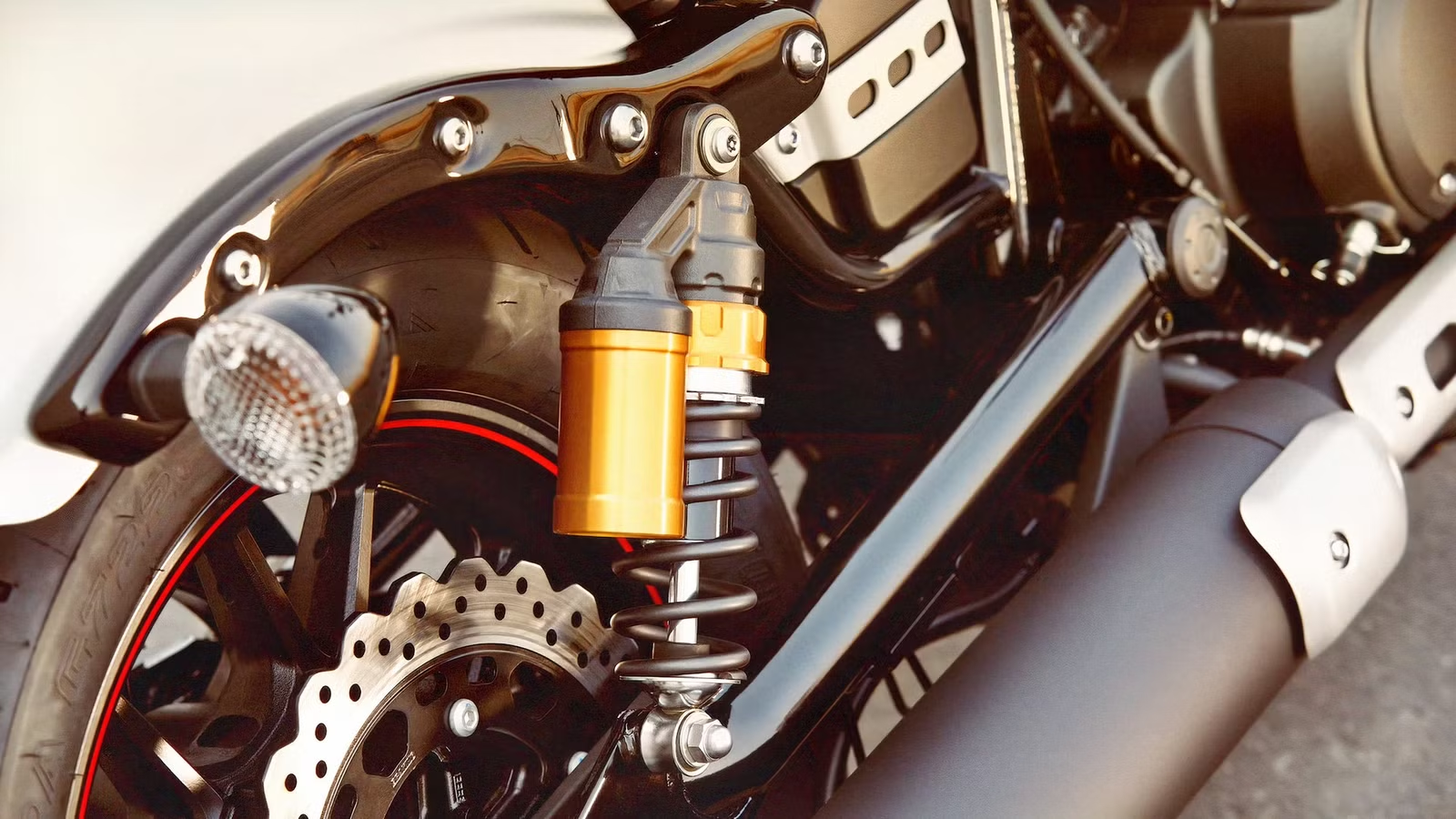
Twin rear shocks with piggyback reservoirs are fitted at the back, and they are a step above the basic units found on many entry-level cruisers. Up front, the fork offers 4.7 inches of travel, while rear wheel travel is a modest 2.8 inches. The motorcycle rolls on a 19-inch front wheel and a 16-inch rear wheel, both alloy and tubeless, wrapped in Bridgestone Exedra tires. That combination should give the Bolt R-Spec a light, willing feel when turning in, especially when compared to cruisers with fat front tires. The fuel tank holds 3.4 gal, so range is not the Bolt R-Spec’s strongest suit, and riders planning long days will need to keep an eye on the gauge.
The Cockpit Strips Cruising Down To The Essentials

The Bolt R-Spec has a clean, uncluttered layout. A wide set of bars sits within easy reach, the single-piece vinyl seat is sculpted and comfortable, and the foot controls fall naturally under the rider’s feet. The upright, slightly relaxed riding position should feel natural right away. Once onboard, you’ll see the instrumentation follows the same minimalist approach. A compact digital display handles the speedometer, trip odometer, and fuel level warning, and that is about it. There are no ride modes to cycle through and no menus to learn.
This Might Be Your Last Chance To Take The Yamaha Bolt Home

Here is the part that makes the timing interesting. Yamaha’s current listing shows the 2025 Bolt R-Spec at an MSRP of $8,999, and as of now there is no 2026 model year for the United States. The company has not said what comes next for the nameplate, so riders who have been on the fence may want to move before dealer stock runs out. Add the dealer discounts, and the value argument is where the Bolt R-Spec really makes its case. So the Sportster remains a great motorcycle with a legendary name, and plenty of riders will happily pay the premium for the badge. But the Yamaha works for anyone who cares more about low-rpm torque, a light and simple setup, and a lower price tag.
Source: Yamaha

Related posts

Latest Post


No Comments