
Leasing firms: “Bloodbath” electric car market needs Budget support
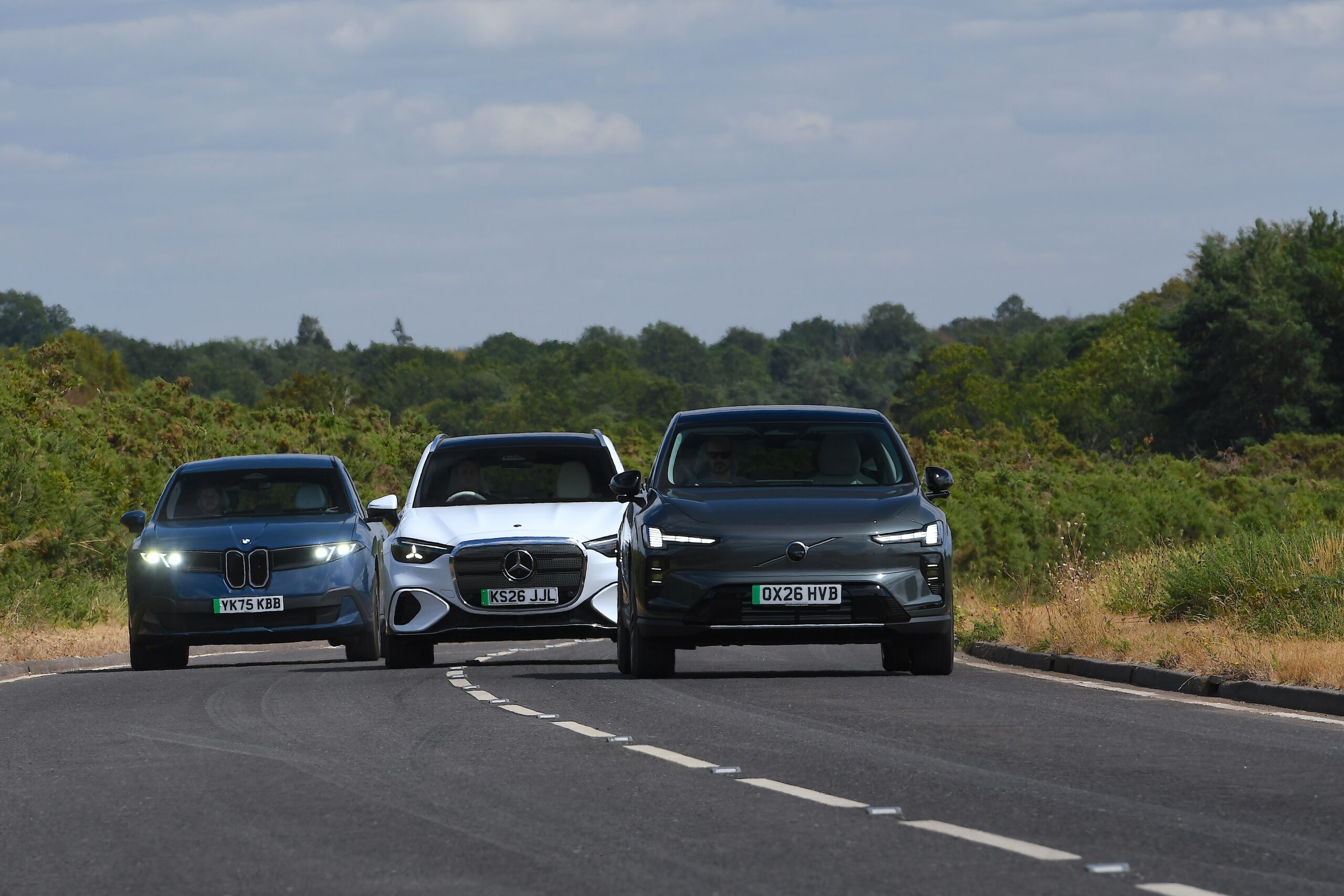
The UK government’s Autumn Budget must address two critical issues with the company car tax system to support the UK’s “cut-throat” EV market, leasing firms have warned.
A new report by the British Vehicle Rental and Leasing Association (BVRLA) highlights an ongoing imbalance, as retail demand for new and used EVs continues to fall behind channels supported by cheap benefit-in-kind (BIK) tax.

Company cars are taxed based on a CO2 emissions-weighted percentage of their list price, and ultra-low bandings for plug-in cars were reintroduced in 2020 to nudge drivers towards them.
For 2026/27, the percentage is 4% of the list price for electric cars and up to 16% for plug-in hybrids compared with at least 26% for the most efficient petrol and diesel models.
This influences company car and salary sacrifice schemes, in which drivers fund monthly rentals using their gross income and pay BIK on the car at lower rates than the income tax on the wages used to fund it.

As that system is capped at 75g/km of CO2, it effectively limits the benefits to PHEVs and EVs, and it’s often cheaper than leasing privately.
Demand has surged: in 2024/25, 920,000 people were paying BIK tax on a car, which was 200,000 more than in 2020/21, according to the latest HMRC data. Half (467,000) were in EVs, while a quarter (220,000) were in PHEVs.
For BVRLA members, tax incentives have supported a 25% increase in their combined fleet in the past five years to the second quarter of 2026, from 1.37 million cars to 1.67m, but that growth isn’t uniform.
Business contract hire (BCH) volume increased 25% to 986,033 cars, while salary sacrifice volume grew more than tenfold to 285,000 cars, drawing level with the personal contract hire (PCH) fleet, which declined by 8% in the same period.
EVs now account for 90% of BCH volume and almost 100% of salary sacrifice volume, according to BVRLA members, compared with 23% for PCH. Half of the BVRLA’s BCH fleet is electric.
Given the importance of BIK tax, BVRLA chief executive Toby Poston stressed that the Autumn Budget, scheduled for publication on 28 October, needs to shore up longer-term support.
“The [BIK tax] rate for electric company cars will reach 9% by 2029/30, but there are no published rates beyond that,” he told Autocar.
“With most agreements lasting three to four years, drivers need greater certainty. We’re asking the chancellor to hold BIK [on EVs] at 9% for 2030/31 and 2031/32 and protect the tax advantages of salary sacrifice, particularly for basic-rate taxpayers.”
The wider market also remains challenging as manufacturers engage in what one leasing firm told the BVRLA was a “bloodbath” for market share, caused by an influx of competitive new brands from China and pressure to avoid fines for not meeting zero-emission vehicle (ZEV) mandate targets (which are currently under governmental review).
For leasing companies, “cut-throat” new car pricing also means ex-fleet vehicles are worth less than the value forecast at the start of the contract – a situation that the sector expects to face for at least another year.

Related posts





Latest Post


No Comments