
Honda’s Affordable Sports Car That Beat Porsche At Its Own Game
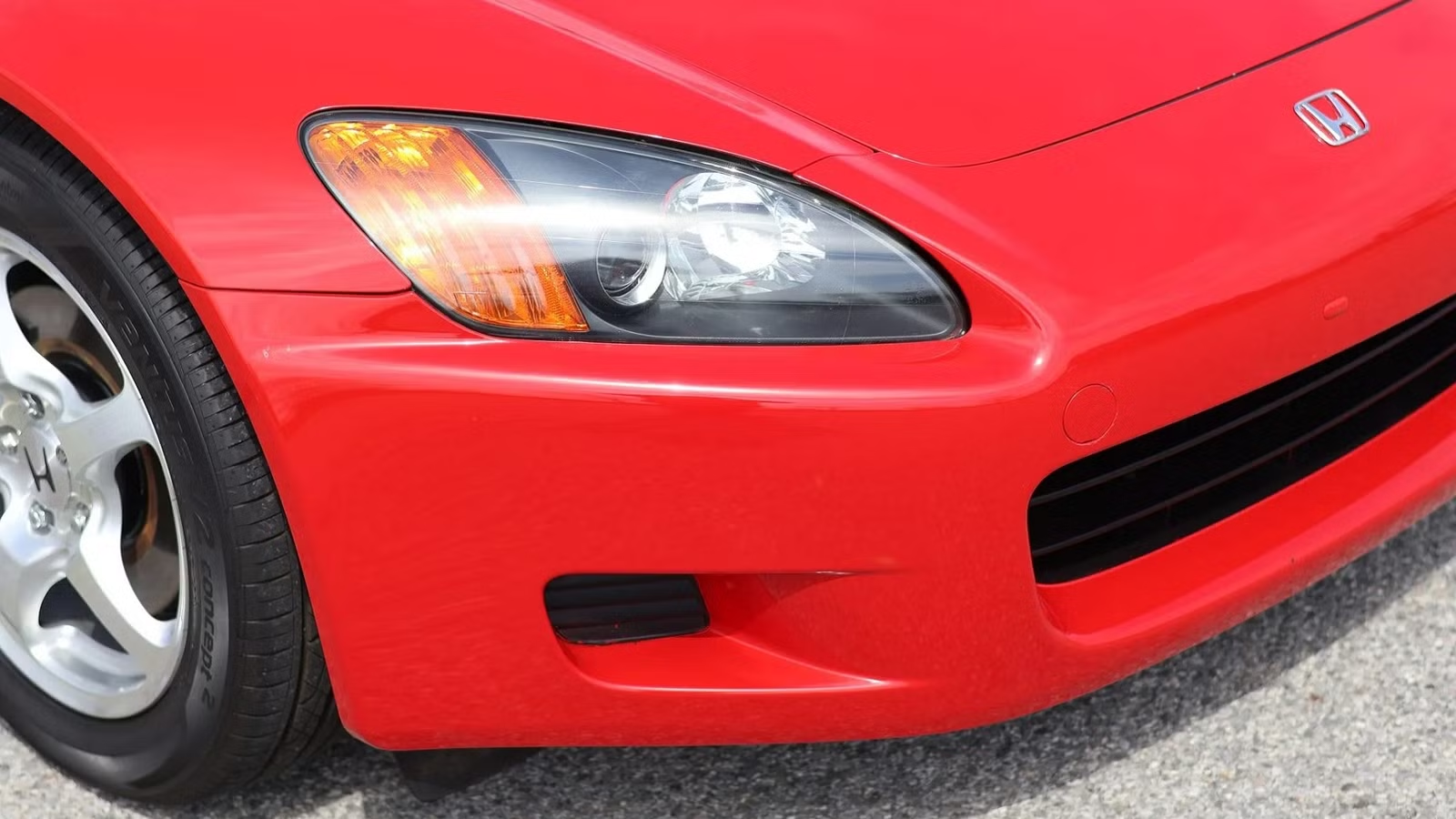
Few rivalries in modern sports car history are as compelling as the one that unfolded at the turn of the millennium between a celebrated German roadster and an unlikely challenger from Japan. While Porsche was busy cementing the Boxster’s reputation as the definitive entry-level sports car experience, Honda quietly engineered something that would make enthusiasts question everything they thought they knew about performance per dollar. The result was a car that revved higher than a Ferrari, outhandled the entry-level Porsche through the bends, and cost thousands less — all while wearing a badge more commonly associated with Civics and sensible minivans. At the center of the German side of this story sat Porsche’s Boxster—the brand’s lighter, more accessible alternative to the 911 and the quintessential entry-level roadster that helped rescue Porsche from near-bankruptcy in the late ’90s. With a mid-mounted flat-six engine, rear-wheel drive, and sharp handling, the Boxster was essentially a wealthy enthusiast’s Miata, and Porsche sold them by the thousands.

Honda’s answer didn’t just show up to the sports car party—it embarrassed the host. A true driver’s car in every sense, this legendary four-cylinder Honda was both cheaper and more capable than the six-cylinder Boxster it was built to rival. Sadly, it would also be the last of its kind.
The Honda S2000 Stole Porsche’s Spotlight
The Honda S2000 is one of those sports cars that only improves with age. Honda nailed the formula from the start, but it took enthusiasts more than a decade to fully appreciate what they had—one of the last truly analog sports cars and arguably one of the finest Japanese performance machines ever built.


First revealed as the SSM Concept at the 1995 Tokyo Auto Show, the production S2000 didn’t arrive until 1999, launched in celebration of Honda’s 50th anniversary. Priced higher and packing more power than the wildly popular MX-5 Miata, it was engineered to compete directly with the BMW Z3 and Porsche 986 Boxster. The S2000 proved relatively successful in that mission, remaining in production for a full decade and finding more than 110,000 owners worldwide.
The Boxster Killer

The Honda S2000 hit the American market in 1999 with a starting MSRP that undercut the already well-established Porsche Boxster 986 by more than $10,000. Even more importantly, the S2000 offered significantly better performance and handling, with a steep 40-horsepower advantage over the German rival in its debut year.

If you wanted a more powerful 253-hp Boxster S (which debuted in 2000), you’d have to pay roughly $53,000 — over $20,000 more than the 240-hp S2000’s sticker price. You’d get a solid flat-six, but you’d still be missing out on the intoxicating 9,000-rpm screams and sharper handling dynamics. That’s how decisive the S2000’s edge was over its rivals — and its value dominance extended well into the late 2000s as it continued to battle the newer 987-generation Boxsters offering 240 hp before it was finally phased out of production in 2009.
Honda S2000 Vs Porsche Boxster Specs Comparison
|
Model |
S2000 |
Boxster 986 (base) |
|
Engine |
2.0-liter inline-4 |
2.5/2.7-liter flat-6 |
|
Power |
240 hp |
201-228 hp |
|
Torque |
153-162 lb-ft |
181-199 lb-ft |
|
0-60 mph |
5.4-5.8 seconds |
5.9-6.7 seconds |
The S2000 Is A Driver-Focused Engineering Masterpiece

The S2000 received its very own exclusive version of Honda’s high-revving VTEC inline-four dubbed the F20C (and later F22C1). It used the brand’s clever variable valve timing architecture to maintain strong torque at the low end and produce remarkable horsepower figures at the top end when VTEC kicks in. A true engineering masterclass, the F20C is both the highest-revving modern four-cylinder and the most powerful naturally aspirated four-cylinder ever made. But a great engine is just the start of what makes the S2000 so revered.
The Definitive Driver’s Car

Everything about the S2000 was oriented strictly toward the driver. Its high-revving four-cylinder masterpiece paired with a silky six-speed manual—one of the finest ever fitted to a production car—and perfect 50/50 weight distribution. Technically a front-mid-engined sports car, the S2000 positioned every inch of its engine behind the front axle, making it remarkably quick to change direction despite relatively muted steering feel from its electric power steering compared to the hydraulic systems found in rivals like the Miata.

Even so, with impressive power, a stratospheric redline, and that exceptional six-speed sending thrust to the rear wheels, the S2000 proved the Miata wasn’t always the answer. Despite sharing a lightweight philosophy, Honda’s roadster delivered nearly double the performance of a contemporary NB or NC Miata, which produced between 116 and 170 horsepower during the S2000’s 1999–2009 production run.
Honda’s roadster evolved through two distinct generations over that decade, and enthusiasts still debate which one reigns supreme.
The Endless Debate: AP1 Or AP2

From 1999 to 2004, the S2000 was in its AP1 generation, offering a 2.0-liter inline-four with 240 hp. After that, it received an all-new 2.2-liter F22C1 that made 237 hp with noticeably more torque. The extra 0.2 liters of displacement were stroked out rather than bored out, which added low-end pull without sacrificing top-end speed. The trade-off, however, was a redline dropped to 8,200 rpm. While this did benefit reliability, the AP2 never quite captured the same high-revving flair that made the AP1 so intoxicating.

That wasn’t all: one major pain point of the AP1 was its overly stiff suspension, so the AP2 addressed that with softer springs, larger 17-inch wheels, better tires, and revised anti-roll bars for improved stability. After 2006, it also gained electronic traction control. All of these upgrades were complemented by a more aggressive front bumper and revised LED taillights that gave the AP2 a sharper, more contemporary look.
Honda S2000 CR: The Sought-After Track Option

When gearheads say the AP2 was better, they’re sometimes referring to the special Club Racing (CR) trim. The S2000 CR is incredibly rare, with just about 1,500 units finding buyers. Bred for the race track, it sheds 99 lbs compared to the standard AP2 models, mostly by deleting unnecessary features such as air conditioning and the power soft top in favor of a removable hardtop. The CR also stiffens the suspension and adds new springs, dampers, and sway bars for extra rigidity. Tighter steering, stronger brakes, and stickier tires complete the package, making it a weapon around a circuit. Buyers could also opt for the aggressive Aero Package, which adds a larger front lip and a substantial rear spoiler for the most track-ready look possible.

These CR models are worth a small fortune today. Classic.com shows the average price paid for a CR is around $75,000, but exceptional examples have fetched as much as $200,000, such as this mint 2009 example with just 123 miles on the clock.
What A Honda S2000 Is Worth Today

Over the years, the gap between German sports cars like the BMW Z3, Z4, and 986 and 987 Boxsters and the S2000 only continued to widen. Today, the S2000 is celebrated for its bulletproof reliability and tuner-friendly platform, whereas the Boxster’s flat-six revealed its fair share of maintenance headaches — and so did its BMW counterparts’ straight-sixes.
Those factors explain why, despite being the most affordable of the bunch when new, Honda S2000s are now changing hands for more than twice as much as their German rivals. In general, the AP1 and early AP2 models never really dropped below their original MSRPs. The cleanest examples in both cases now fetch close to six figures.

Meanwhile, according to Classic.com, 2008 and 2009 models are worth roughly twice what buyers paid for them when new. That’s about as much as a brand-new Mustang or a Supra. It’s also what you’ll pay for a used Corvette C8.
The S2000 Is The Perfect Mazda Miata Alternative In 2025

The S2000 may not be a Miata, but Japan has never produced a better lightweight convertible sports car. Nearly 30 years on, the S2000 poses a truly viable alternative to a brand-new Mazda Miata ND, offering more power and a more celebrated manual transmission — albeit at roughly the same price. It’s the ideal alternative for buyers looking to invest in the S2000 legacy and get a roadster that’s just a step faster, louder, more aggressive, and more capable on a track.
The S2000’s Legacy And Cult Status

Apart from its bulletproof reliability and driving experience, the S2000 also owes its reputation to pop culture, appearing in several iconic roles in the Fast and Furious franchise — driven by Johnny Tran (pictured) in the first movie and Suki in the sequel — as well as countless racing games such as Need for Speed and Gran Turismo. At the same time, the car has steadily built its reputation in tuner culture as a near-perfect platform for modifications and track day fun. Its famous owners include celebrities such as Ryan Gosling and Jay Leno.
While most sports cars steadily depreciate on the used market, the Honda S2000’s value continues to climb. The model is now on the same trajectory as legends like the Supra Turbo and Nissan GT-R R34, and rare variants like the CR could very well soon command supercar money.
Sources: Honda, Classic.com.

Related posts
Latest Post


No Comments