
GM 6.2-Liter L87 V8 Under NHTSA Investigation After Recall Fix Fails
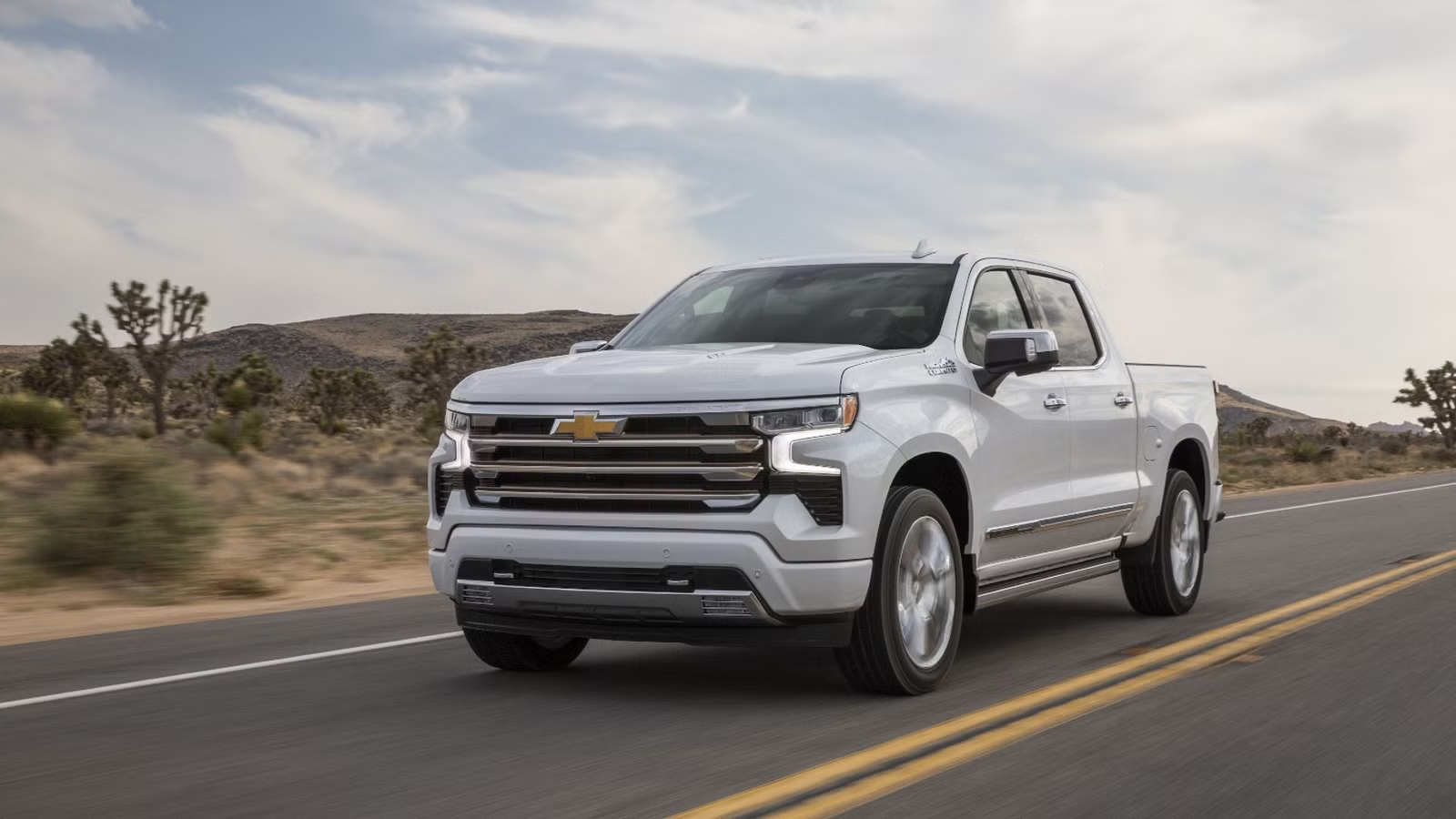
Nearly one million GM truck and SUV owners are staring down a problem that should have been solved more than a year ago. On August 21, 2026, NHTSA’s Office of Defects Investigation opened a fresh engineering analysis into 997,743 vehicles powered by the 6.2-liter L87 V8 — not because the original recall was ignored, but because owners say it simply didn’t work.

The scope covers 2021–2026 model year Chevrolet Silverado 1500s, Tahoes, and Suburbans; GMC Sierra 1500s, Yukons, and Yukon XLs; and Cadillac Escalades and Escalade ESVs. Federal regulators have received 499 complaints of engine failures in vehicles that already went through GM’s official recall remedy — and GM itself has logged a staggering 6,953 post-remedy failure complaints from its own customers.
What GM’s Original Recall Was Supposed to Do
The L87 trouble traces back to manufacturing defects in the engine’s rotating assembly — specifically, out-of-spec crankshaft dimensions, surface finish irregularities, and rod-bearing damage caused by machining sediment left inside connecting rods and crankshaft oil galleries. GM attributed the failures to supplier manufacturing and quality issues, and in April 2025 voluntarily recalled 597,630 U.S. vehicles (model years 2021–2024) under Recall 25V-274.

The remedy came in two forms. Dealers first ran a diagnostic inspection, scanning for trouble code P0016, which flags crankshaft or camshaft misalignment. Engines that failed the test were eligible for a complete replacement. Engines that passed received a switch from the factory 0W-20 oil to heavier 0W-40, along with a new oil filler cap and a revised owner’s manual insert. GM also put a special coverage program in place — 10 years or 150,000 miles from the vehicle’s original in-service date — for engines that passed inspection but might fail later.
Why Federal Regulators Are Back at the Table

The numbers tell the story. Of the 499 NHTSA complaints alleging post-remedy failure, 473 came from owners who received the oil viscosity change — the lighter-touch fix — and 26 came from owners who had already received a full engine replacement. On top of that, NHTSA received 191 additional complaints of L87 failures in engines built after May 2024, meaning the problem may extend well beyond the production window the original recall addressed.
That’s what prompted the August 21 escalation. NHTSA is now expanding its engineering analysis — designated EA26005 — to include engines produced after the March 2021 to May 2024 window cited in Recall 25V-274, pulling 2025 and 2026 model years into the investigation for the first time. An engineering analysis at this stage is a formal technical evaluation: regulators examine components, test protocols, and supplier manufacturing controls. It’s typically the final administrative step before the agency can demand an expanded recall or a more comprehensive fix.
“The safety and satisfaction of our customers are the highest priorities for the entire GM team, and we continue to cooperate with NHTSA’s evaluation of this matter,” GM spokesman Bill Grotz said in a statement to the Detroit Free Press on August 21. GM has not changed its existing recall, which remains limited to 597,630 U.S. vehicles from model years 2021 through 2024.
What Owners Are Experiencing — and What Comes Next

The failure mode is hard to ignore. Owners have reported sudden power loss, severe engine knock, and complete engine shutdown while driving — conditions NHTSA describes as a “loss of motive power due to engine failure.” At least one crash and one injury tied to sudden power loss have been recorded in the current investigation file.
Some owners have taken GM to court. The automaker has asked a federal judge to dismiss the lawsuit, arguing the recall campaign already provides the remedy plaintiffs are seeking. GM’s internal investigation concluded that supplier manufacturing defects — not a fundamental design flaw in the L87 itself — are behind the failures.
If NHTSA determines that the oil viscosity change is insufficient to prevent spun bearings, broken connecting rods, or scarred crankshafts across the full population of affected vehicles, GM could face a secondary recall campaign covering close to one million trucks and SUVss. For owners driving an L87-equipped vehicle right now, the agency’s guidance is straightforward: keep detailed records of all recall-related service work and oil changes, and report any warning lights, unusual engine noise, or performance hesitation immediately. The special 10-year/150,000-mile coverage program GM established remains in effect — use it.

Related posts





Latest Post


No Comments