
Ford Mustang Dark Horse Manual Review: The Last True Muscle Car

You look at the lineup of hardcore performance vehicles and it’s kind of hard to argue against one aspect: there’s absolutely no dearth of speed on offer. As enthusiasts, we’re ever grateful for that, but maybe they’re all just suspiciously good at making speed feel clean? They sort out traction before your right foot has finished making a decision you know you’ll come to regret later, shuffle gears faster than your brain can say ‘Bwoah!’, and cover road imperfections with immaculate ease.

Some may like that, but the best Muscle Cars were never about clinical perfection. They were loud, dramatic, rude, and happiest when the driver had to work a little. That’s the part modern speed has been slowly sanding away, which is why one V8 coupe with three pedals feels like maybe there’s some hope left after all.
Modern Muscle Cars Got Faster And Less Human
Speed has never been easier to buy. The Dodge Challenger turned horsepower into a bar fight with seatbelts, the Chevrolet Camaro became sharp enough to worry proper sports cars, and even the regular Ford Mustang GT kept the V8 alive while the rest of the market grew quieter and cleverer. Nobody sensible wants bad brakes, vague steering, or a chassis that treats every freeway ramp like a personal insult.

And yet, the problem is that speed alone doesn’t make a muscle car feel alive. A car can be quick enough to embarrass the car on your old bedroom poster and still feel like it’s doing most of the interesting work behind a curtain. Automatic gearboxes, clever stability systems, drive modes, digital dashboards, and layers of electronic filtering have made fast cars easier to trust, but they’ve also made some of them feel weirdly distant.
Cars like the Challenger and Camaro proved that American performance could still be loud, quick, and properly dramatic, but the emotional connection has become harder to preserve as the segment has evolved. The sound may still be there, and the horsepower may be outrageous (and it is), but the driver sometimes gets reduced to a supervisor with a steering wheel. When the entire point is to feel like you’ve escaped the commute, it’s a sizable letdown.
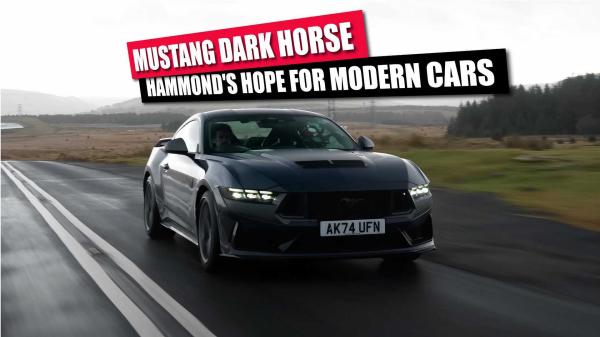
Why The Mustang Dark Horse Restores Richard Hammond’s Hope For Modern Cars
Hammond takes a spin in Ford’s new performance-focused Mustang and explains why it offers a release from the world’s worries.
The Manual Gearbox Became The Real Line In The Sand

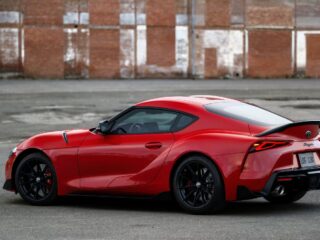
The days of the manual transmission being normal are no more, sadly. It now feels like a secret handshake. The Mazda MX-5 Miata still treats the stick shift like a core part of its personality, the Honda Civic Type R builds much of its appeal around three-pedal precision, and cars like the Nissan Z and Toyota GR Supra show that enthusiasts still care when a performance car lets them shift for themselves.
Without it sounding too dramatic, a clutch pedal changes the conversation between driver and car. You have to time things, listen to the engine, feel the shift, and occasionally accept that your left foot has the elegance of a folding chair. A good automatic can make a car quicker, but a good manual makes the driver part of the machinery.
We Need Manuals

That’s why the disappearing stick shift has become such a big deal for muscle cars. It’s no longer only about whether a car has a V8 or rear-wheel drive. The real question is whether a car lets the driver participate, or whether it simply asks them to select a mode and hang on for dear life. The clutch pedal has become a kind of truth serum. There’s even science now backing up what manual loyalists have been saying over coffee for decades. Manual driving asks more of the brain than an automatic does, which makes sense to anyone who has ever downshifted into a corner and felt their whole body wake up.

Top 10 Fastest Mustangs Ranked
We’ve ranked the top 10 fastest Mustangs ever built, from track-focused beasts to supercharged street demons hitting over 200 mph.
The Ford Mustang Dark Horse Still Gets It

|
Engine |
Power |
Torque |
Transmission |
|
5.0-liter Coyote V8 |
500 hp |
418 lb-ft |
6-speed manual |
The Ford Mustang Dark Horse lands right in the middle of this argument with exactly the kind of stubborn charm the moment calls for. It uses a 5.0-liter V8 rated at 500 hp and 418 lb-ft of torque, sends power to the rear wheels, and, importantly, can be had with a six-speed manual. In a world full of cars that want to make performance neat and tidy, that’s just heartening.
The Dark Horse gets the Tremec TR-3160, a gearbox tied to Ford’s more serious track-focused Mustangs rather than the regular GT’s manual. It also brings automatic rev-matching and no-lift shifting, so the car isn’t pretending modern technology never happened. It simply uses the tech to support the driver.
There’s also a 10-speed automatic available, and it’ll make sense for some buyers. It can knock out some quicker laps and acceleration with less effort. But in this writer’s opinion, the manual is the version that gives the Dark Horse its soul. It’s the one that turns the Mustang from a fast coupe into a proper hustle. Nothing like making a grocery run feel like you’re leaving a pit lane, except with milk.
The Dark Horse Has More Discipline Than Its Badge Suggests

The Dark Horse sounds like it was focus-grouped in a room full of people wearing black hoodies, but the hardware underneath is far more serious than the badge might suggest. It gets adaptive dampers, stickier tires with the right package, larger anti-roll bars, different chassis tuning, added cooling, and a 3.73 Torsen limited-slip rear differential with the manual. It also gets bigger brakes, including 15.4-inch front discs and 14.0-inch rear discs. No messing about here.
Grip is a big part of the story. With the right hardware and sticky Pirelli rubber, the Ford Mustang Dark Horse can pull serious lateral g-forces and deliver properly strong braking numbers. It’s still a seriously cool front-engine, rear-drive Mustang, so nobody’s confusing it for a featherweight canyon scalpel, especially at nearly 4,000 pounds. But it has the discipline to make that weight feel managed.
The best part is that the Dark Horse doesn’t become useless when the track day ends. It still has a usable trunk, decent outward visibility, modern screens, and enough everyday comfort to function like a real car. No wonder, then, that it bagged ‘Best Sports Car’ for 2025.
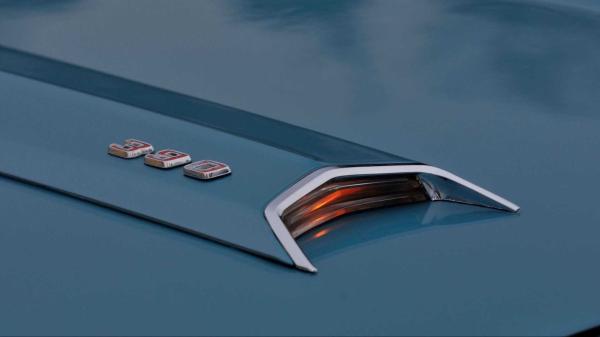
Ford Made One Muscle Car That Nobody Remembers
It seems bizarre that high-profile company like Ford would have an anonymous ride, but they produced one of the most obscure classic muscle cars ever.
Freedom Feels Better When The Car Still Needs You

It should be plenty clear by now that the Mustang Dark Horse isn’t the fastest possible version of the modern performance car idea. At the same time, it refuses to turn the driver into luggage. It still expects coordination, attention, and a little commitment, especially with the manual. That’s rare now, and rarity has a way of making ordinary things feel precious.
There’s something deeply satisfying about a car that lets you be imperfect. A manual Mustang gives you room to nail a downshift, slightly botch an upshift, laugh at yourself, and try again. That feedback loop is the whole point. Modern performance often tries to erase mistakes before they happen, but driving pleasure lives in the space between nailing it and botching it completely.
Still Alive And Shiftin’

Cars like the Dodge Challenger and Chevy Camaro have left the traditional gas-powered coupe fight, which makes the Mustang feel like the last guy still playing guitar after the bar lights have come on. With that context, the Dark Horse manual doesn’t need to be perfect to matter. All that matters is that it’s still here: loud, rear-driven, and willing to hand the driver a proper lever.
Source: Ford

Related posts



Latest Post


No Comments