
12 Dependable Luxury Cars That Cost Less Than The Average Price Of A New Car
New-car sticker shock is real. With the average transaction price for a new vehicle in 2026 hovering around $49,220 according to KBB, more buyers than ever are rethinking their options — and many are turning to the used market for relief. The second-hand market has never been more flush with inventory, but sorting through it can feel overwhelming, especially when you’re trying to avoid a money pit. The fear is understandable: buy the wrong car, and you’re trading one financial headache for another, this time in the form of repair bills and rapid depreciation.

If you know luxury cars, you know the terms ‘reliable’ and ‘affordable’ don’t mix well together. Although many luxury cars tend to fall victim to high depreciation rates, which result in them costing mere pennies on the dollar for second-hand buyers. More often than not, this includes spending thousands of dollars in repairs and maintenance as well. Fortunately, some of the most reliable cars ever made are luxury cars, and it all comes down to the fine details. Here are the most reliable luxury cars available today that don’t cost more than the average new car.
1997 Lexus LS 400
Average Used Price: $3,310
The successor to the very first Lexus car ever made, the second-generation Lexus LS 400 still holds a candle to modern-day luxury cars. Although its styling is far less flamboyant than newer vehicles, the 1997 Lexus LS 400 has impeccable build quality, a surprisingly powerful V-8 engine, and an interior fit for a king.
Reliability Highlights
- 4.0/5.0 RepairPal Reliability Rating
- $435 RepairPal Annual Maintenance Cost

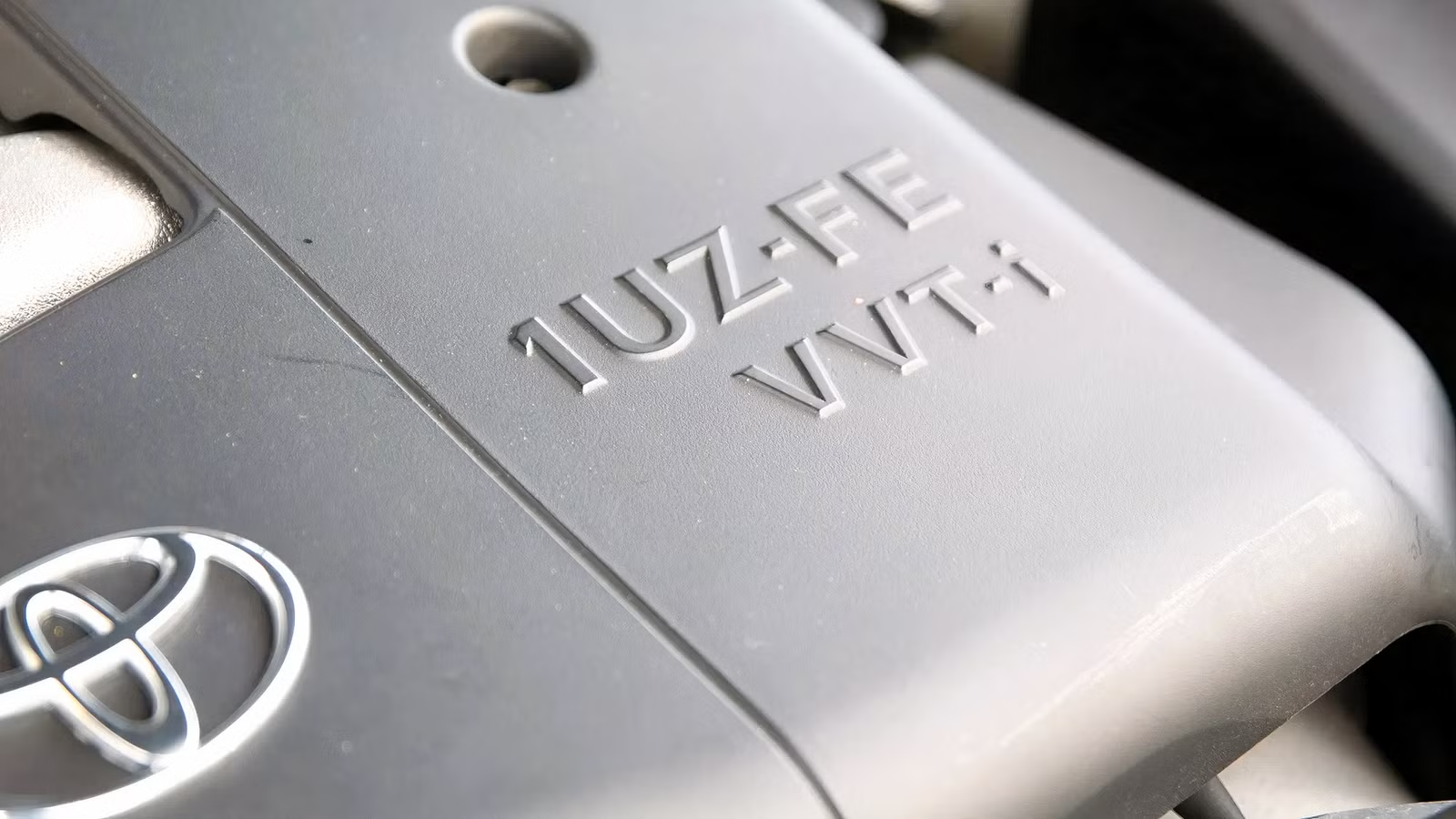
Under the hood of the 1997 Lexus LS 400 sits a naturally aspirated 4.0-liter V-8 — called the 1UZ-FE — that produces 260 horsepower and is capable of pushing the LS to 60 mph from a stop in a stout 7.1 seconds. The 1997 Lexus LS 400 drives a hard bargain, typically selling for less than $5,000 on the used market.
Pros
- Quiet, well-insulated cabin
- Power-adjustable, leather front seats
- Independent double wishbone suspension
Cons
- EPA-estimated combined fuel consumption rating of 19 MPG
- High-mileage examples develop rattling from the front suspension
- Only available as a four-speed automatic
2009 Infiniti G37 Sedan
Average Used Price: $5,010

The 2009 Infiniti G37 Sedan features a 3.7-liter V-6 engine making 328 horsepower — two fewer than the coupe’s V-6. So, why go for the lesser-powered sedan? Because it offers more cabin space than the coupe, translating to greater comfort for all occupants. The four-door is also easier on the wallet.
Reliability Highlights
- 4.0/5.0 RepairPal Reliability Rating
- $540 RepairPal Annual Maintenance Cost
The G37 was much larger than its German competitors when it debuted — and significantly cheaper. Though it lacked the grace and driving dynamics of offerings like the BMW 3 Series, it offered affordable luxury. The G37 was a masterstroke from Infiniti, combining brisk performance, attainable luxury, and a generous standard-equipment list. Good examples can still be found for under $8,000.
Pros
- Boisterous V-6 engine
- Luxurious cabin
- Spacious interior
Cons
- Outdated technology
- Thirsty powertrain
- Questionable looks
2010 Audi A6 3.0 TFSI
Average Used Price: $5,500

As mentioned previously, European luxury cars tend to depreciate at an alarming rate and cost an arm and a leg to maintain. Fortunately, the 2010 Audi A6, fitted with the supercharged 3.0-liter V-6, proves that reliable luxury cars exist. Its V-6 powerplant generates 300 horsepower and 310 pound-feet of torque — a welcome bonus on top of an already compelling package.
Reliability Highlights
- 3.5/5.0 RepairPal Reliability Rating
- $814 RepairPal Annual Maintenance Cost
Apart from having more than enough power, a used 2010 Audi A6 3.0 TFSI costs less than $10,000 on average. In turn, you won’t receive a ticking time bomb, but rather a well-built, reliable European luxury sedan.
Pros
- Quattro all-wheel-drive
- Power adjustable, heated front seats
- 5.9-second 0 to 60 mile-per-hour time
Cons
- Faulty torque converter resulting in check engine light is a common problem
- Jerky six-speed automatic transmission
- EPA-estimated combined fuel consumption rating of 21 MPG
2009 Mercedes-Benz S550
Average Used Price: $5,850

One car that you might have thought would never earn a spot on a list of reliable luxury cars is the Mercedes-Benz S-Class. Although unreliable S-Class models exist, the W221-generation S-Class is surprisingly dependable, especially the 2009 S550. Despite RepairPal giving the S550 a below-average reliability rating and estimating nearly $1,500 per year in maintenance costs, owners tend to be satisfied with their experience — as reflected in Edmunds’ consumer rating of 4.8/5.0 stars for the 2009 S-Class.
Reliability Highlights
- 2.0/5.0 RepairPal Reliability Rating
- $1,451 RepairPal Annual Maintenance Cost
Although not as powerful as full-blown AMG models, the 2009 Mercedes-Benz S550 still packs a mighty naturally aspirated 5.5-liter V-8 that’s good for 382 horsepower and 391 pound-feet of torque. With an original MSRP of $91,225, the S550 is also one of the most depreciated luxury cars of all time.
Pros
- Heated and ventilated, electronically-adjustable front seats
- Harman Kardon surround-sound audio system
- Automatic air suspension
Cons
- HVAC blower motor may fail
- EPA-estimated combined fuel consumption rating of 19 MPG
- Models without fully documented service history may be money pits
2014 Mercedes-Benz E350
Average Used Price: $9,785

Albeit not as luxurious as the S-Class — it lacks standard air suspension and ventilated seats — the W212-generation Mercedes-Benz E-Class still provides a well-equipped, opulent interior and handsome design language. The 2014 Mercedes-Benz E350, in particular, not only delivers 302 horsepower from its 3.5-liter V-6, but it’s also reliable.
Reliability Highlights
- 3.5/5.0 RepairPal Reliability Rating
- $833 RepairPal Annual Maintenance Cost
When new, a Mercedes-Benz E350 of this generation carried a sticker price of $55,327 — today, used examples typically sell for around 20% of that figure. Its modern appearance, comprehensive safety features, and plentiful creature comforts make the 2014 E350 a genuine bargain luxury car.
Pros
- 6.1-second 0 to 60 mile-per-hour time
- Well-insulated cabin
- Power-adjustable, heated seats with memory function
Cons
- Nine recalls to tend to beforehand
- Outdated infotainment system
- Some interior panels may squeak, creak, or rattle
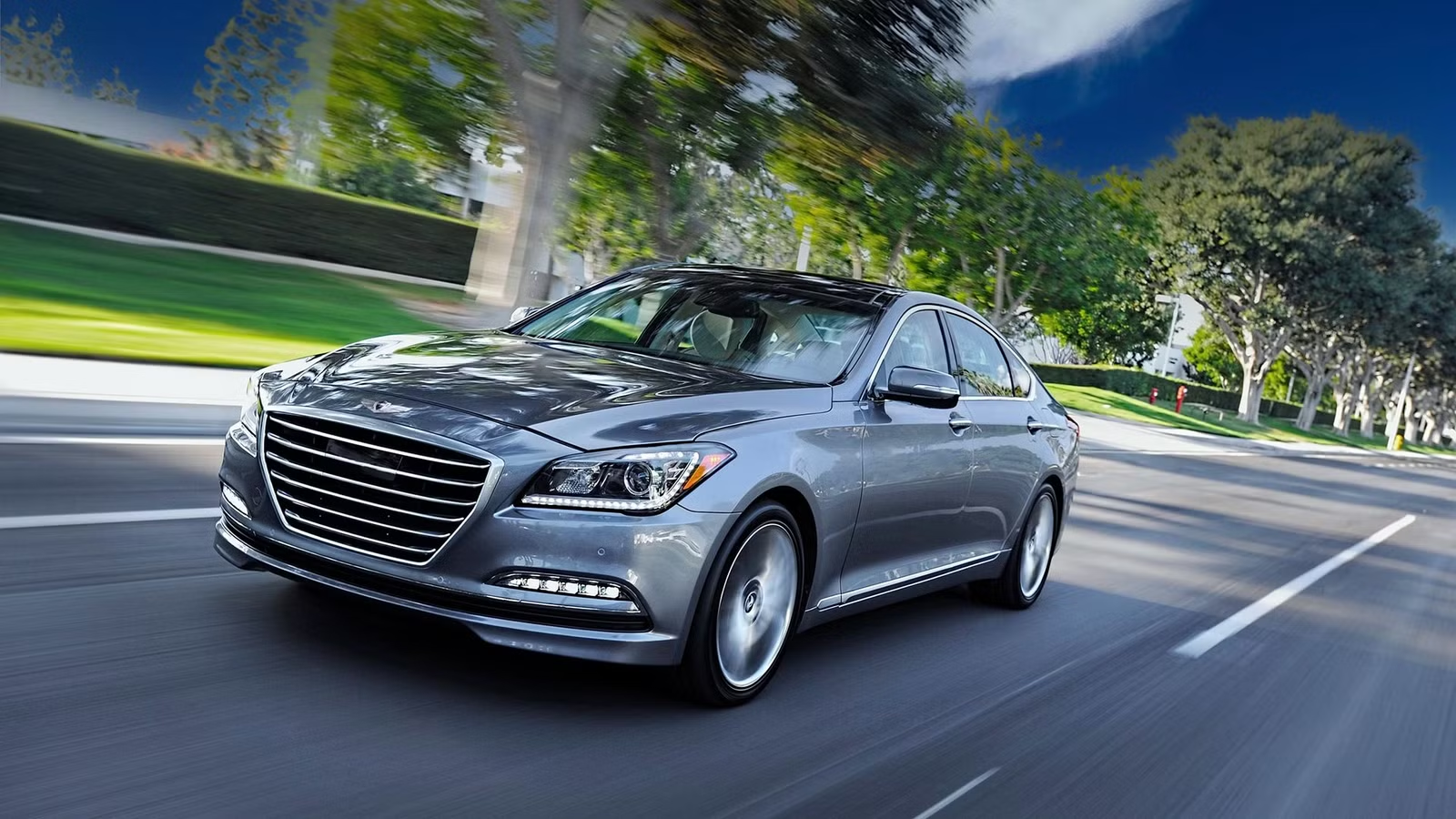
2016 Hyundai Genesis 5.0
Average Used Price: $12,360

Nowadays, Hyundai and Genesis are two completely separate entities. But back in the day, Hyundai placed its more premium vehicles in the Genesis range. Now known as the Genesis G80, the 2016 Hyundai Genesis sedan was offered with one of two engines: a 311-horsepower 3.8-liter V-6, and a 420-horsepower 5.0-liter V-8. Of the two, the V-8 model is considerably more reliable and comes loaded with an impressive array of luxury features.
Reliability Highlights
- 3.5/5.0 RepairPal Reliability Rating
- $583 RepairPal Annual Maintenance Cost
The interior of the 2016 Hyundai Genesis is something extraordinary. With high-quality materials throughout, power-adjustable leather front seats that are heated and ventilated, and memory and lumbar support, the Genesis looks like a six-figure car. In reality, a used V-8-powered Genesis sells on average for less than $20,000.
Pros
- 5.3-second 0 to 60 mile-per-hour time
- 123 cubic feet of interior room
- Long list of advanced safety features
Cons
- Rear seats can’t fold down
- Electrical gremlins may arise
- EPA-estimated combined fuel consumption rating of 18 MPG
2017 Lexus GS 350
Average Used Price: $18,000

After listing two Lexus models already, here is yet another one — further proof that Lexus cars are nearly bulletproof. The Lexus GS is the brand’s mid-size luxury sedan, slotting between the compact IS sports sedan and the full-size LS flagship. The 2017 Lexus GS 350 sports a 3.5-liter V-6 engine that puts out 311 horsepower and 280 pound-feet of torque.
Reliability Highlights
- 4.0/5.0 RepairPal Reliability Rating
- $592 RepairPal Annual Maintenance Cost
With an interior you’d expect from a Lexus of this era, the GS 350 features a 12.3-inch screen with an integrated navigation system and smartphone compatibility. The GS 350 comes wrapped in leather but lacks the more opulent wood trimmings found in pricier models like the LS flagship.
Pros
- Standard adaptive cruise control
- F Sport models have sport-tuned adaptive suspension
- Well-insulated cabin
Cons
- Short rattling sound on initial start-up may occur
- Rear seats can’t fold down
- Complex infotainment system with touchpad
2017 Lexus LS 460
Average Used Price: $21,210

Sharing the same engine as the luxurious, V-8-powered Lexus GS 460, Lexus’ flagship luxury car, the Lexus LS also packs a mighty punch. The 4.6-liter V-8 tucked beneath the LS 460’s hood runs with remarkable refinement, yet still generates 386 horsepower and 367 pound-feet of torque.
Reliability Highlights
- 3.5/5.0 RepairPal Reliability Rating
- $874 RepairPal Annual Maintenance Cost
The 2017 Lexus LS 460’s interior looks like it belongs in a six-figure-plus luxury car, with leather and wood trim throughout the cockpit. Driver and passenger seats are power-adjustable with memory function, and all LS 460 models feature a power moonroof and navigation system, among other amenities.
Pros
- 5.4-second 0 to 60 mph sprint
- Soft-close doors
- F Sport models have sport-tuned air suspension
Cons
- Knocking sound from the brake actuator may occur
- Complex infotainment system with touchpad
- EPA-estimated combined fuel consumption rating of 19 MPG
2020 BMW 440i xDrive Gran Coupe
Average Used Price: $23,000

According to Consumer Reports, BMW outperforms all other German luxury automakers when it comes to reliability. Generally speaking, BMWs from the 2000s and early 2010s tended to carry punishing repair costs, but the brand has made significant strides in recent years.
Reliability Highlights
- 81/100 J.D. Power Quality & Reliability Rating
- $968 RepairPal Annual Maintenance Cost for a BMW
The 2020 BMW 440i is one of the best used BMW models money can buy, thanks to its 3.0-liter turbocharged inline-six, more commonly known as the B58. Although you could buy a 440i coupe for a few thousand dollars less, if you want a reliable, luxurious BMW that comes in under the average new-car price, the 2020 440i Gran Coupe xDrive is the one to have.
Pros
- EPA-estimated combined fuel consumption rating of 25 MPG
- All-wheel-drive resulting in 4.7-second 0 to 60 mph time
- 16-speaker Harman Kardon premium audio system
Cons
- No manual transmission available
- Subscription needed for Apple CarPlay
- Sloping roofline reduces rear passenger space
2024 Audi A3
Starting MSRP: $23,300

The 2024 Audi A3 is one of the best bargains in the luxury sedan segment. It comes with a turbocharged inline-four funneling 201 horsepower to the front wheels via a seven-speed automatic transmission. Four-wheel drive is optional. The Audi A3 features a mature, no-nonsense exterior that includes a wide trapezoidal grille and curvy body panels.
Reliability Highlights
- 3.5/5.0 RepairPal Reliability Rating
- $741 RepairPal Annual Maintenance Cost
Though the interior features plenty of hard plastics, it is expertly assembled. You get a 10.3-inch digital instrument display, which can be upgraded to a 12.3-inch screen. If it makes financial sense for you, the pricier Premium Plus variant adds a host of desirable features, including a wireless charging pad and adaptive cruise control.
Pros
- Attractive design
- Frugal powertrain
- Well-equipped interior
Cons
- Sluggish powertrain
- Acres of hard plastics in the cabin
- Small trunk
2022 Genesis G70 3.3T
Average Used Price: $24,700

Just like the aforementioned Hyundai Genesis, the modern, smaller Genesis G70 offers phenomenal value. Albeit much more expensive than the older entries on this list, a used 2022 Genesis G70 fitted with the twin-turbocharged 3.3-liter V-6 comes in below $40,000 on average and brings considerably more substance to the table.
Reliability Highlights
- 87/100 J.D. Power Quality & Reliability Rating
With adaptive dampers, the G70 can shift between a stiff, sporty ride and a more relaxed, comfortable one, while 365 horsepower ensures there’s always adequate performance on tap. As standard, the Genesis G70 3.3T also features a comprehensive suite of safety technology, including adaptive cruise control with stop-and-go function, automated emergency braking, automatic high-beams, blind-spot monitoring, and lane-keep assist.
Pros
- 4.5-second 0 to 60 mph sprint
- 10-year warranty from new
- 10.3-inch touchscreen infotainment system with Apple CarPlay and Android Auto
Cons
- Still prone to depreciation
- No manual transmission available
- Limited rear passenger space
2024 Mercedes-Benz CLA250 Coupe
Average Used Price: $27,300

Mercedes refreshed the CLA-Class for 2024, revising the front and rear ends and adding two new body color options. Interior upgrades included illuminated USB ports and new trim pieces. The most significant change was the mild hybridization of the model’s turbocharged 2.0-liter engine. Though the hybrid system adds 13 horsepower at low rpm, peak output remains unchanged at 221 horsepower and 258 pound-feet of torque.
Reliability Highlights
- 3.5/5.0 RepairPal Reliability Rating
- $736 RepairPal Annual Maintenance Cost
Despite the relatively accessible sticker price, the CLA250’s cabin oozes class and sophistication. The dashboard’s layout — a digital gauge cluster and infotainment screen perched above three circular air vents — is simply striking. One gripe about the CLA250’s interior, however, is that the sloping roofline limits rear headroom and space.
Pros
- Stylish interior
- Frugal powertrain
- Many standard features
Cons
- Limited rear room
- Lackluster performance
- Pricey optional extras
Sources: Kelley Blue Book (KBB), Edmunds, RepairPal, EPA

Related posts



Latest Post


No Comments